Day 1: Visit Queen Elizabeth National Park, Afternoon Game Drive
Your fantastic 6 Day Uganda Safari begins today!
At about 7.30 am, our tour driver, the guide will pick you up from your place of stay in Entebbe or Kampala. After a short briefing, you’ll begin on long rewarding journey southwest to Queen Elizabeth National Park, a UN Biosphere Reserve and the most popular destination for safaris in Uganda.
Set on the floor of the Great Rift Valley, this fabulous Uganda safaris park has 1970km2 of rolling savannah grasslands, lush rainforests, beautiful crater lakes, freshwater lakes, and fertile wetlands, to explore, right in the south of the legendary Mountains of the Moon. Along with all the awesome landscapes to explore, there are a great variety of opportunities for wildlife viewing as well. Queen Elizabeth National Park has over 600 bird species and almost 100 different species of mammal.
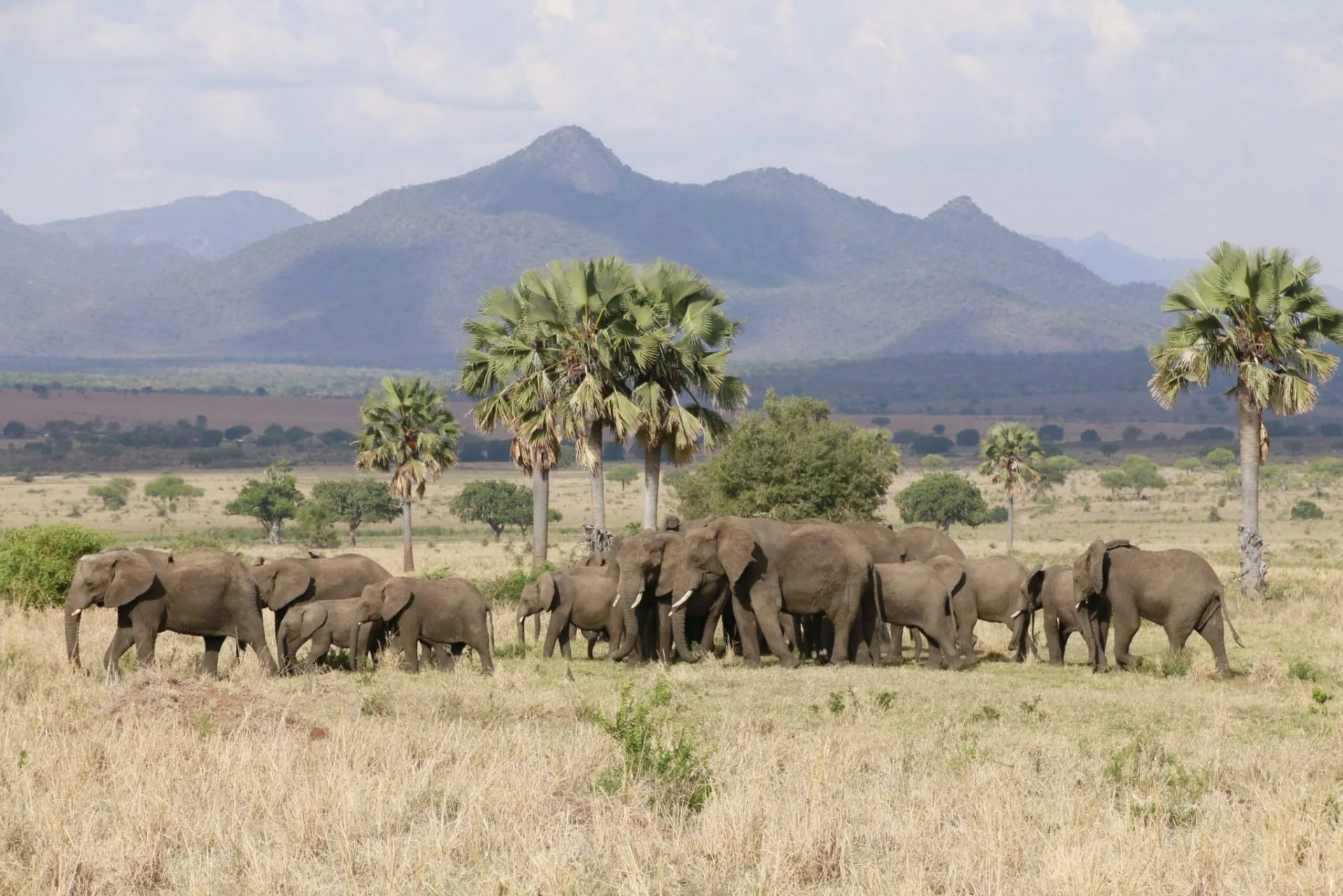
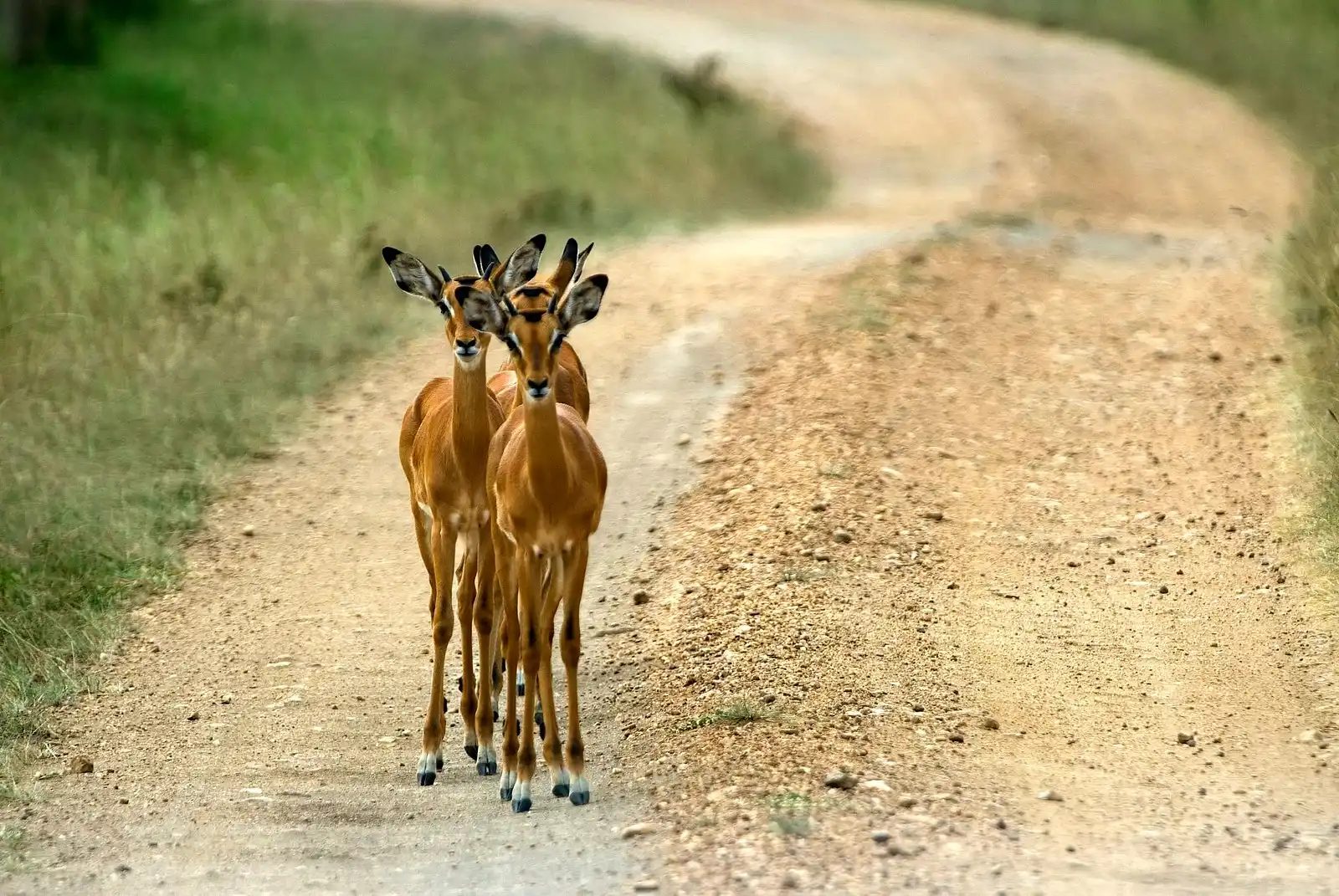
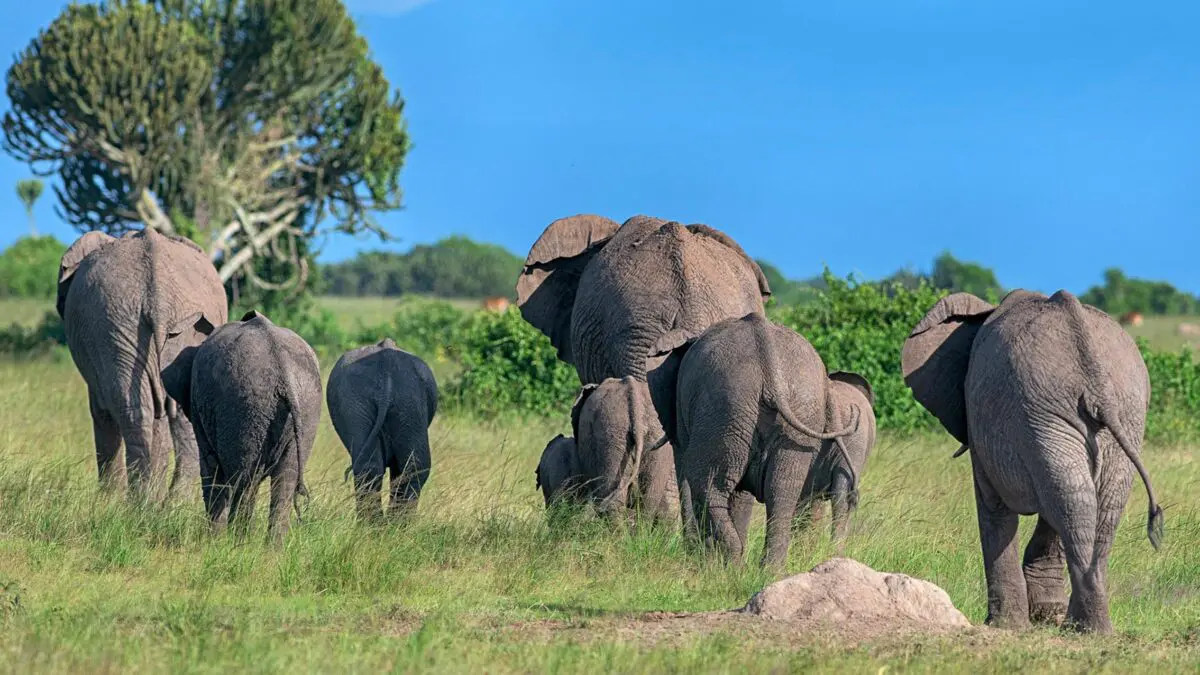
It is also home to humans, too. Queen is one of the few safaris parks in Africa to have communities living inside its boundaries. You’ll have lunch en route, arriving at your lodge in the afternoon. You freshen up and have some time to rest before embarking on a thrilling evening game. You’ll look out for elephants, buffalos, warthogs, and numerous antelopes. You’ll stay out until sunset and hopefully, you can find some predators as they start to become more active at this time.
Midrange: Enganzi Game Lodge/Bush Lodge/Park View Lodge
Budget: Pumba Safari Cottages
Meal Plan: Breakfast & Dinner
Day 2: Morning Game Drive & Afternoon Boat Cruise
Safari breakfasts in Africa are traditionally served before daybreak so that as the sun comes up, you can start your wildlife game drive. Sunrise is the best time for game viewing as animals tend to be the most active during the cool golden hours of the day when the first rays of the sun come to rest on the African savannah. So, on day two of the 6-day Uganda safari, you shall wake up very early for breakfast before going out into the savanna to watch animals.
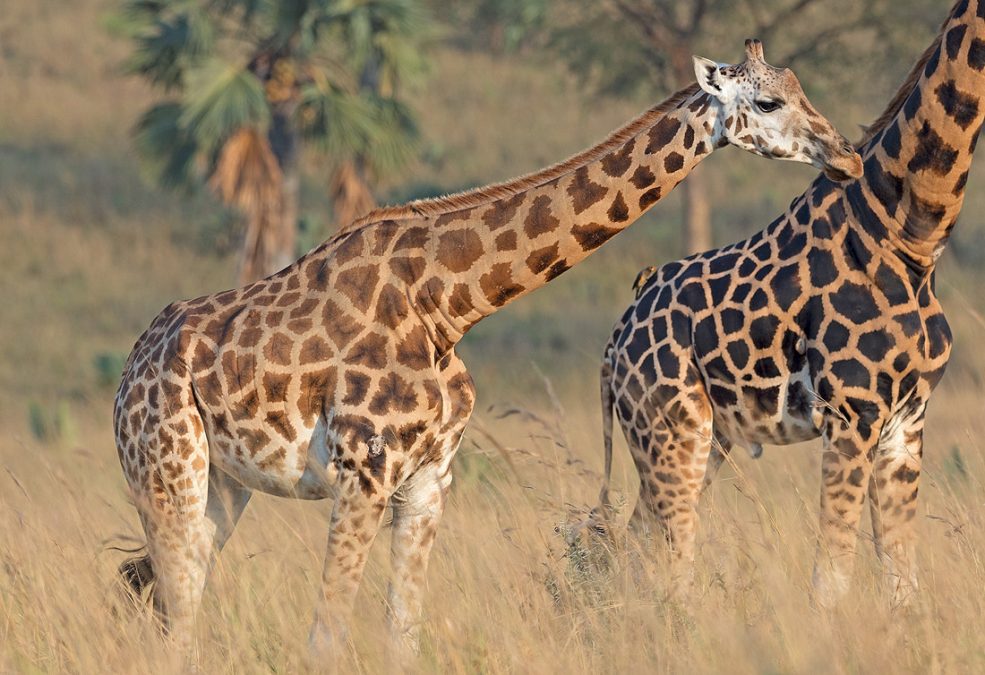
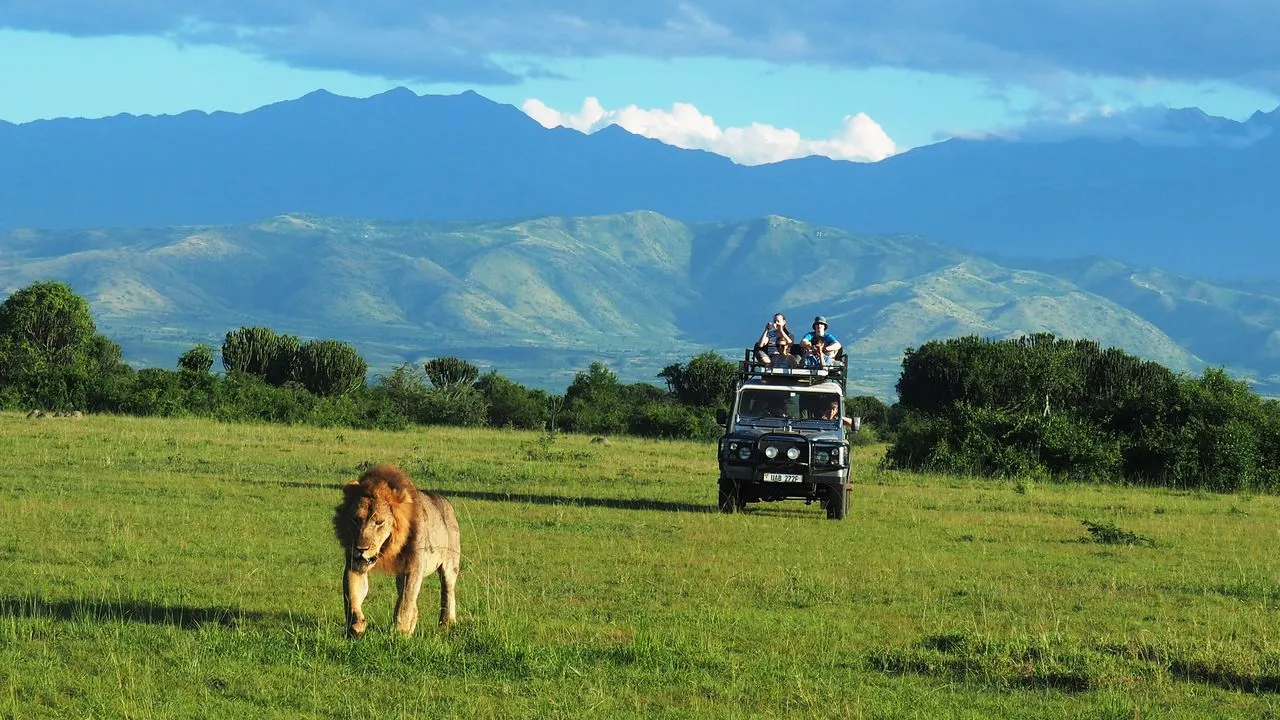
You’ll explore the plains of the Kasenyi sector, one of the most beautiful sections in Queen Elizabeth National Park. You’ll have a chance to tick off some amazing African animals like Lions, hyenas, buffalos, elephants, Uganda kobs, hippos, bushbucks, waterbucks, and Warthogs. Occasionally, you’ll be able to see the legendary Mountains of the Moon (Rwenzori Mountains). If you’re lucky, you might even spot a giant forest hog – Africa’s largest pig or an elusive leopard.
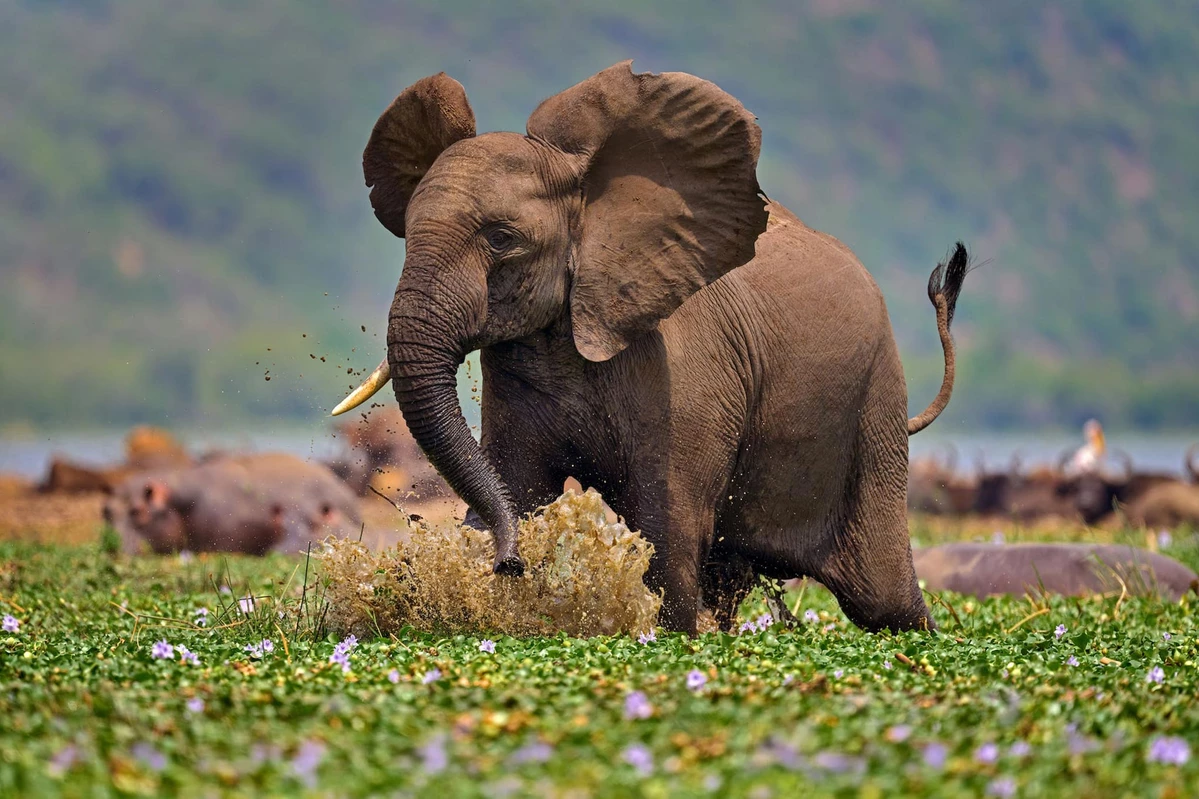
After your 3-4-hour game drive, you shall return to the lodge for lunch and some relaxation. In the afternoon, you will enjoy a leisurely boat cruise on the Kazinga Channel, a natural channel that flows between Lakes George and Edward. One of Africa’s densest concentrations of hippo live here, as well as large numbers of elephants, buffaloes, crocodiles, and a plethora of waterbirds like fish eagles, pelicans, skimmers, storks, Ibises, Lapwings, and Terns.
After the boat cruise, you will do a short game drive along the channel track as you head back to the lodge for relaxation, dinner, and overnight.
Midrange: Enganzi Game Lodge/Bush Lodge/Park View Lodge
Budget: Pumba Safari Cottages
Meal Plan: Breakfast, Lunch, & Dinner
Day 3: Chimp Trekking In Kalinzu & Game Drive In Ishasha Sector
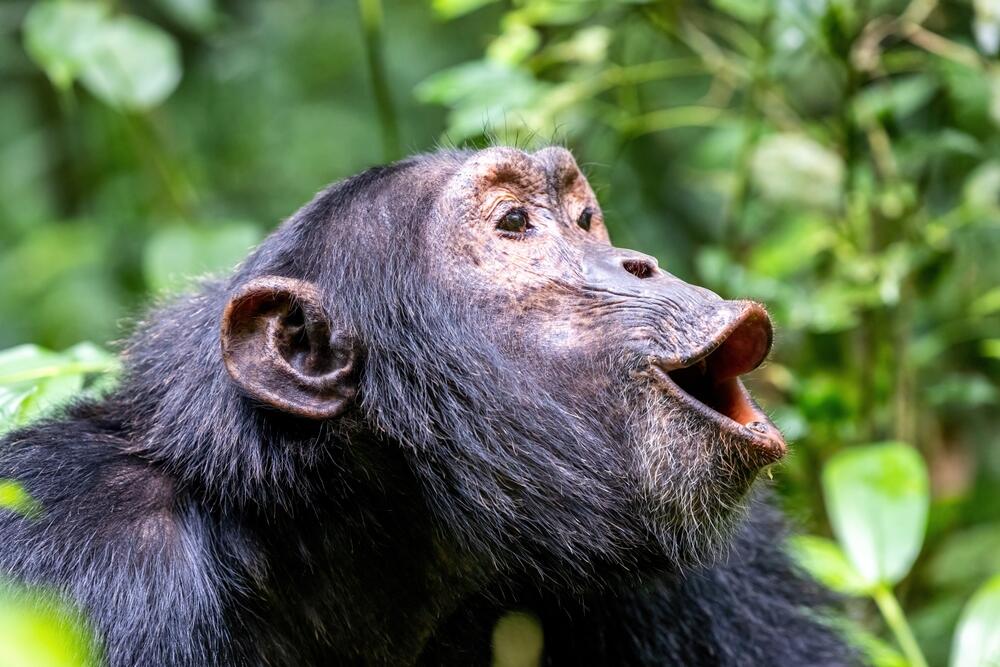
After breakfast, you will explore the nearby verdant, green Kalinzu Forest Reserve on foot with an expert local ranger guide, looking for the chimpanzee communities that call this protected area home.
You will learn about the habits and social activities of these endangered apes – our closest relatives in the animal world – and gain insights into current efforts to protect them. Kalinzu Forest is home to about 300 wild chimpanzees and it’s the best place to see them after Kibale Forest. There will also be plenty of opportunities to see different species of birds, butterflies, and plants Kalinzu.
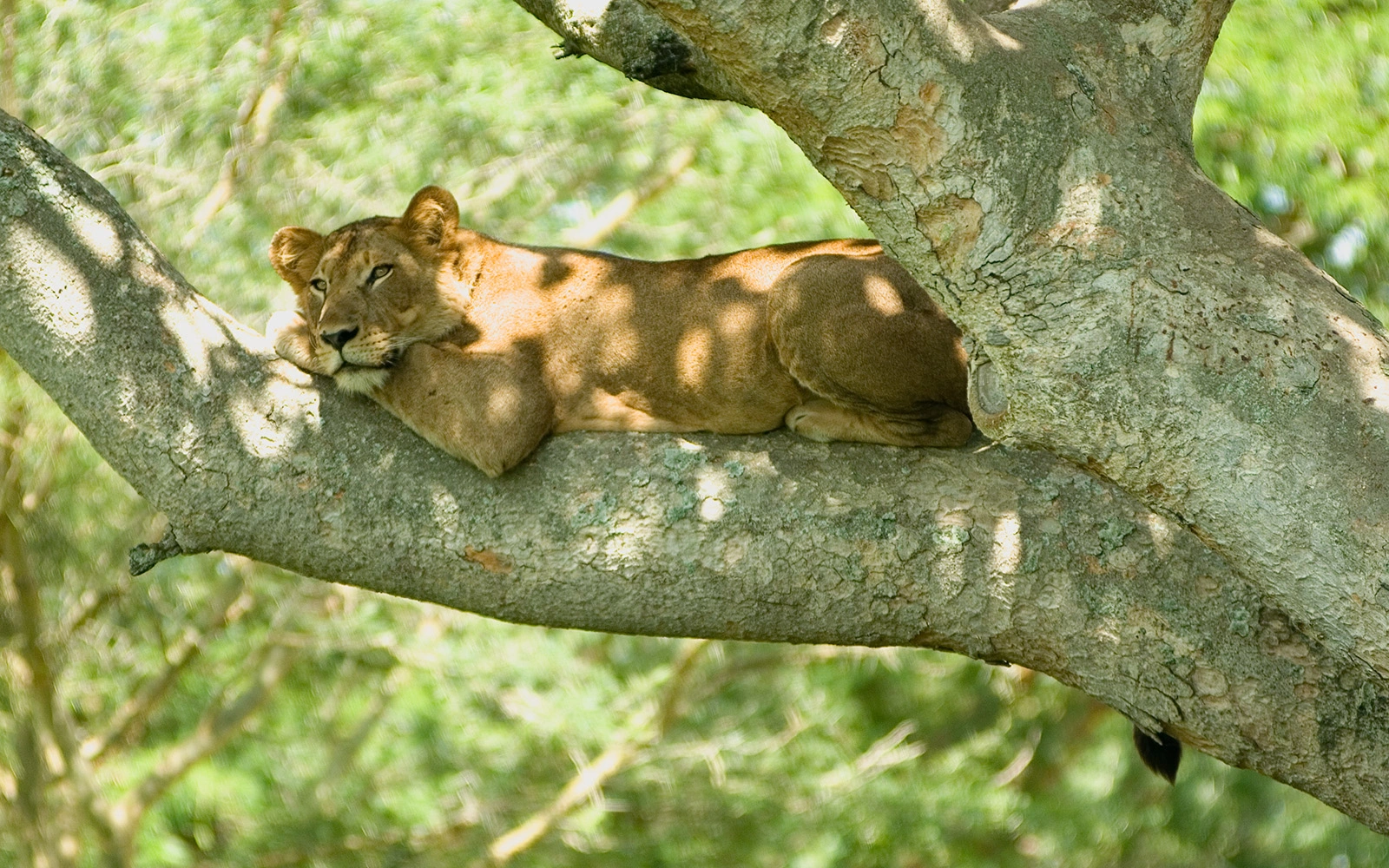
After, the chimp trek, you will enjoy a packed picnic lunch and then embark on a slow drive south to the remote Ishasha sector of Queen Elizabeth National Park. This southern section of the park is home to tree-climbing lions who spend long lazy days dozing in the pretty fig trees. The Uganda Kob, which they watch from the branches, graze the plains. Enjoy game-watching – make sure to look out for huge herds of elephants, buffalos, and topi.
Accommodation Options:
Luxury: Ishasha Wilderness Camp
Mid-range: Enjojo Lodge
Budget: Enjojo Lodge
Meal Plan: Breakfast, Lunch, & Dinner
Day 4: Morning Game Drive As You Travel To Bwindi
After a peaceful night’s rest, you’ll start the day with an early morning game drive on the Ishasha Plains, watching the resident wildlife forage or hunt for food, before enjoying a delicious bush breakfast in Queen Elizabeth National Park. You will then depart for your next stop.
As you drive further south, the landscape will change dramatically: Bwindi is a place of steep hillsides, dense jungle, and towering trees. After about a 3 to 4-hour drive, you will arrive at your lodge near or inside Bwindi Impenetrable National Park, an acclaimed UNESCO World Heritage Site.
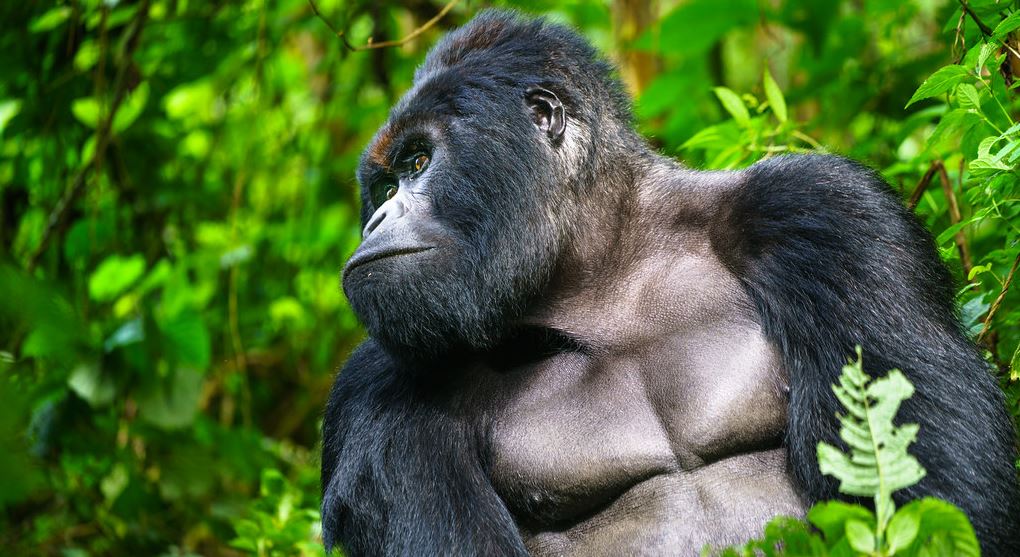
Bwindi is considered one of the richest biological and botanical regions in Africa. Its rainforest is over 25,000 years old and contains almost 400 species of plants. It is also the best place on the planet to see wild mountain gorillas. There are only about 1063 wild mountain gorillas left worldwide. Of those, 500 reside in Bwindi! A visit to the national park – especially one focused on meeting these great apes – help conservation efforts.
Besides gorillas, the region provides shelter for another 120 species of mammals, including several primates such as baboons and chimpanzees, as well as elephants and antelopes. You will arrive at you’re your lodge in the later afternoon to freshen up and relax. In the evening, you will visit the community of Batwa – a hunter-gatherer tribe indigenous to the region, whose people once lived and sustained themselves within the Bwindi Forest. They lived peacefully with gorillas.
Day 5: Gorilla Trekking & Relaxation At Lake Bunyonyi
Rise early, have a hearty breakfast, and prepare for a gorilla trekking adventure! Before beginning the trek, park rangers will brief the group to ensure your safety and that of the great apes.
The trek usually takes 2 to 7 hours. We recommend bringing a good pair of walking boots or shoes. The rangers will accompany you as you trek through the dense forest jungle, occasionally hacking the dense undergrowth with a machete as you search for gorillas. As part of anti-poaching efforts, the apes are under 24-hour monitoring, so you’re almost guaranteed to see them!
Once you have located a gorilla family, you will be asked to leave all your belongings on the side and approach the gentle giants with only your camera. It is advised that you keep within 23 feet (7 meters) of the apes to reduce the risk of transmitting human diseases to them. This also helps guides interpret the animals’ behavior and easily retreat if danger is perceived.
You will be able to see the gorillas in their natural environment: feeding, playing, interacting with each other, or just sleeping. The gorillas are usually quite curious to see humans as well! You’ll be allowed exactly one hour with the apes. You will then enjoy your packed picnic lunch before returning to the starting point to receive your gorilla trekking certificate.
From there, you will leave Bwindi and embark on a 1-hour drive through the Little Switzerland of Africa along winding mountain roads and through rural villages to Lake Bunyonyi one of Africa’s deepest and most beautiful lakes.
Here, you will have time to relax at the lake shore resort as you reflect on the once-in-a-lifetime experience of encountering the endangered Mountain Gorillas. You may opt for an evening boat cruise on the lake.
Accommodation Options:
Luxury: BirdNest@Lake Bunyonyi
Midrange: Lake Bunyonyi Rock Resort
Meal Plan: Breakfast, Lunch, & Dinner
Day 6: Relaxed Breakfast & Transfer Back To Kampala
Enjoy one last leisurely breakfast before departing for Entebbe.
You have quite a long journey ahead of you, so make sure you have your snacks and water handy. From your lodge, you will be driven to the back to Entebbe or Kampala, where your unforgettable adventure first began. En route, you will stop at the Igongo Cultural Centre, a huge commercial enterprise with a five-star hotel, a top restaurant, craft shops, and luckily also one of the best museums in all of Uganda
Here you will enjoy a traditional lunch and learn about the Ankole culture of Uganda, getting a glimpse into the history of these interesting people. After lunch you will continue on your way making another stop will be at the Equator; Uganda is one of the few countries in the world where you can cross this imaginary geographical line on land.
Observe how water swirls in opposite directions on either side of the equator. It makes for great photographs and memories. It is also an impressive site for purchasing memorabilia to take back home as a memento of this incredible safari in Uganda.
You’ll arrive in Entebbe by early afternoon and you may have a Day Room to yourself to rest if you fly out a bit late. Closer to your departure time, you’ll be transferred to Entebbe International Airport to catch your flight back home.
A 4 days safari in Queen Elizabeth offers one of the best short African Wildlife safaris.
Day 1: Pickup And Transfer To Queen Elizabeth National Park
Our Tulambule Uganda safaris guide shall pick you up very early in the morning from your place of stay in Entebbe or Kampala. After short tour briefing, you will begin your journey to Queen Elizabeth National park.
Queen Elizabeth is located in the southwestern part of Uganda on the floor of the Great Rift Valley. The Rift Valley was formed by the pulling apart of two tectonic plates, and these literally earth-shattering movement millennia ago caused the formation of some truly magnificent views.
Along the way, watch out for the local people working in their gardens or doing business in the roadside market places. You will also see herdsmen tending to the interesting long-horned Ankole cattle.
Your driver guide shall make a brief stop at the Equator monument in Kayabwe to allow you stretch your legs. Uganda is one of the few countries on Earth where you can cross this imaginary geographical line on land. Observe how water swirls in opposite directions on either side of the equator and take some photos.
From there, the journey will continue and the next stop will be at the Igongo Cultural Center, a huge commercial enterprise with a five-star hotel, a top restaurant, craft shops, and one of the best museums in Uganda. Here you’ll enjoy a traditional lunch, before proceed on your drive to Queen.
As you approach the park, you’ll begin to see lovely views of the Rwenzori Mountains from the horizon as well as crater lakes, wildlife and the rift valley. This is where your guide will be most active as he shares with you details about all the features.
You’ll arrive in the afternoon and be taken to your hotel for some relaxation and refreshment.
In the evening, you will game drive at the Kasenyi plains to spot warthogs, buffaloes, elephants, and several species of antelopes among others. You’ll stay out until sunset and hopefully, you can spot some predators like lions, leopards, and hyenas as they start to become more active at this time.
Midrange: Enganzi Game Lodge/Bush Lodge/Park View Lodge
Budget: Pumba Safari Cottages
Meal Plan: Breakfast, Lunch, & Dinner
Day 2: Game Drive in Kasenyi Sector & Afternoon Boat Cruise on the Kazinga Channel
Africa safari breakfasts are traditionally served before sunrise so that as the sun rises, you can start your wildlife safari game drive. Sunrise game drives offers the best game viewing opportunities as animals tend to be the most active during the golden hours of the day when the first rays of the sun come to rest on the African savannah.
So, on day two of your 4-day safari in beautiful Queen Elizabeth National Park, you will wake up very early for breakfast before going out into the savanna to view animals. You will traverse savannah plains of the Kasenyi, one of the most beautiful areas of Queen Elizabeth Park.
You will have a chance to tick off some wonderful wildlife like Lions, hyenas, buffalos, elephants, Uganda kobs, hippos, bushbucks, waterbucks, and Warthogs.
Occasionally, you’ll be able to see the legendary Rwenzori Mountains. If you are very lucky, you might even spot a Giant forest hog – Africa’s largest pig – or an elusive leopard. After the game drive of about 3 to 4 hours, you will return to your lodge for lunch. In the afternoon, you will have a relaxing boat tour on the Kazinga Channel, a natural channel that flows between Lakes George and Edward.
Some of the densest concentrations of hippo in Africa reside here, as well as a large number of elephants, crocodiles, buffaloes, and a plethora of waterbirds like fish eagles and pelicans.
After the boat cruise, you will take a short game drive along the channel track as you head back to the lodge for relaxation, dinner, and overnight.
Midrange: Enganzi Game Lodge/Bush Lodge/Park View Lodge
Budget: Pumba Safari Cottages
Meal Plan: Breakfast, Lunch, & Dinner
Day 3: Game Drive Up To Katwe Salt Lake Community & Transfer to Ishasha For Tree Climbing Lions.
Crater Drive
After hearty breakfast today, you will check out of the lodge and take on a scenic Crater Drive. You will explore the volcanic explosion craters that remind us of the Albertine Rift’s violent tectonic history.
You will follow spectacular route around the rims of extinct craters filled, variously, with lakes, forests, and grassland. You will drive up to Katwe Salt Lake where the local community has been extracting salt for over 600 years!
You will meet a local guide from the community to take you for a tour around the salt mines while explaining how salt mining is done, the challenges faced as well as the opportunities available.
Lake Katwe salt extraction project is one of the living examples of man and biosphere reserves or conservation areas in the whole world where man harmoniously co-exists with wildlife.
Because of the salty condition of this Crater Lake, it can’t support any animals within it. However, you will be able to view elephants, buffaloes, and flamingos at the baboon cliff.
Drive To Ishasha Sector To See Tree-Climbing Lions
From Katwe, you will drive to park’s Ishasha sector. The Ishasha Sector lies near the southwestern edge of Queen Elizabeth Park.
This sector is known primarily for its incredible and unusual tree-climbing lions that have made old fig trees their regular – hangout. It is said they do this in order to get better viewpoints, and for protection from the winds.
However, the sector provides plenty more to do and see. This untouched area of savannah and rivers, decorated with fig, acacia, and cactus trees.
It’s a wonderful place to enjoy wildlife game drives, nature walks, and community tours. Ishasha is one of the best bird-watching spots in Uganda. And is also home to elephants, buffalos, hippos, waterbucks, and topis
The drive to Ishasha will take about 1-2 hours. On arrival, you will have lunch and some relaxation before embarking on a game drive.
Kyambura Gorge Chimpanzee Trekking – Optional
Often referred to as the Valley of the Apes, Kyambura Gorge is located in Queen Elizabeth National Park. Over the past two years a small family of wild Chimpanzees has been habituated to tolerate the presence of humans.
However, sightings are not guaranteed. So chimp trekking permits here are offered at considerably low rates compared to the more well-known Kibale Forest National Park. But this is a chance to discover this beautiful tropical gorge area and track the Chimpanzees in a remote and lesser-known location.
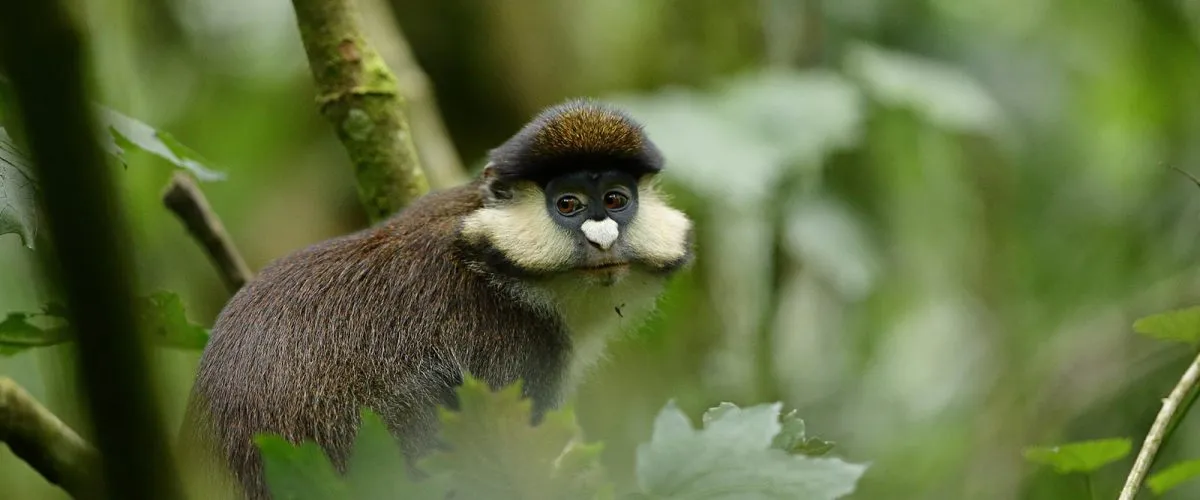
Kyambura is well known stunning scenery and a vast bio-diversity. Should you miss the chimpanzees, your guide will still point out Colobus monkeys, Red-tailed monkeys and mangabeys as well as different bird species and provide details of the traditional of the plant species within the forest.
Chimpanzee trekking adventures in Kyambura starts in the morning and afternoon. The treks usually lasts 3 to 4 hours with about 4-6 people in a group each led by a specialist guide from Ugandan Wildlife Authority (UWA).
Kalinzu Forest Chimpanzee Trekking – Optional
You can also opt to go for chimpanzee trekking in Kalinzu Forest near Queen Elizabeth National Park. This verdant forest is home to about 300 wild chimpanzees and it’s the best place to see them after Kibale Forest. You will learn about the habits and social activities of these endangered apes – our closest relatives in the animal world – and gain insights into current efforts to protect them.
Accommodation Options:
Luxury: Ishasha Wilderness Camp
Midrange: Enjojo Lodge
Budget: Enjojo Lodge
Meal Plan: Breakfast, Lunch, & Dinner
Day 4: Game Drive in Ishasha, Transfer To Kampala
Wake up and have an early morning game drive in Ishasha to see more of the lions and other Uganda wildlife in Ishasha. This sector will offer you a different experience because it has a different setting and landscape from Kasenyi.
After the game drive, you will begin the journey back to Kampala or Entebbe with lunch at the Igongo cultural Centre. You may tour have a brief tour of the centre to learn about the culture of the Ankole people.
That is you if did not get time on the first day. You then will continue the drive using the same route and bypass the Uganda equator crossing. Expect to reach Entebbe or Kampala at around 6 pm.
Tulambule offer different group tours from the private group tours to open group tours that will leave you in awe of this beautiful East African country with almost everything that you want to see.
Students Group Tours: On our student group tours we take schools/students to educational and recreational safari around the country. These include historical sites, cultural sites, geographical features, national parks, and other attraction and youth friendly destinations.
Group Tours for seniors: Our senior group tours are typically designed for a small group of at advanced age who is not interested in sole vacation. The seniors should have the same travel goals and a safari itinerary of slower pace that leads them to places or adventures that require less energy. You can read our guide on gorilla trekking for the very old.
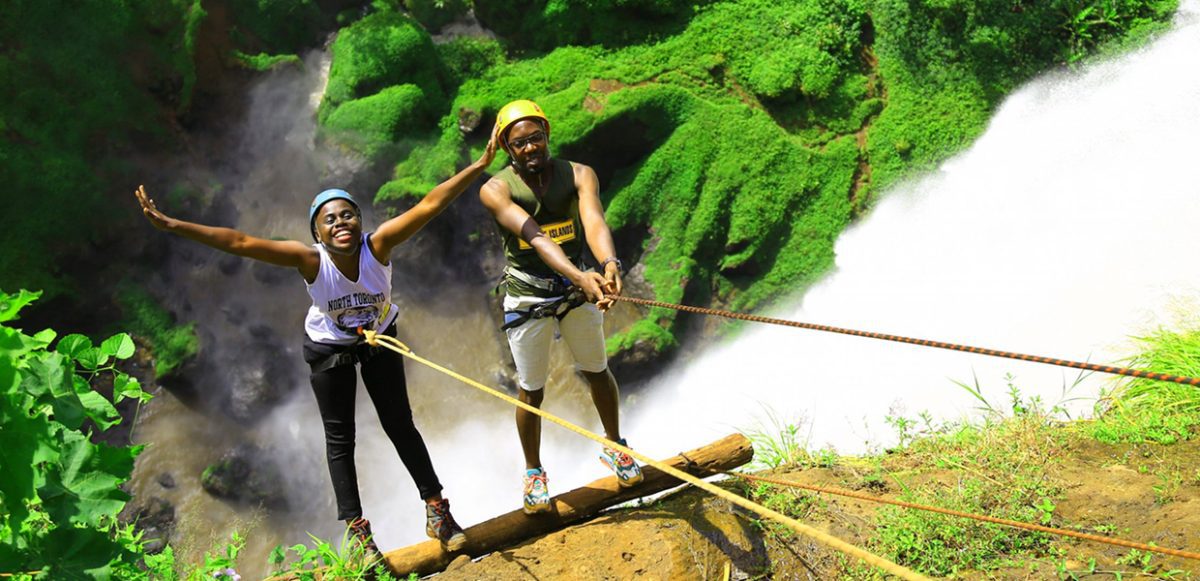
Adventure Group Tours: These are also small group tours that offer challenging activities. Our Uganda adventure group tours requires some levels of fitness. You can go white-water rafting on the Nile, gorilla trekking, zip-lining, bungee jumping, quad biking, hiking and mountaineering, horseback riding, sport fishing, and kayaking among others.
FAQs About Uganda Group Tours
1. Why Book A Group in Uganda?
Taking a Uganda group safari is generally cheaper than booking a private safari. This is because road transport costs can be much cheaper when split between several people.
For travelers willing to share accommodation with another group member, this is another potential saving because single supplements often add 50% to 75% to the ‘per person’ room price.
That said, the general saving on Uganda group tours might not be as much as you expect, as shared accommodation, meals, park fees and most safari activity charges (including the US$800 gorilla trekking permit) will be the same either way.
2. Are there specialized Uganda group tours for birders and photographers?
Yes. And dedicated Uganda group safaris tours are especially worth looking at for travelers with these special interests.
This is partly because the itinerary of a specialized safari will be tailored for that interest group. Photographic safaris, for example, are likely to take extra care to be out in the finest light possible, as well as to set up vehicles for the best possible angle.
Birding tours often focus on the top bird watching spots, to be out and about when the birds are most active, and utilizing local guides with specialist bird knowledge.
Also, many specialized Uganda group tours are led by an acknowledged expert, such as a professional ornithologist or published photographer.
It is worth noting that serious photographers and birders (as well as others with special interests) may find it frustrating to join a group safari that is not dedicated to that interest group. If there are no suitable specialized group tours available, they should plan a private safari.
3. What types of vehicles can I expect on a Uganda group tour?
Most Uganda group tours and safaris use a stretch Land Cruiser or a similarly rugged high-clearance 4×4 safari vehicle to travel between destinations as well as for game drives.
These vehicles typically take a maximum of 7 passengers and are reasonably comfortable. However, they lack the smoother suspension and speed of a standard car. It is usual for safari vehicles in Uganda to have pop-up roofs, which is great for viewing and photographing distant wildlife.
4. What is the recommended maximum group size for a safari?
If you are traveling in a single stretch safari vehicle, the maximum group size will be 7 people (one in the front and three rows of two in the back).
This can be a bit squashed, as the vehicles have limited luggage space.
When there is a full quota of passengers, bags will probably need to be carried on a roof rack when driving between the safaris destinations. For this reason, a more comfortable group size would be 4 or 5 people. Larger groups are often split between 2 or more vehicles on specialist Uganda group tours led by professional photographers or ornithologists.
5. Is there a minimum age for a group trip in Uganda?
There is no blanket minimum age for Uganda group tours, but in the case of tours that include mountain gorilla and chimpanzee trekking, this might be influenced by the minimum age limit of 15 years old for gorilla trekking and 12 years old for chimpanzee trekking.
In other cases, it might be due to certain lodges and camps on the safari itinerary have a minimum age limit, which could be anything from 4 to 12 years old. Even if the tour operator does not specify an age limit, parents with young children – especially those prone to tantrums or crying – might want to consider whether it is reasonable to impose this on other group members.
6. How Much Do Uganda Group Tour Packages Cost?
Typically, you would be looking at about US$200 to US$300 per person per day for a Uganda group tour. But this will depend on many factors including the group size, duration, itinerary, accommodation and safari activities.
For example, a budget safari in Uganda that does not include gorilla trekking (which costs US$700 per person) might be much cheaper. By contrast, packages that use luxury safaris lodges and/or domestic flights, or that employ a specialist tour leader, could be a lot more expensive.
Whatever you pay, the price should usually include all costs related to accommodation, meals, transport, activities and national park visits, but usually excludes drinks.