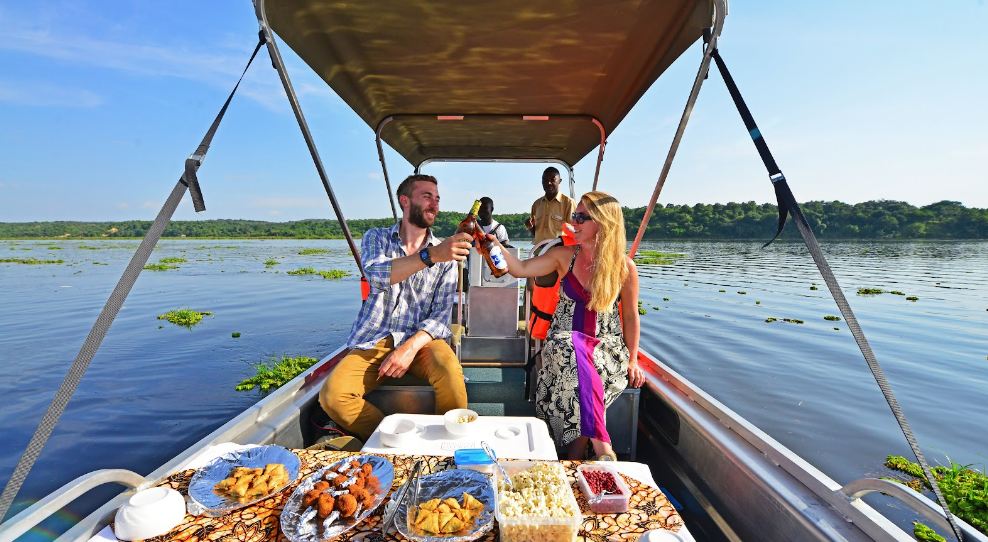
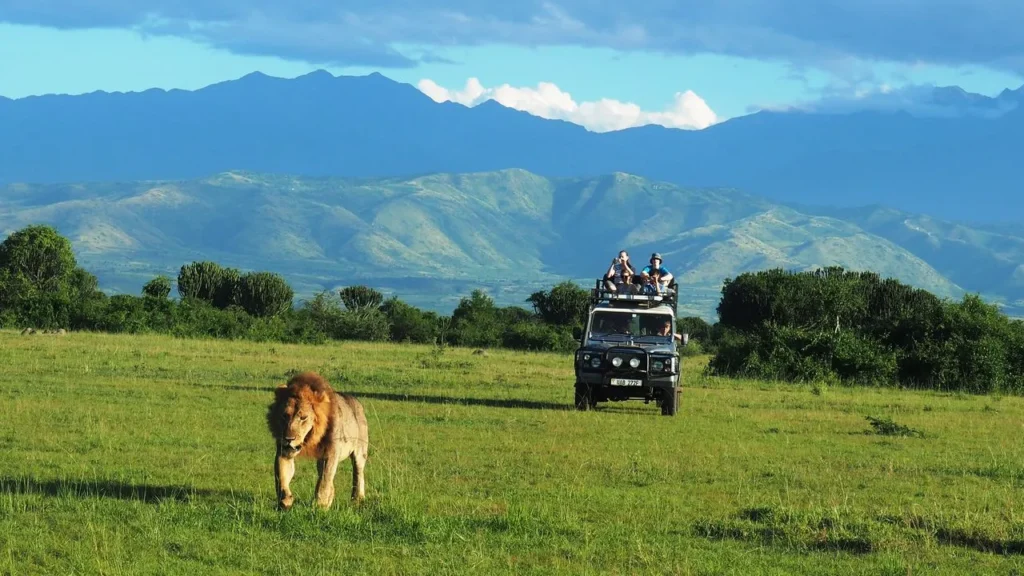
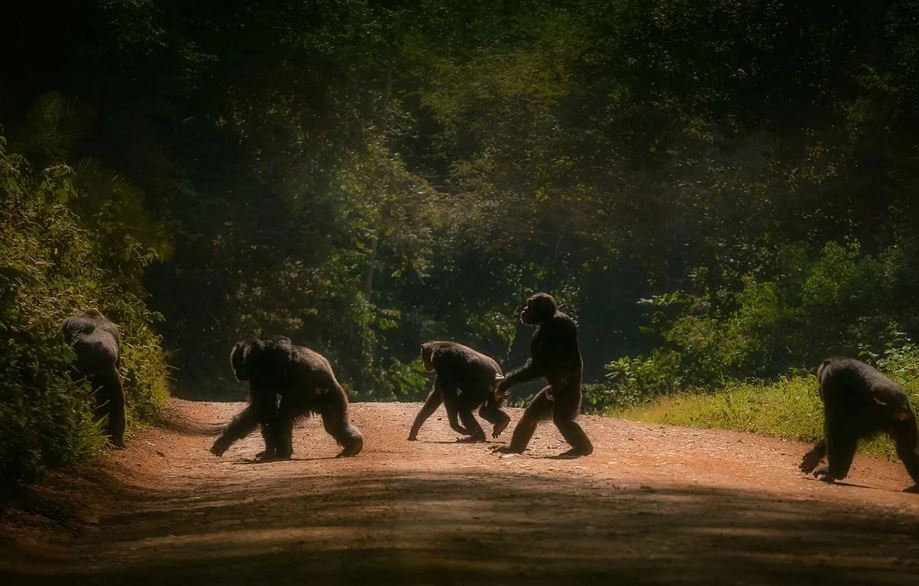
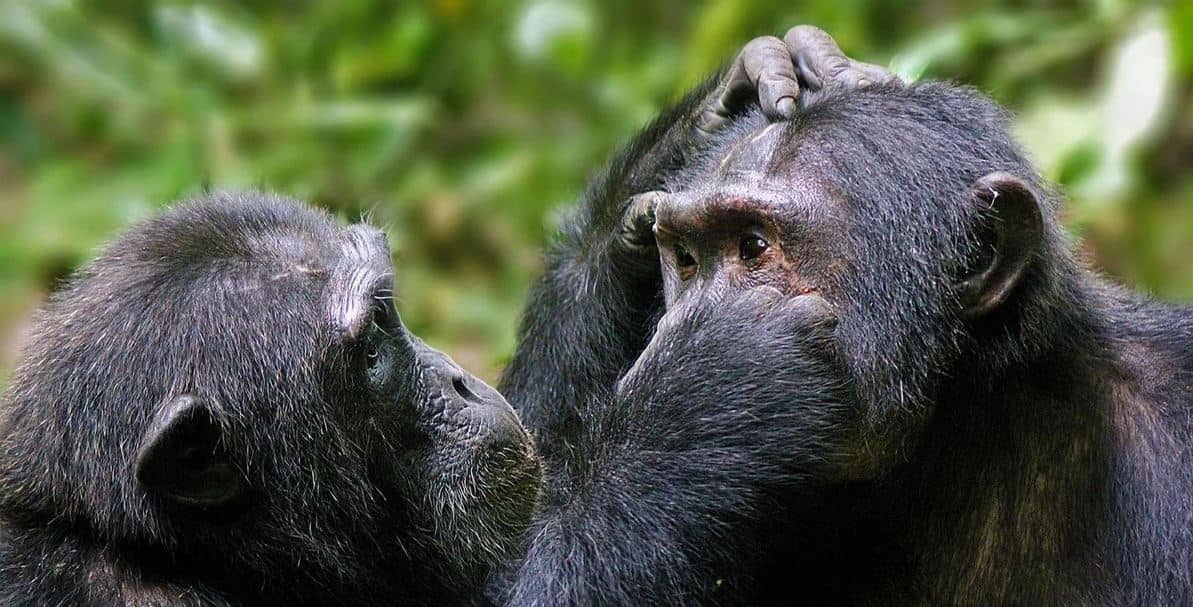
Shopping malls in Kampala have quietly become one of the most useful stops on any Uganda itinerary, and most travelers never plan for them. You land in Entebbe, spend two weeks chasing gorillas and lions,…
Birding in Murchison Falls National Park is one of the richest birdwatching experiences anywhere in Africa. The park sits in northwestern Uganda, where the Victoria Nile is squeezed through a narrow gorge before crashing over…
Mount Elgon National Park
Mount Elgon National Park is one of Uganda’s most rewarding and least visited natural destinations, offering a unique combination of highland hiking, ancient caves, stunning waterfalls, and rich biodiversity. Straddling the border between Uganda and Kenya, this ancient volcano rises to 4,321 metres above sea level and is home to the world’s largest volcanic base.
For travellers seeking something different from Uganda’s famous gorilla safaris and savannah game drives, Mount Elgon National Park delivers a cool, green, and deeply immersive highland adventure that stands entirely in a class of its own.
Why Visit Mount Elgon National Park
Mount Elgon is often overlooked in favour of Uganda’s more famous parks, and that is precisely what makes it special. Trails are uncrowded, wildlife is undisturbed, and the landscape is breathtaking at every altitude.
The park protects 1,279 square kilometres of montane forest, bamboo woodland, open moorland, and ancient lava tubes. It is a place where you can hike through elephant-carved caves, stand on the rim of one of Africa’s great calderas, and watch rare birds in forest silence without another soul in sight.
Mount Elgon is also the starting point for visiting the famous Sipi Falls, making it a natural pairing for a memorable eastern Uganda itinerary. Whether you are an experienced hiker, a birding enthusiast, or simply someone who loves extraordinary natural landscapes, this park has something that will stay with you long after you leave.
Top Attractions and Activities in Mount Elgon National Park
Hiking to the Wagagai Summit
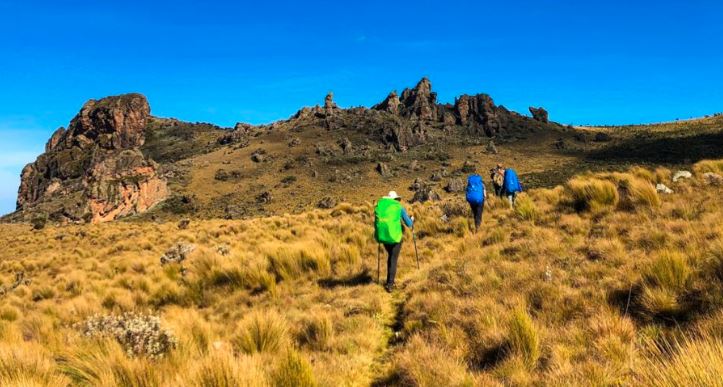
The highest point on the Ugandan side of Mount Elgon is Wagagai Peak, standing at 4,321 metres above sea level. The multi-day hike to the summit takes travellers through distinct ecological zones — from dense montane forest at the base, through bamboo and heather woodland, to open alpine moorland near the top.
The final approach to the caldera rim is one of the most dramatic landscapes in Uganda. The caldera itself is approximately 40 kilometres wide, making it one of the largest in the world.
Most hikers complete the summit trek in three to four days, camping at designated sites along the route. The best time to attempt the summit is during the dry seasons from June to August and December to February.
The Elephant Caves — Kitum, Chepnyalil and Makingeny
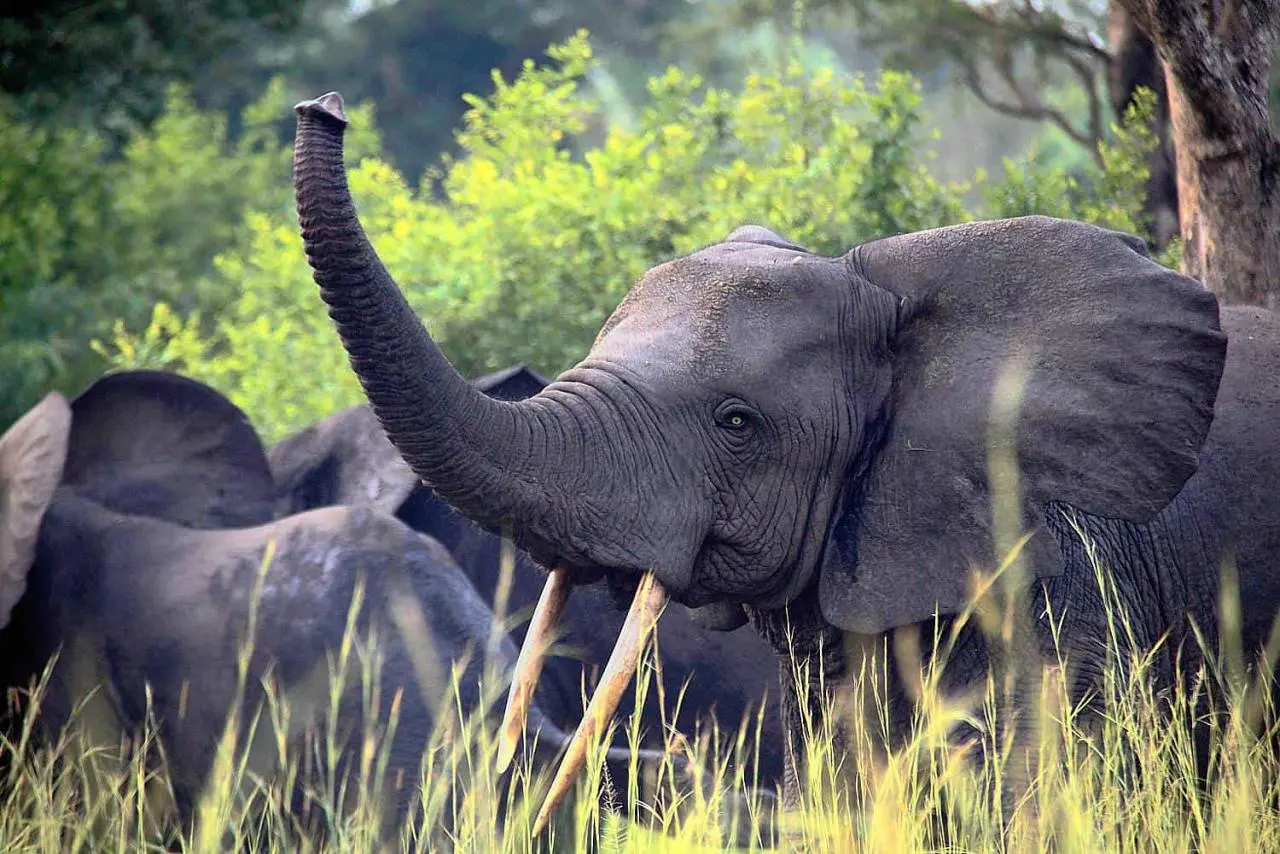
The lava tube caves of Mount Elgon are among the most extraordinary natural attractions in Africa. Kitum Cave is the most famous, stretching 60 metres into the mountain and drawing elephants, buffalo, and other wildlife that come to lick the salt-rich walls at night.
The sight of elephants mining the cave walls with their tusks in the early morning hours is one of Africa’s most remarkable wildlife encounters. Guided cave visits can be arranged from the park headquarters and are best undertaken in the early morning hours when wildlife activity is highest.
Chepnyalil and Makingeny caves offer similar experiences in a more intimate setting and are excellent alternatives for visitors who want to avoid the most popular spots.
Sipi Falls
Located on the lower slopes of Mount Elgon in Kapchorwa District, Sipi Falls is a series of three spectacular waterfalls that are among the most scenic in Uganda. The largest plunges 100 metres over a cliff with sweeping views of the Karamoja plains stretching endlessly to the east.
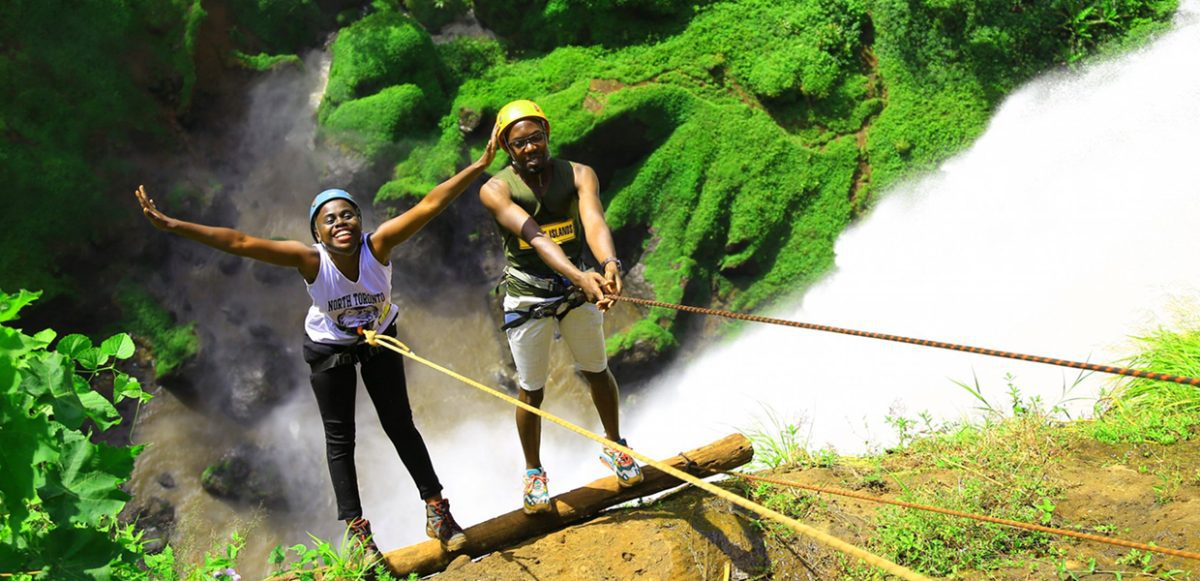
Sipi Falls is connected to the Mount Elgon National Park experience by easy hiking trails and makes a perfect one or two night addition to any park visit. Activities at Sipi include guided waterfall hikes, abseiling down the cliff face alongside the falls, and Arabica coffee tours through local farming communities. Learn more on our Sipi Falls guide.
Hiking and Nature Walks
Mount Elgon National Park offers a range of guided walks and hiking trails suited to different fitness levels. Day hikes through the lower montane forest offer excellent birding and wildlife encounters without requiring multi-day camping commitments.
Popular day hike options include the Chebonet Waterfall trail and the forest loop trails near the Budadiri and Kapkwata trailheads. All walks are conducted with Uganda Wildlife Authority rangers who provide expert guidance on wildlife, plants, and the park’s unique geological history.
Birdwatching
Mount Elgon National Park is a birdwatcher’s paradise with over 300 recorded bird species, including numerous Albertine Rift endemics and highland specialities that are found nowhere else in Uganda. The Jackson’s francolin, Hartlaub’s turaco, and the stunning African green broadbill are among the sought-after species that draw birders from across the world.
The montane forest zone between 2,000 and 3,000 metres is the richest birding habitat, and early morning walks yield the most rewarding sightings. Tulambule can arrange specialist birding guides for focused ornithological visits to the park.
Wildlife Viewing
Mount Elgon National Park supports a rich diversity of mammals adapted to its highland environment. Elephants are the park’s most iconic residents and are regularly encountered on forest trails and around the salt caves.
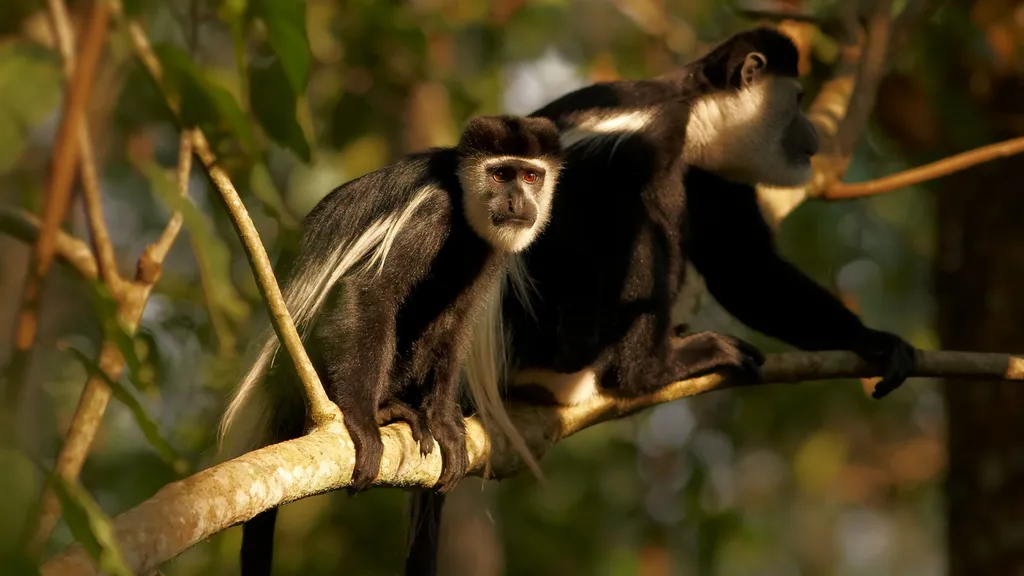
Buffalo, giant forest hog, sitatunga, black and white colobus monkey, olive baboon, and the De Brazza’s monkey are among the species commonly seen on guided walks. The park’s remote highland zones also support rare and elusive species including the African leopard and the side-striped jackal.
Getting to Mount Elgon National Park
Mount Elgon National Park is located in eastern Uganda near the town of Mbale, approximately 240 kilometres from Kampala. The drive from Kampala takes around four to five hours via the Jinja-Iganga-Mbale highway.
The main access points to the park are:
Budadiri — the most popular trailhead for summit hikes, located 25 kilometres northeast of Mbale town. This is the starting point for the Sasa Trail, the most direct route to Wagagai Peak.
Kapkwata — located on the southern side of the park near the Kenya border, offering access to the Piswa Trail, which is a more gradual and scenic alternative summit route.
Kapchorwa — the gateway town for Sipi Falls, sitting at around 1,800 metres altitude with a cool climate and spectacular views across the Elgon slopes.
Tulambule Uganda Safaris arranges private road transfers from Kampala and Entebbe to all Mount Elgon entry points as part of our eastern Uganda safari packages.
Where to Stay Near Mount Elgon National Park
Accommodation near Mount Elgon ranges from comfortable mid-range lodges to basic camping facilities inside the park.
Sipi River Lodge — A beautifully positioned lodge on the slopes above Sipi Falls, offering comfortable en-suite rooms with stunning views of the waterfall and the Karamoja plains. Ideal for travellers combining Sipi Falls with a Mount Elgon hiking itinerary.
Lacam Lodge — Perched on a cliff edge overlooking the highest Sipi waterfall, Lacam is a rustic and atmospheric lodge with kerosene lamps and unforgettable views.
Casa Sipi Falls Lodge — A mid-range option at the base of the falls offering self-contained thatched cottages in a peaceful garden setting.
Noah’s Ark Hotel, Kapchorwa — A budget-friendly option in Kapchorwa town, well-suited to travellers on a tight budget who want a comfortable base for day hikes.
UWA Bandas and Campsites — The Uganda Wildlife Authority operates basic bandas and designated camping areas at key points within the park, ideal for multi-day trekkers on a budget.
Best Time to Visit Mount Elgon National Park
The best time to visit Mount Elgon National Park is during the dry seasons from June to August and December to February. During these months, trails are drier and more manageable, summit views are clearest, and wildlife activity around the caves tends to be highest.
The park can be visited year-round, however. The wet season months of March to May and September to November bring lush green landscapes and excellent birding conditions, though some upper trails can become muddy and the summit may be cloud-covered.
Park Entry Fees
Mount Elgon National Park entry fees are as follows:
Foreign Non-Residents: USD 35 per person per day
Foreign Residents: USD 25 per person per day
East African Citizens: UGX 15,000 per person per day
Activity fees for guided hikes, cave visits, and summit treks are charged separately. Tulambule Uganda Safaris will provide a full breakdown of all costs when booking your Mount Elgon itinerary.
Combining Mount Elgon with Other Eastern Uganda Destinations
Mount Elgon National Park combines naturally with several other outstanding eastern Uganda destinations to create a rich and varied itinerary.
Sipi Falls — Just 30 kilometres from the park’s southern boundary, Sipi Falls is the perfect companion to any Mount Elgon visit. Read our full Sipi Falls travel guide for everything you need to know.
Jinja — Source of the Nile — Uganda’s adventure capital sits approximately 130 kilometres west of Mbale and is easily combined with Mount Elgon on a road trip from Kampala. White water rafting, kayaking, and bungee jumping are among the highlights.
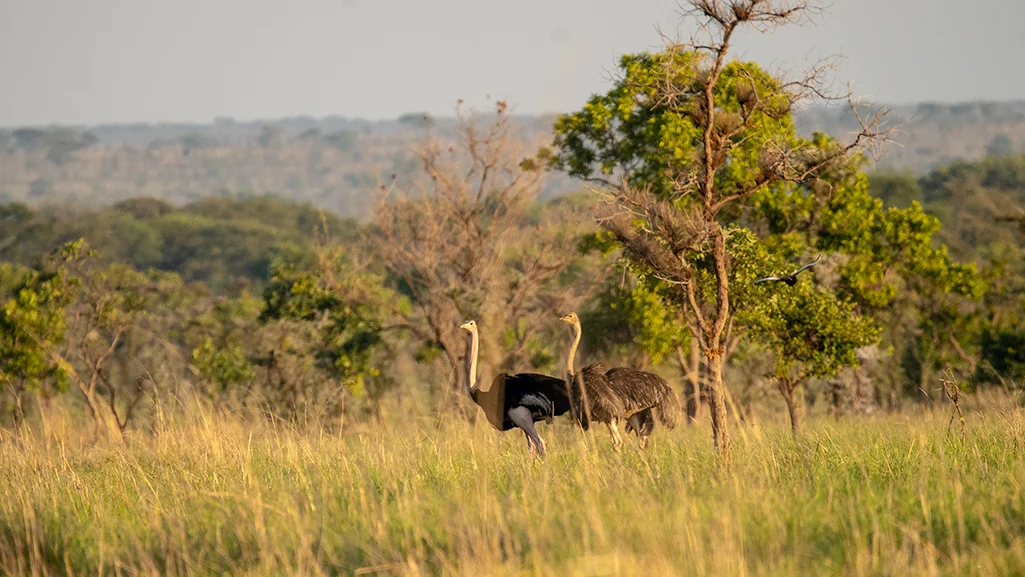
Pian Upe Wildlife Reserve — Uganda’s second-largest protected area lies north of Mount Elgon and offers raw wilderness, cheetahs, zebras, and ostriches in an off-the-beaten-path setting. Read more on our Pian Upe Wildlife Reserve page.
Kidepo Valley National Park — For adventurous travellers, a continuation from Mount Elgon through Pian Upe to Kidepo creates one of Uganda’s great wilderness road trip itineraries, covering highlands, reserves, and remote savannah in one journey.
Why Book Your Mount Elgon Safari with Tulambule Uganda Safaris
At Tulambule Uganda Safaris, we are specialists in Uganda travel with deep knowledge of eastern Uganda’s hidden gems. We are 100% Ugandan-owned, UTB and UWA accredited, and carry a 4.9-star TripAdvisor rating earned through years of delivering exceptional safari experiences.
We handle everything for your Mount Elgon visit — private road transfers from Kampala or Entebbe, UWA permit bookings, ranger guide arrangements, accommodation bookings, and full itinerary design.
Mount Elgon is one of Uganda’s great undiscovered destinations, and we love introducing travellers to its extraordinary landscapes and wildlife. Contact us today to start planning your Mount Elgon National Park adventure.
Frequently Asked Questions About Mount Elgon National Park
How do I get to Mount Elgon National Park from Kampala? The drive from Kampala to Mbale takes approximately four to five hours via the Jinja-Iganga highway. From Mbale, it is a further 25 kilometres to the Budadiri trailhead. Tulambule arranges private road transfers for all guests.
How many days do I need for Mount Elgon National Park? For a day hike and cave visit, one to two days is sufficient. For the full summit trek to Wagagai Peak, plan for three to four days including camping nights on the mountain.
Is Mount Elgon suitable for beginner hikers? The lower forest trails and cave visits are suitable for reasonably fit beginners. The summit trek to Wagagai Peak requires good fitness and preparation but does not require technical climbing skills.
What wildlife can I see at Mount Elgon National Park? Elephants, buffalo, giant forest hog, colobus monkeys, olive baboons, leopard, and over 300 bird species including Albertine Rift endemics.
Can I combine Mount Elgon with Sipi Falls? Absolutely — Sipi Falls is located just 30 kilometres from the park and is an essential addition to any Mount Elgon itinerary. Most visitors spend one night at Sipi and one or more nights at the park.
When is the best time to visit Mount Elgon? June to August and December to February are the best months — dry trails, clear summit views, and active wildlife around the caves.
Ready to explore Mount Elgon National Park? Contact Tulambule Uganda Safaris today and let us design your perfect eastern Uganda adventure.
The Semuliki Valley (including Semuliki National Park and Semuliki Wildlife Reserve) is one of the most beautiful and remote wilderness regions in Uganda.
The Semuliki Valley is situated near the snow-capped “Mountains of the Moon” in western Uganda, about 6-hour from the capital city, Kampala.
Unspoiled by mass tourism, Semuliki Valley is considered by many (especially avid birders) to be one of Uganda’s best-kept secrets. Here, the great forests of Central Africa gradually give way to the rolling savannas of the East.
Semuliki is part of Africa’s Albertine Rift valley which runs the short length of Semuliki River from where it enters Uganda until it empties in Lake Albert.
Semuliki National Park and Semuliki Wildlife Reserve are two distinctive wildlife reserves. The contrasting character of the two wilderness area, from ancient rain-forest jungle to gentle savanna ensure an astonishing combination of weird, wonderful, endemic, and unusual wild creatures.
Semuliki National Park
The 220 km2Semuliki National Park is situated in Bwamba County, Bundibugyo District on the border with the Democratic Republic of Congo.
The national park was gazetted in 1993. It protects the easternmost extension of the Great Ituri Forest, which stretches more than 500 km to the Congo River. Semuliki represents the only true tract of lowland tropical forest in East Africa.
It’s landscape is dominated by Uganda ironwood trees, interspersed with lush palm trees and verdant ferns.
Set against this backdrop of green, are over 350 species of colourful butterflies that flutter between shafts of light. And there is a variety of rare forest birds.
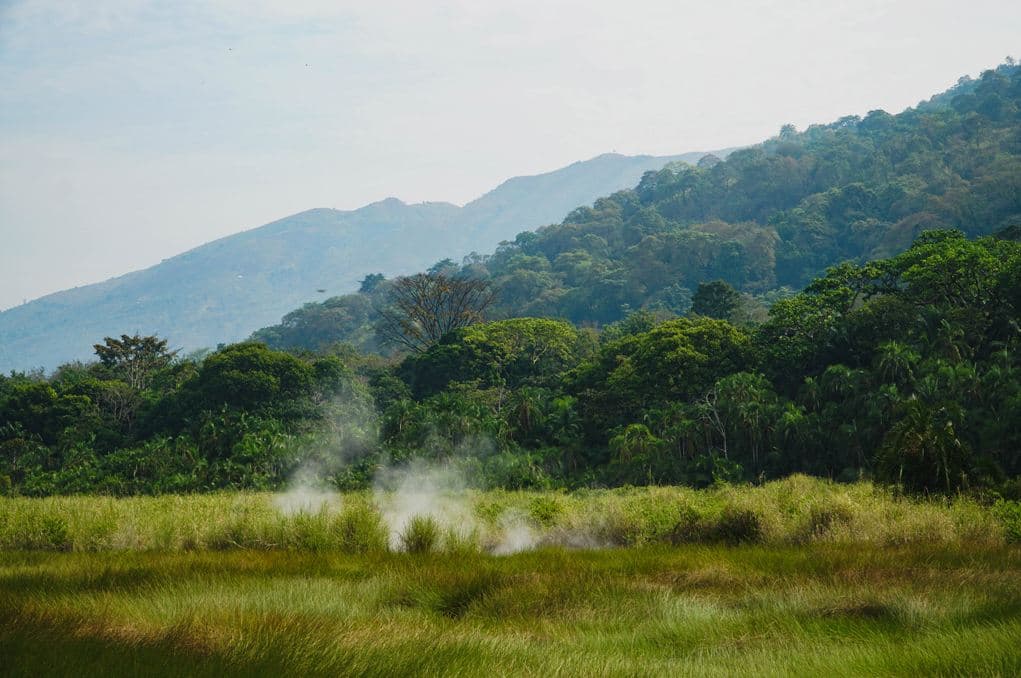
The dark woods are broken by open patches of papyrus swamps, the amazing scenery of the Sempaya Hot Springs, and the dramatic views of the Rwenzori Mountains, a World Heritage Site with the third point in Africa (after Mount Kilimanjaro and Mount Kenya).
The Wetlands of Semuliki National Park
Semuliki Wildlife Reserve
In contrast to verdant rainforest jungle of Semuliki National Park, most of Semliki Wildlife Reserve (formerly Toro-Semliki Wildlife Reserve) is a mosaic of dry savannah grassland. The reserve also features small patches of forest, riparian woodland and Borassus palms.
Herds of buffaloes, elephant, and antelopes gather in the plains beneath the looming peaks of the Blue Mountains in the neighbouring Democratic Republic of Congo to the west and the dramatic slopes of the Great Rift Valley escarpment to the east.
Although Semuliki National Park and Semliki Wildlife Reserve are home to some of the more iconic mammal species on the safari checklist, the Semliki Valley is best known for offering remarkable birding tours in Uganda.
Uganda is the prime birding destination in Africa with over 1090 species, and many of the country’s most exciting species can be found in the west, where forests meet savannah.
Over 435 species of Uganda birds have been recorded in Semuliki National Park alone. 216 of these are true forest birds.
Semuliki also provides a habitat for 131 of the 144 Guinea –Congo forest Biome bird species, including nearly 50 species that cannot be found anywhere else in East Africa!
The Congo serpent eagles haunt the dark understories of the Forest, while the lyre-tailed honeyguide attracts many birds lovers here every year.
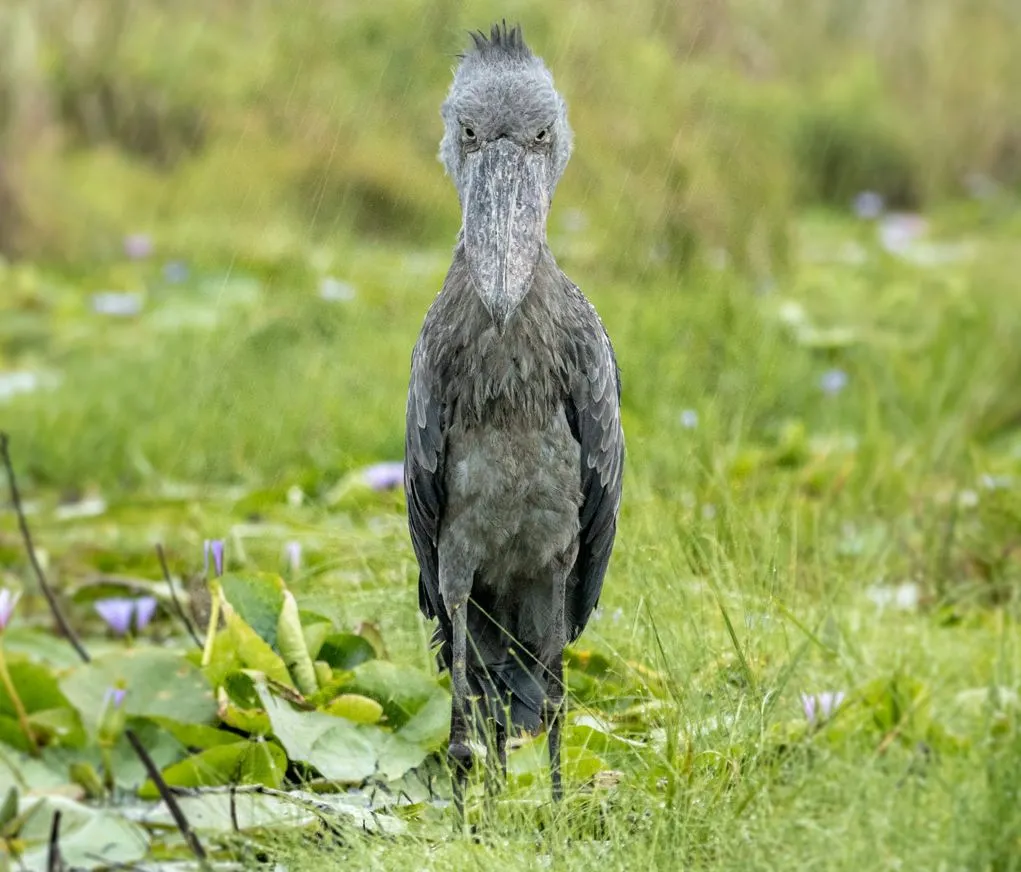
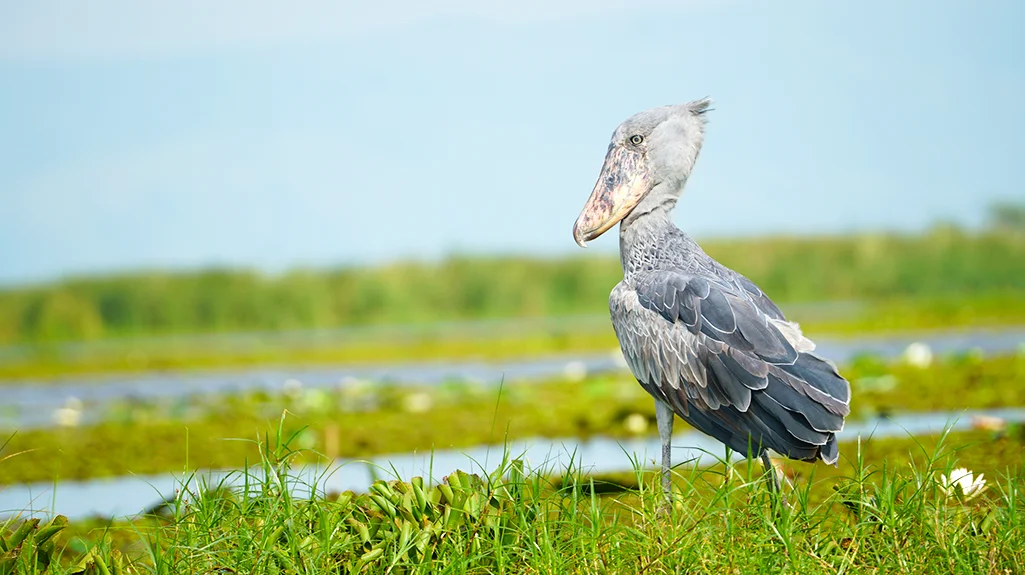
An assortment of hornbills, including the red-billed, white-crested, white-thighed, black-wattled, black dwarf, black-and -white casqued, and the piping hornbills are generally more conspicuous, and the Nkulengu rail is an invariable highlight, as are the shoebills of nearby Lake Albert.
Red-throated bee-eater, spot-breasted ibis, Oberländer’s ground thrush, piapiac, blue swallow, snowy-headed and blue-shouldered robin-chats, red-rumped tinkerbird, White-bellied Robin-chat, yellow-throated nicators, Equatorial Akalat, African piculet, Bate’s nightjar — the “specials” bird list of the Semliki Valley is enough to have birdlovers itching to reach for their binoculars.
Animals In Semuliki
Beside the amazing birdlife, Semuliki’s mammal life is also fascinating.
Forest rarities like the red-legged, sun fire-footed rope, Beecroft’s and Pygmy Scaly-tailed flying squirrels share their arboreal space with Mona Monkeys, Olive baboon, Vervet monkey, grey-cheeked mangabeys, mantled guerezas, red colobuses, red-tailed monkeys and De Brazza’s monkeys.
elusive water chevrotain (also known as the Fanged deer) and African Civet lurks in the undergrowth along with a host of duiker species, including the Bay duiker.
Encounters with the larger residents like African buffalo and African elephant (including both forest and savannah varieties) are intermittent, and Lions are more commonly heard than seen.
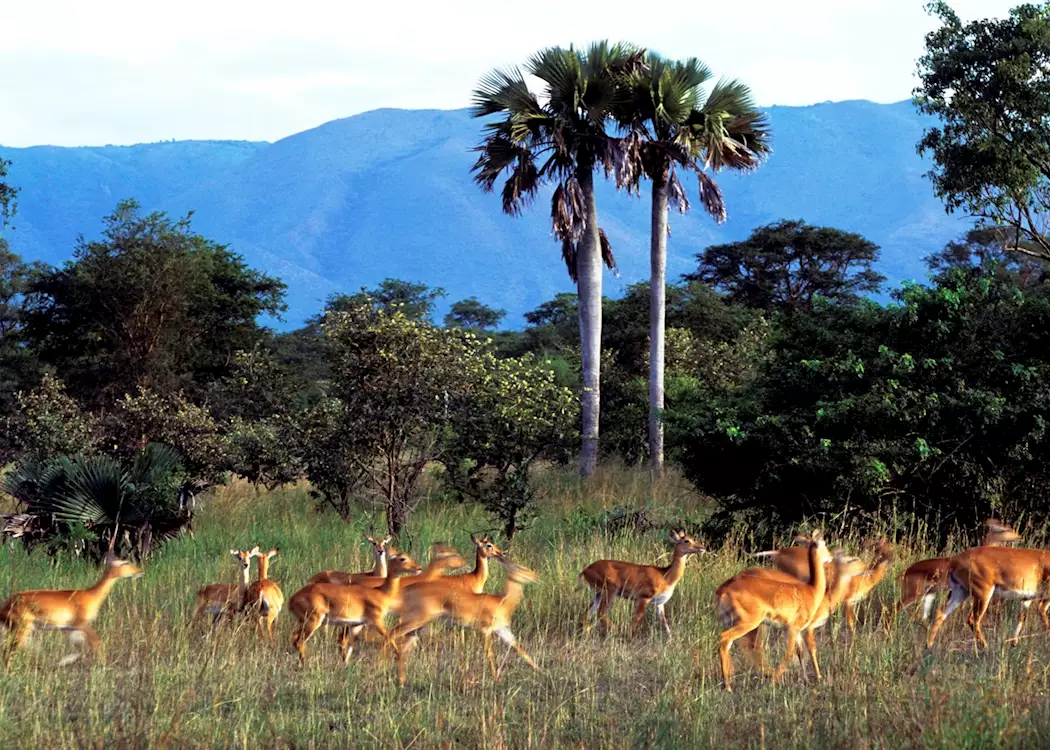
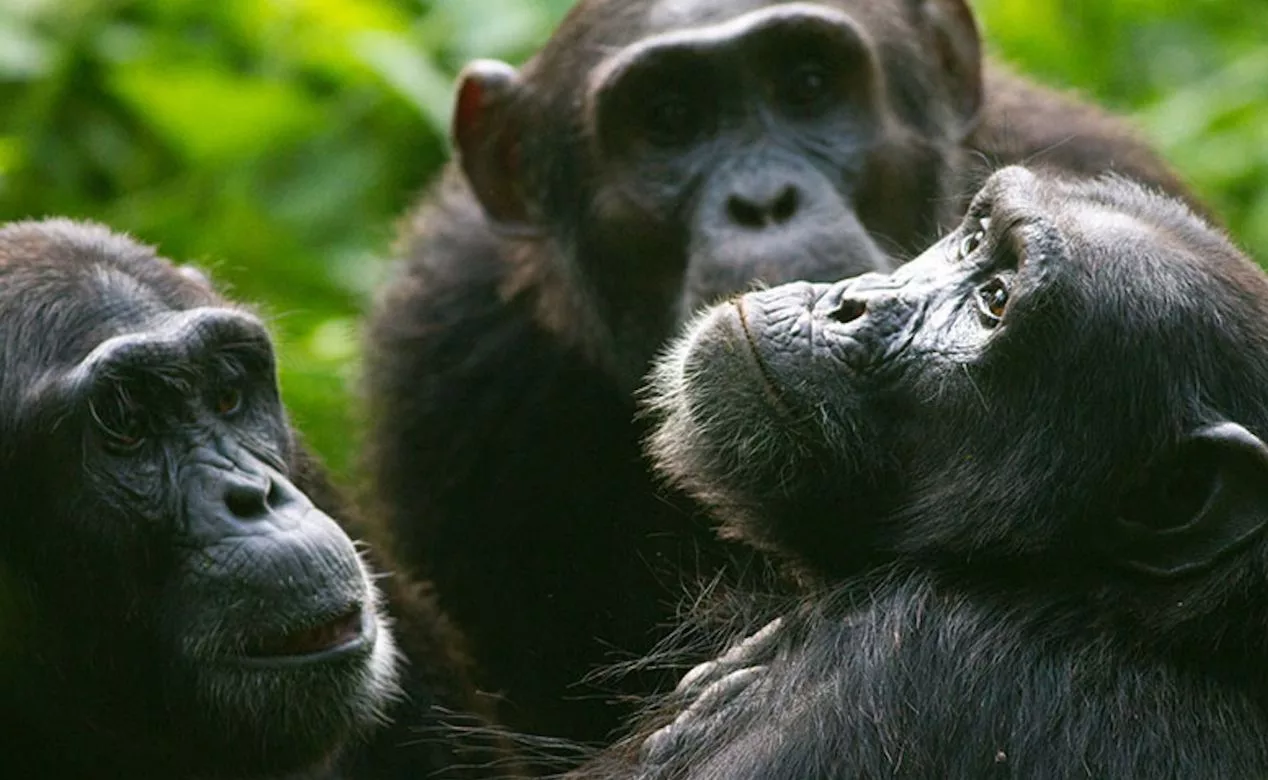
However, large herds of Ugandan kob (Uganda national animal) are common in Semliki Wildlife Reserve. Both protected areas are home to populations of chimpanzees.
And while they are less habituated than those of nearby Kibale Forest, chimpanzee treks are among the activities on offer.
The chimpanzees in the reserve are of particular interest to the scientists of Indiana University’s Semliki Chimpanzee Project, as they survive in an unusually arid habitat.
Semuliki National Park Hot Springs
Encircled by forest and beautiful palm trees, the Sempaya hot springs are situated not far inside Semuliki and are accessed via a short boardwalk that runs through the forest.
As the most popular attraction of the national park, the two hotsprings are a testament to the region’s rich geological history and hold a deep cultural significance to the local Bamaga people.
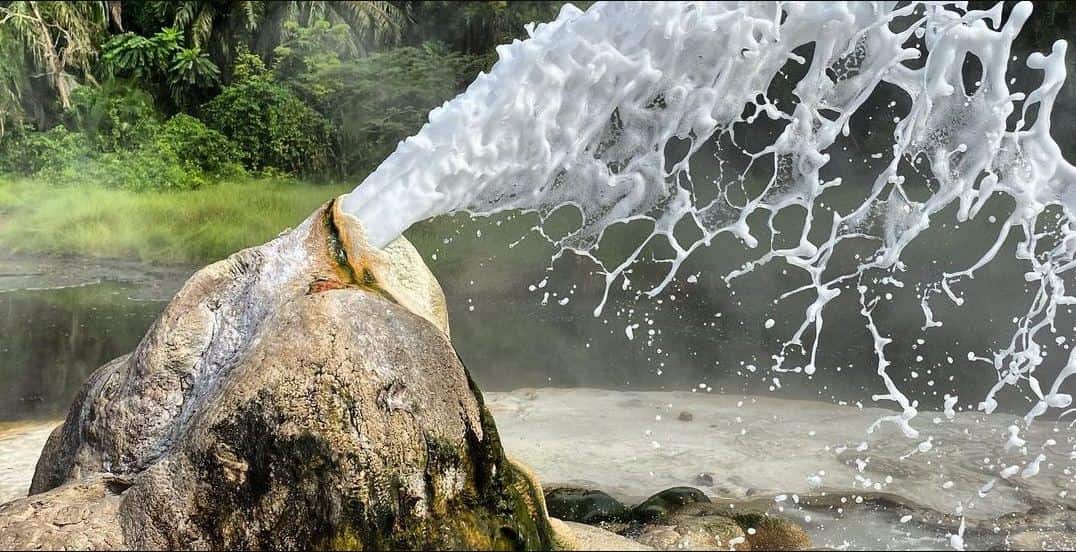
The “male hot spring” — called Bitende — is a calm pool some 12 metres in diameter, whiles the “female hot spring” — called Nyasimbi — is geyser that spouts up to 2 meters into the air from an opening in a low salt sculpture.
The emerging water has a temperature of over 100 °C and the surrounding pools are hot enough to boil eggs in 10 minutes. The Bamaga people believe their female ancestors live beneath Nyasimbi and their male ancestors beneath Bitende.
Annual rituals are carried out at the springs to appease these spirits. Alongside the springs, mineral-encrusted swamps attract forest-dwelling mammals searching for au natural dietary supplements.
What To Do In Semuliki National Park & Reserve
With its relatively low densities of large mammal species, Semuliki National Park and Semliki Wildlife Reserve are not the best choices for first-time safari-goers.
However, if you are a birder or you have a genuine capacity to appreciate Africa’s more unusual offerings, there are few destinations as delightfully unspoilt and jaw-droopingly scenery of Semuliki Valley. Furthermore, a few days spent in Semuliki National Park and Wildlife Reserve can easily be combined with:
Big Game viewing safari in Queen Elizabeth National Park, Lake Mburo National Park, or Murchison Falls National Park.
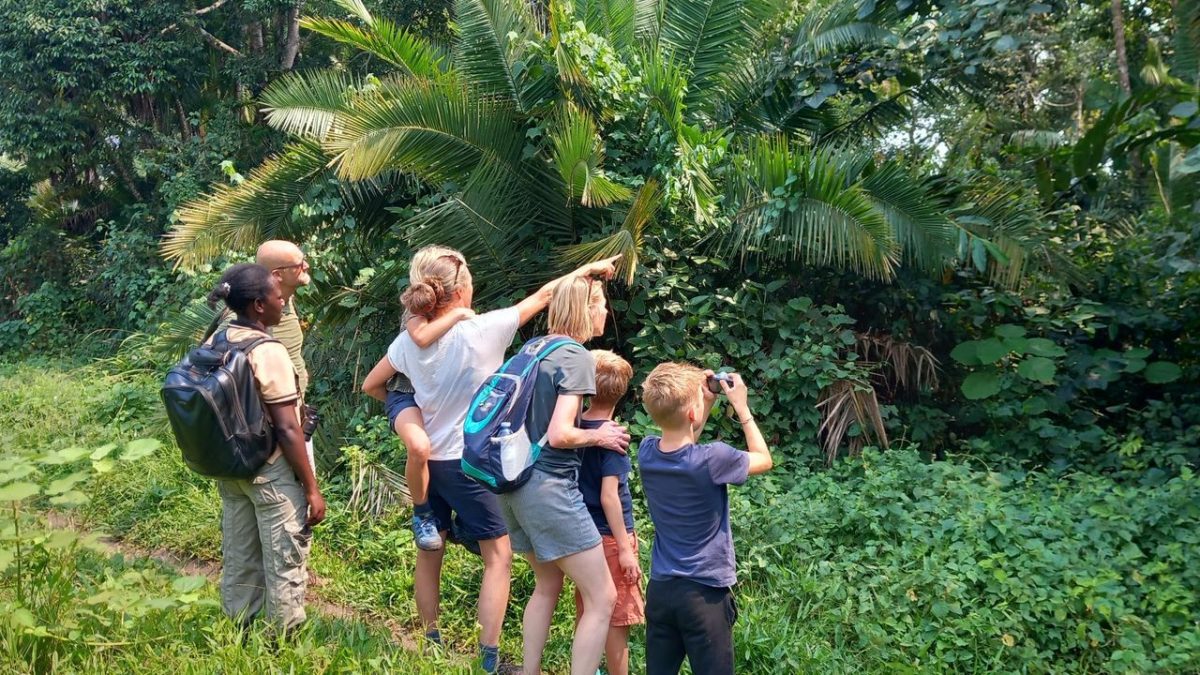
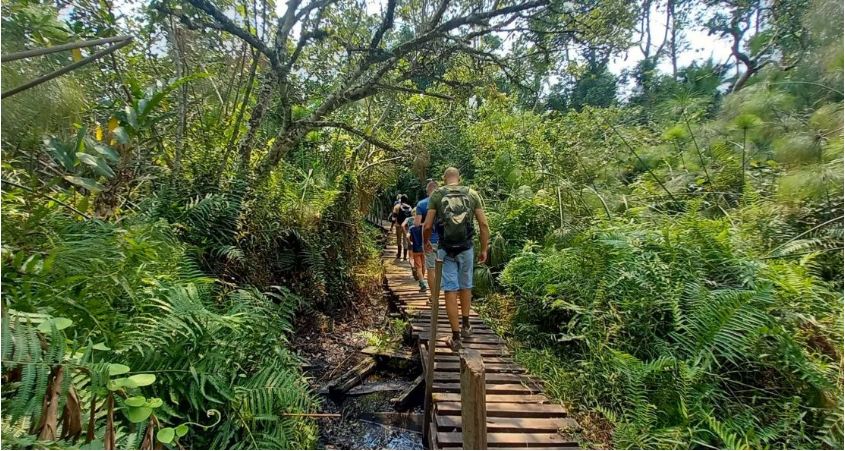
Much of Semuliki Valley exploration is done on foot, with both the national park and reserve offering guided trails of varying lengths and difficulty levels.
As such, a strong pair of comfortable hiking shoes is essential! This hike can be tailored to your interest (a birding or primate focus, for example) or simply to take in the stunning scenery of the surroundings.
Wildlife safari day game drives and night drives are offered in Semliki Reserve, along with boat cruises on the crystalline waters of Lake Albert, in search of the incredible shoebill stork.
Where To Stay In Semuliki Valley
You can visit Semuliki National Park even if you are staying in Uganda safari lodgesor tented camp (accommodation) in Fort Portal town – or even Kibale Forest National Park if you don’t mind the time on the road.
However, it is best enjoyed by spending a few nights at the wonderful Semuliki Safari Lodge, a luxury lodge which is located in Semuliki Wildlife Reserve.
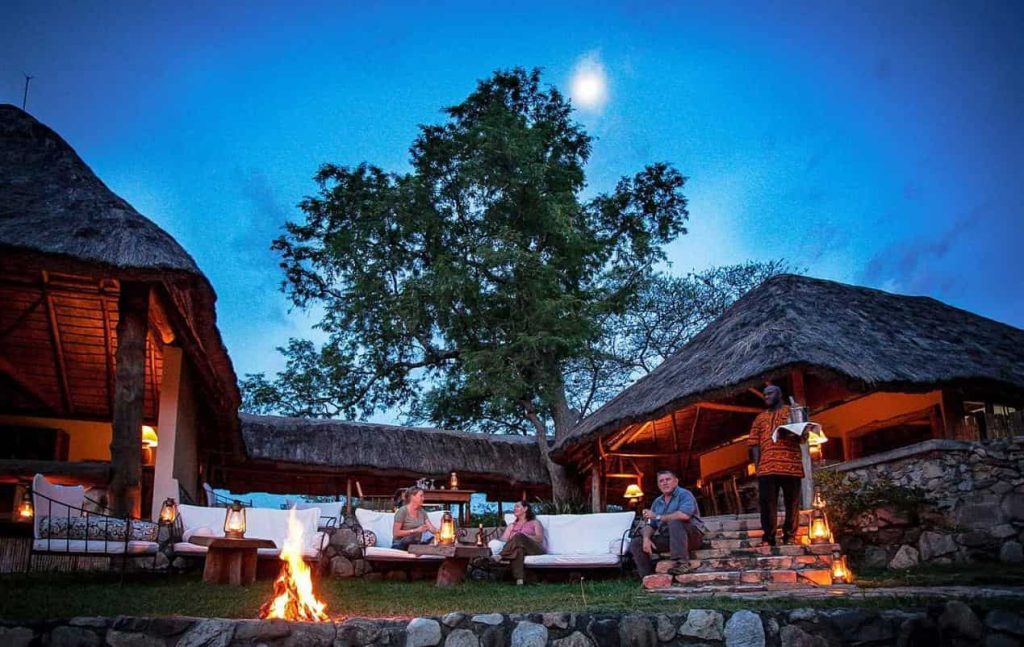
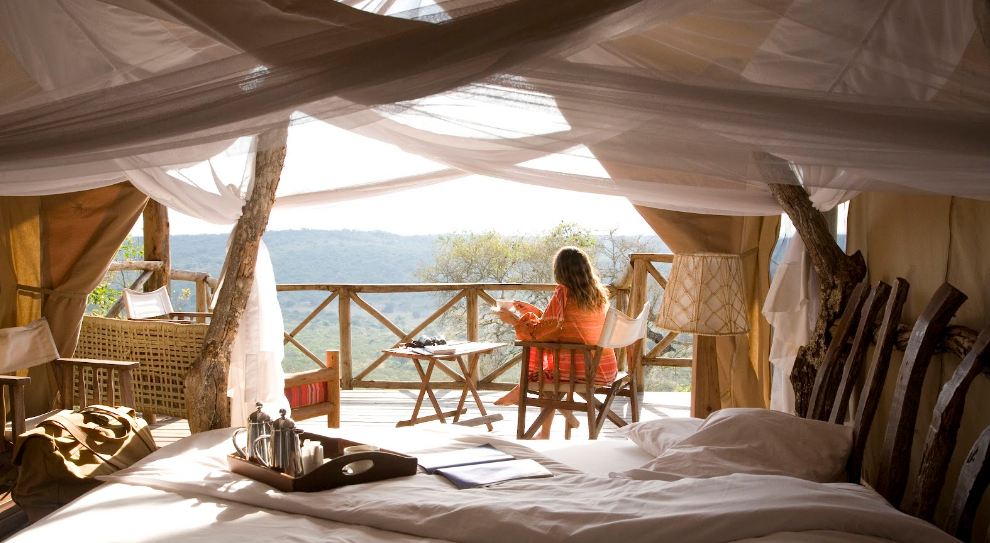
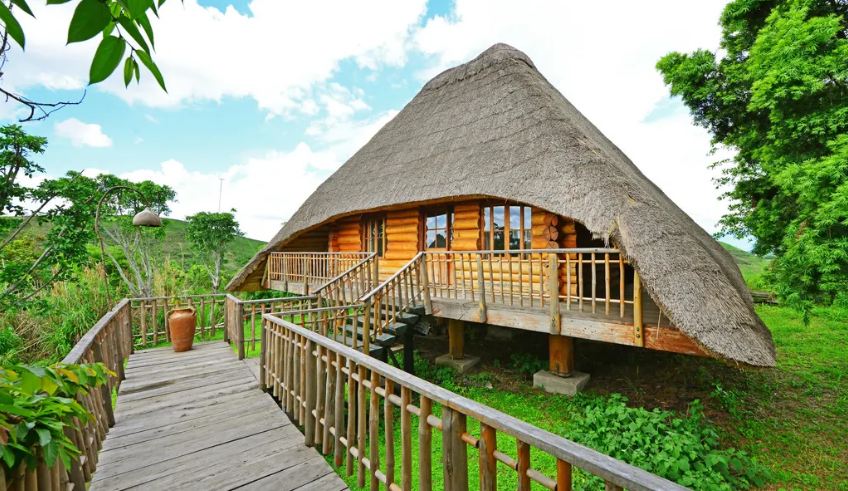
The lodge offers a unique lodging experience in African designed thatch cottages. It evokes the spirit of the old explorers and piques the curiosity of arriving visitors.
The location is as remote as it is unique: in the middle of nature with quite some wildlife around it. Semuliki Safari lodge has a maximum capacity of 18 guests, leaving guests with an unforgettable experience of life in the true wilderness.
Semuliki National Park Weather
Semuliki experiences an average rainfall of 1,250 mm, with peaks from March to May and from September to December. During the rainy season, many areas of the park experience flooding. The temperature at the Semuliki National Park ranges from 18 to 30oC – 64 to 86oF, with relatively small daily variations.
How To Get To Semuliki?
By Car: You access Semuliki via Kampala – Mubende – Fort Portal road which is about 355kms (5-6 hours) drive. Once in Fort Portal town, Sempaya gate is 52kms two 2 hour drive through a winding marram road through the lower ranges of Rwenzori Mountains. Please note that a 4WD safari vehicle is recommended for the entire journey.
By Plane: Flights can be chartered from Entebbe International Airport or Kajjansi Airfield in Kampala city. It can take about 40 minutes to reach and land at an airstrip in Toro Semliki Wildlife Reserve from Entebbe or Kajjansi.
6 Unforgettable Safari Itineraries for Wildlife Lovers
Are you a serious bird watcher, wildlife watcher, nature lover or just want to unwind in a serene natural environment – Lake Mburo National Park awaits you.
With a total size of around 260 square kilometers, Lake Mburo is Uganda’s smallest game park, yet it is nonetheless home to a variety of natural wonders.
There is something for everyone, from savanna to lakes, from zebras to leopards, from game walks to game drives. Lake Mburo National Park is also conveniently positioned and accessible from various places around the country.
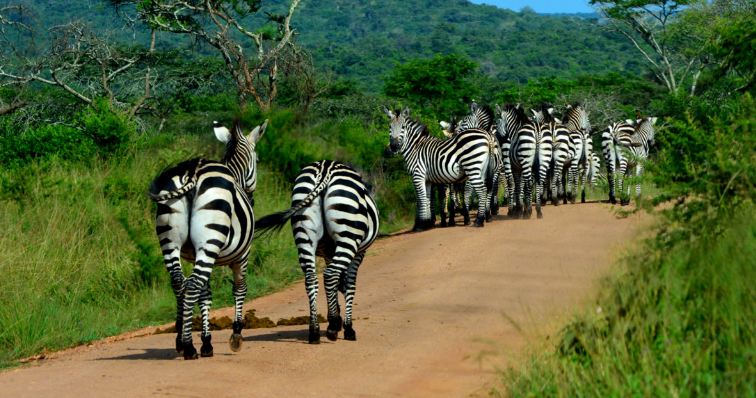
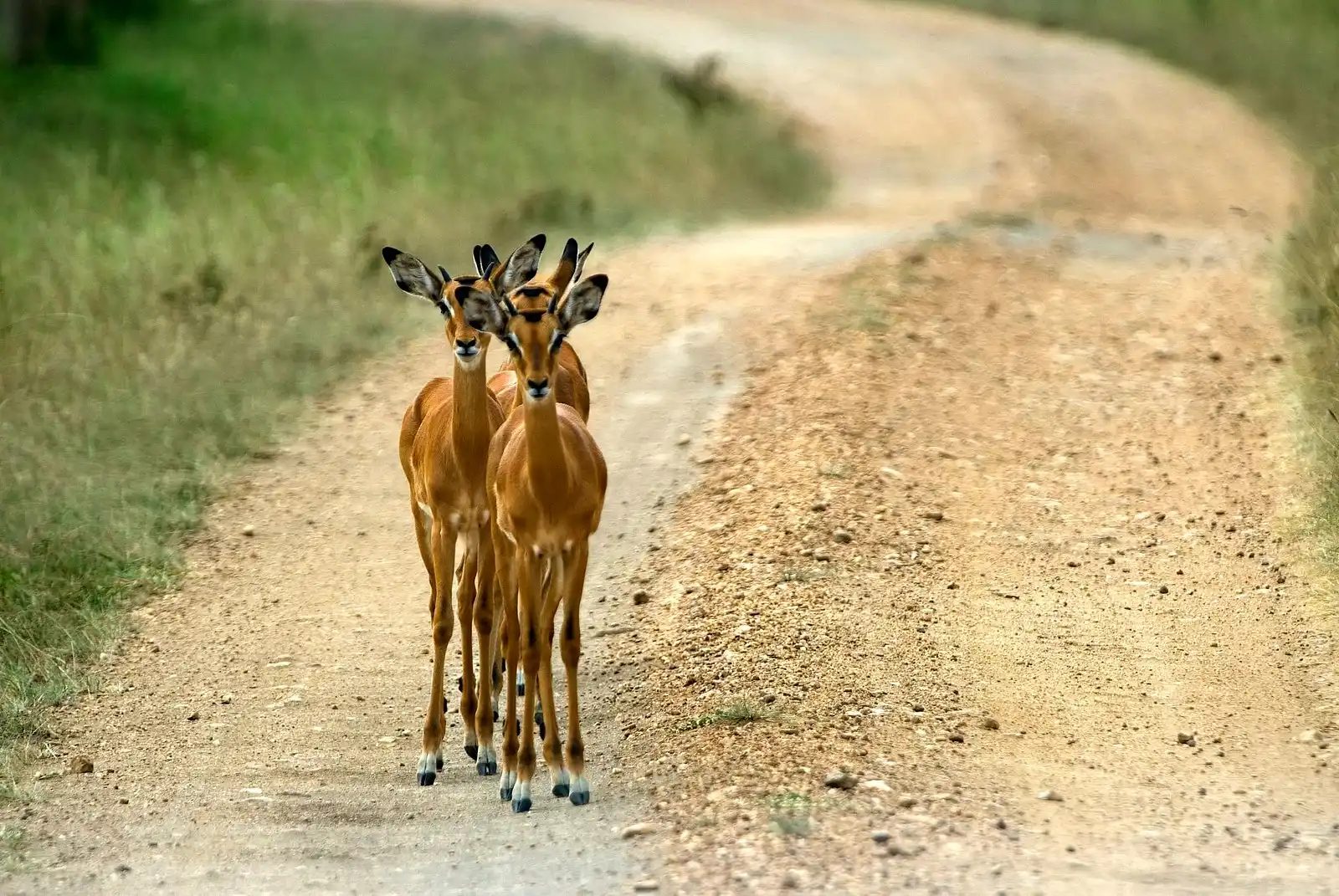
Lake Mburo National Park is located a 3 hours’ drive from the capital, Kampala. The park can be reached within 6 hours from the gorilla trekking forests of the southwest. It is often a relaxing end to a Uganda safari. Lake Mburo National Park has unique wildlife. This is the only protected area in western Uganda with Impalas, zebra, giraffes, and elands.
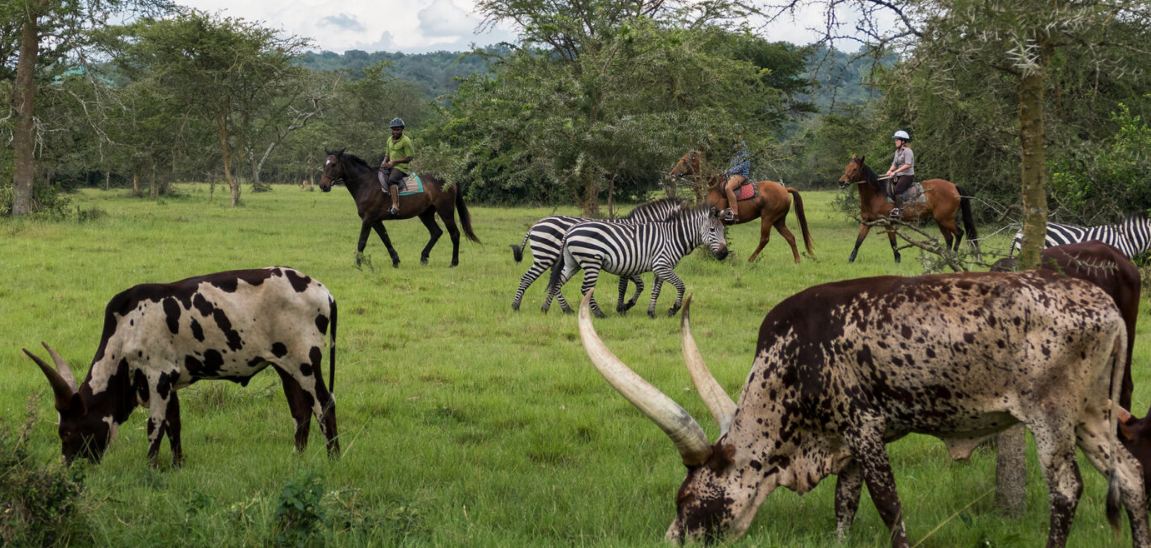
What makes Lake Mburo so unique is that this is the only park in Uganda where you can do a walking safari, or you could also do a horse riding safari.
What you should definitely not miss is the boat cruise on Lake Mburo. The slogan of Lake Mburo National Park is “Whispers of the Wild”. Indeed the soughing of wind in the grasses and trees brings peace to the city-worn soul. If you live in Kampala, then Lake Mburo is also a great place for a short break trip or a weekend getaway.
Safaris To Lake Mburo National Park
If you want to visit Lake Mburo National Park, look no further. Our Lake Mburo National Park safari tours range from short wildlife safaris that include only Lake Mburo National Park to multi destination itineraries that include other savannah game parks and the gorilla parks.
Many of our suggested itineraries also take in chimpanzee tracking in Kibale Forest National Park. Click here to see all our pre-packaged Uganda wildlife safaris or simply contact us for a tailor-made itinerary.
The reason Lake Mburo National Park has remained a sanctuary of wilderness is explained by its history. It was well-known for the culture of pastoralists who roamed its savannah plains and hills as the “Karo Kurungi” (“beautiful land”) before it was designated as a protected area.
The Banyankole Bahima people’s culture has contributed to the preservation of Mburo’s natural beauty.
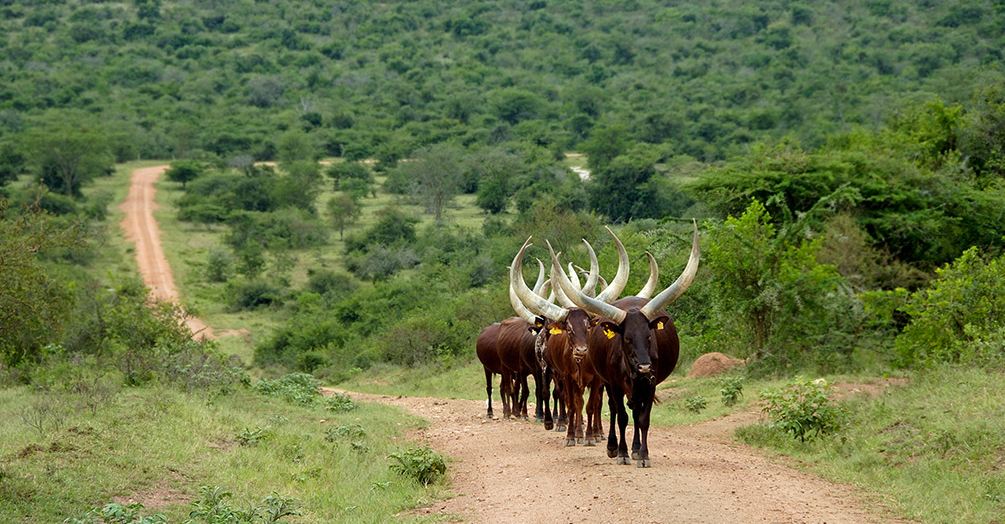
This is partly because the Bahima People believed that the beauty of their long-horned Ankole cattle depended on preserving the pastoral beauty of Karo Kurungi – their ancestral land.
The graceful long-horned Ankole cattle are suited to survive on little water and sparse foliage and offer meat and very rich milk.
The Bahima people also believed that because they were tasked with taking care of the Ankole, the prosperity of their cattle hinged on the land remaining beautiful, which meant it had to remain unfenced, unfarmed, and uncropped.
This prohibited other Banyankole groups (the Bahinda and Bairu farming class) from turning Karo Karungi into a productive landscape of farms and fences
As rangeland grazing in the savannah biome is dictated by the unpredictable vagaries of rains and sun, pastoralists had to meander far and wide with their cattle. Unrestricted by fences, this intermittent grazing helped the grasslands to rest and recover after grazing.
The cattle grazing also prevented the open grasslands from bush encroachment (when acacia tree thickets started to dominate the plains).
In essence, the pastoral nature of the Bahima kept the savannah of today’s Lake Mburo National Park intact. All of this, however, went awry in 1983 when the national park was gazetted by the Obote regime, and the locals were forcibly removed from their land with little consultation and no compensation for the lost grazing land.
The decision to declare the area a national park was in one part targeted to punish the Banyankole who were believed to be supporting the anti-Obote rebels. In a sense, the Bahima’s connection to their pastoralist identity and “Beautiful Land” was suddenly detached.
When the Obote II regime collapsed in 1985, the former occupants re-claimed their land and chaos ensued; they expelled the park’s staff, destroyed the infrastructure and annihilated wildlife. However, the story does not end there.
After hearing about the Ankole cattle of the Bahima and how the area was intrinsically linked to their culture, the NRM government reopened the park and degazetted a portion of the territory in 1986.
Now, Lake Mburo National Park is unfenced and managed to include the values of the Banyankole People and their culture as well as the protection of wildlife.
As a result, visitors on Uganda safaris here will sometimes see these cattle, stippled with patterns that look like the dapplings of light through the trees, grazing alongside zebra in the park. The park and the people have started a new journey together, which is why Lake Mburo National Park is so special.
It is one of the few places left that reflects Africa’s fenceless, wild, untamed rangelands. It is an oasis amongst the surrounding landscape’s dairy farms and subsistence croplands.
Geography and Geology of Mburo
Uganda’s smallest game park is located in the southern Ankole region – close to the town of Mbarara. The park is situated halfway between Bwindi Impenetrable National Park and Entebbe/Kampala.
Apart from the savannah element, the 260km2 park is a treasure trove of other habitats, including hills and shrublands, grasslands, seasonal and permanent swamps, rocky outcrops and thickets. With each habitat comes its cast of inhabitants, from otters to birds.
Lake Mburo National Park is also located in the ‘rain shadow’ between Lake Victoria and the Rwenzori Mountains. The game park has a relatively low annual rainfall of 800mm, similar to Kidepo National Park.
Despite this, 20% (50 square kilometers) of the park is made up of wetland habitats, most notably 5 lakes, the largest of which being the 13km² Lake Mburo. The underlying Pre-Cambrian bedrock dates back over 500 million years and supports sandy, well-drained, soils.
Animals in Lake Mburo National Park
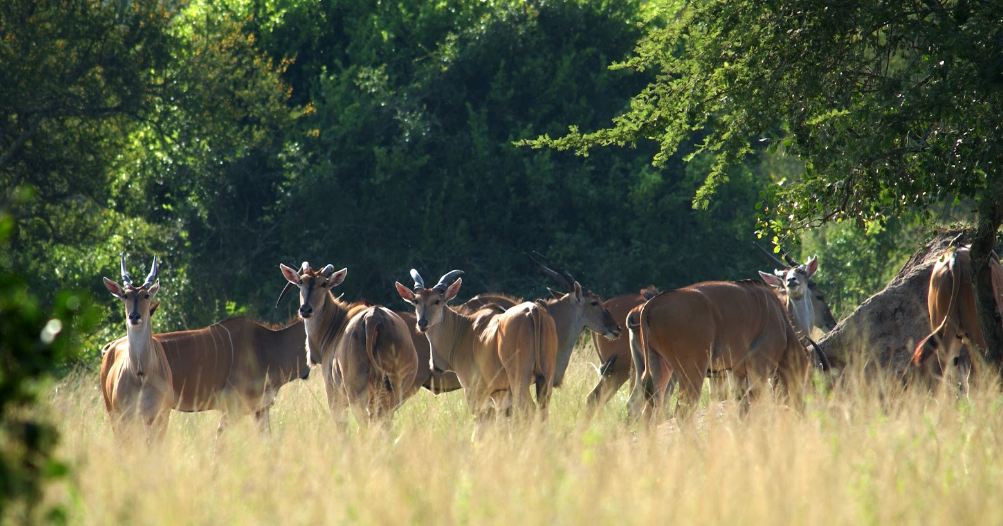
Over 68 species of mammals live in Lake Mburo National Park. The park is the only one in Uganda wildlife safari with impalas, klipspringers and the gigantic Eland antelopes.
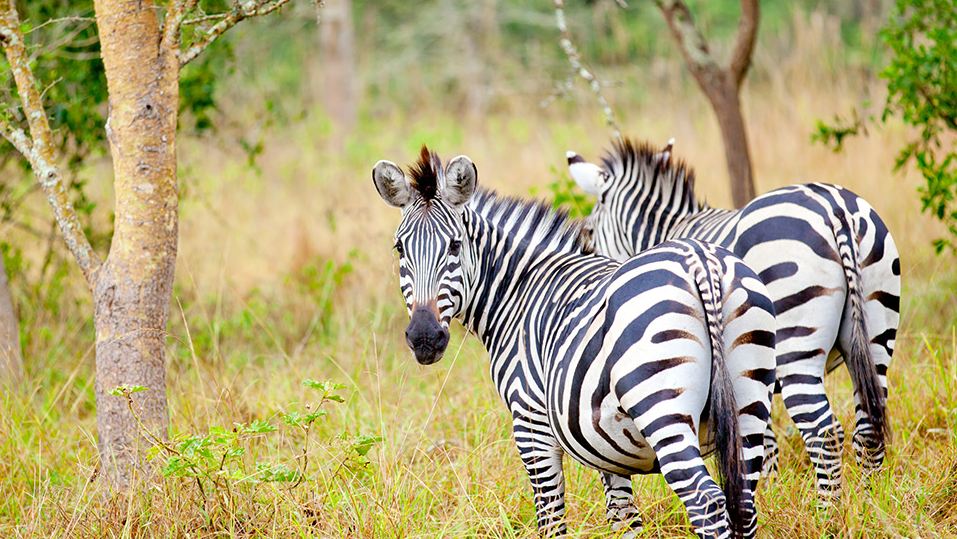
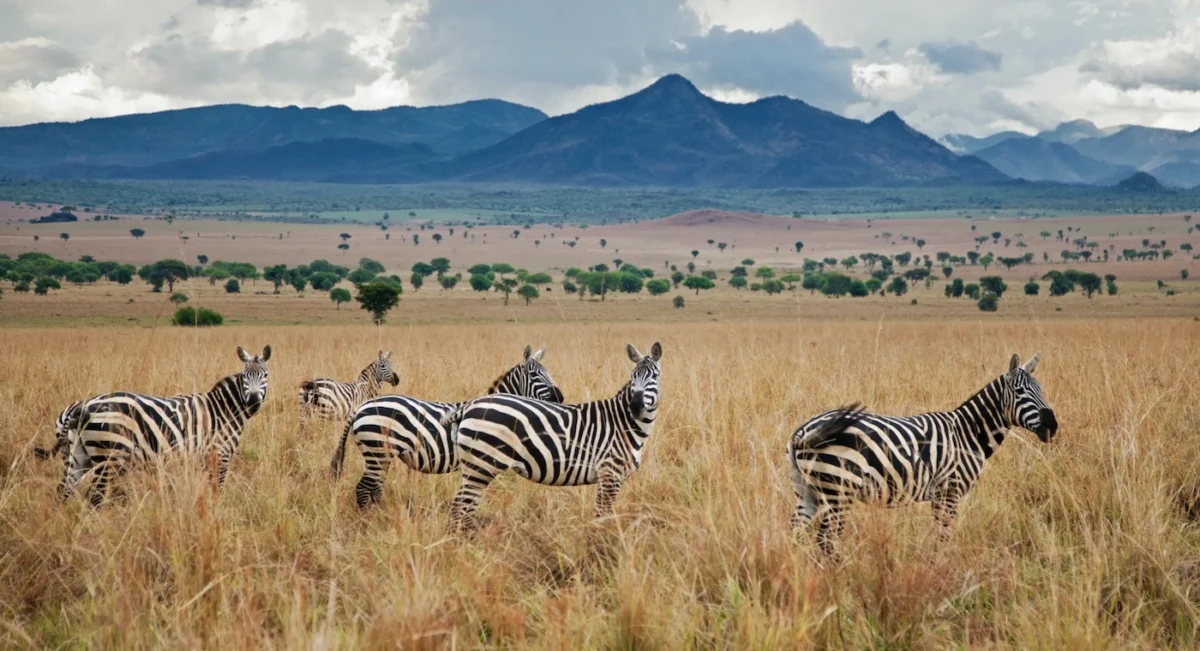
The beautiful Plains Zebras which are found in only one other Uganda park (remote Kidepo Valley National Park) live here in large number, estimated at 5,000 large. Lake Mburo also possibly contains the highest concentration of leopards found anywhere in Uganda.
The mighty African Buffaloes are also easy to see in the open savanna and near water sources. The lakes support about 300 hippos and a heap of Nile crocodiles. Three other species frolic in the lakes’ waters: Congo clawless, Cape clawless, and the spotted-neck otter.
A group of Rothschild’s Giraffes was brought into the park in 2015 thus improving on the diversity of wildlife in the park.
The park is also home to Vervet monkey, Olive baboon, Bush baby, Genet and many types of mongoose. Other animals that inhabit the park include Defassa waterbuck, bushbuck, warthog, topi, oribi, Bohor reedbuck, Statunga, spotted hyena, genet, and bush pig.
Birds in Lake Mburo National Park
Uganda is possibly the best birding watching destination in Africa and Lake Mburo National Park’ is one of the top places for birding tours in Uganda.
There is over 300 bird species recorded in the park, many of which are associated with the acacia and water habitats in the park.
Lake Mburo has given many a birders their first exciting glimpse of the elusive African Finfoot with its bright red, big feet or the sighting of the Brown-chested lapwing that arrives in November to hang out on the zebra trails.
The park’s woodlands support the near-threatened Red-faced barbet.
There is also an opportunity to watch the pre-historic looking shoebill stork, standing still at the water’s edge. Lake Mburo National Park has some of Uganda’s highest concentration of raptors (35 species), including the African Fish Eagle, Lappet-faced Vulture, Brown Snake Eagle, Bateleur, and African harrier hawk.
Other bird species with names that roll off the tongue include the:
Green-winged pytilia
Papyrus yellow warbler
African paradise flycatcher
Black-headed Gonolek
Rufus-bellied heron
Ross’s Turaco
Narina trogon
Lilac-breasted Roller
Green Wood Hoopoe
Common Scimitarbill
Coqui Francolin
White-backed heron
Activities in Lake Mburo National Park
Lake Mburo National Park may be Uganda’s smallest game park, but it offers an array of guided activities – enough to whet the tastebuds of any explorer. See an overview below:
1. Walking Safari
Put on your comfortable walking shoes, backpack and bring plenty of water!
During the walking safari in Lake Mburo National Park, you will walk in search of wild animals in the park under the guidance of an experienced ranger. Giraffes, Zebras, buffalos, hyenas and beautiful antelope species come to greet you up close. This is a unique experience that is only possible at a limited number of locations in Uganda.
2. Cycling Tours
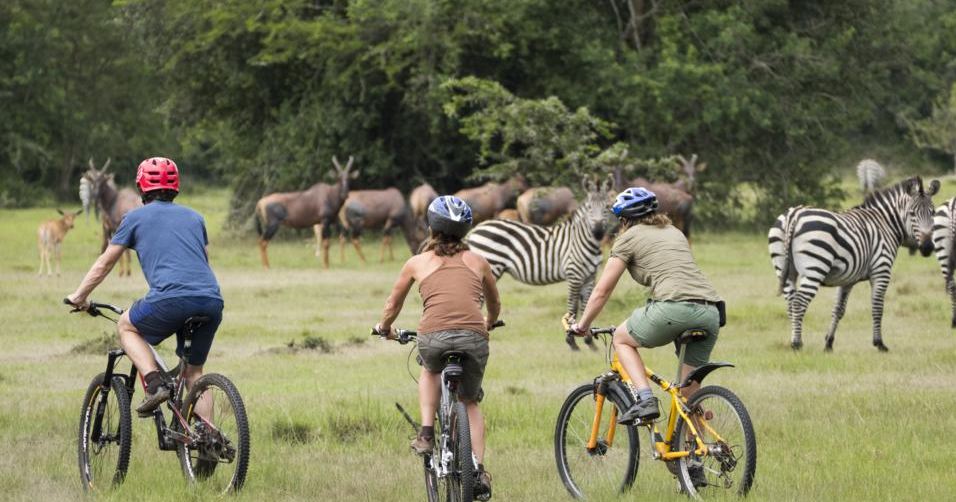
Cycling tours in Lake Mburo National Park offers a unique opportunity to move amongst the wild animals and enjoying the consistently beautiful view.
It is perfect for the sporty traveler! The cycling tour is a challenging due to the height differences in Lake Mburo National Park.
Do you have doubts about your physical condition in combination with this excursion? The travel specialists will be happy to offer you with further information in a personal conversation.
3. Horseback Safari
The horseback safari is a thrilling adventure for both beginners and advanced riders.
There is no better way to get close to beautiful wildlife of Lake Mburo National Park than with another animal, which is why you can get really close to the animals during the horse riding safari. Please note that for this excursion a maximum weight of 90 kilogram – applies per person. The excursion can only be booked in advance or on site through your guide.
4. Day Game Drive
There are several beautiful drives to tour in the park either heading out yourself with a map, with a guide. Research Track is one of our favorite drives where you are likely to see buffalo wallowing in the mud, Zebra, Impala, Topi, Bush buck, Reed buck, Oribi and Warthog.
For spectacular views, park at the bottom of Kazuma look-out and walk up to the top; from here the view is stunning and you can see 5 lakes including Lake Mburo. For some 4 x 4 driving during the rainy season Eland track is the most challenging.
5. Night Game Drive
The night safari in Lake Mburo National Park starts when it starts to get dark, before your dinner starts. A professional ranger, who lives in the park, will accompany you.
He or she will look for night-dwelling creatures with a large lamp. Of course, help during spotting is always welcome.
A night safari is special because of the chance to see animals that are not or hardly active during the day, such as leopards, genets, bush babies, spotted hyenas and porcupines.
6. Boat Cruise On Lake Mburo
Lake Mburo National Park also take to the water in Lake Mburo on a 2-hour boat cruise, which allows the chance to watch hippos and crocodiles, hear the iconic call of the African fish eagle and seek out exciting wetland birds. Private cruises can also be organized.
7. Bird Watching
Birding in Lake Mburo National Park can be done on game drive, boat cruise or nature walk.
8. Cultural Visits
You can take a walk or a bike ride over to a traditional Bahima Banyankole homestead to learn about their cultural traditions and their way of life.
Activities include learning about the Ankole long- horned cattle with a chance to try your hand at milking, understand the ghee making process, taste milk and much more.
This adventure includes a nature walk or bike ride across grazing land, where wildlife and livestock mingle together, to the homestead and back again. Alternatively you can ride a mountain bike to a nearby fishing village and see how the people live.
Where To Stay in Lake Mburo National Park
Keen on touring Lake Mburo National Park for your next safari? The park offers a variety of accommodation options available inside and outside the national park boundaries, from budget, mid-range to luxury options. The best places to stay include:
Lake Mburo NP’s annual rainfall and temperatures average 800 mm and 28°C, respectively. The park is open year round. But the best times to visit Lake Mburo National Park are during its two dry seasons of:
December to February
June to August.
2. How much is Lake Mburo National Park entrance fee?
Foreign Non-Resident (Adult): US Dollars 40
Foreign Non-Resident (Children): US Dollars 20
Foreign Resident (Adult): US Dollars 30
Foreign Resident (Children): US Dollars 10
East African Citizen (Adult): UGX 20,000
East African Citizen (Children): UGX 5,000
Ugandan Pupils and/ or Students (Groups): UGX 3000
Tertiary Institutions/ Universities: UGX 5000
3. How To Get To Lake Mburo National Park?
Lake Mburo can easily be accessed via a 3-hour drive from Kampala, though there are also chartered flights available from Entebbe International Airport to the airstrip in Mbarara, a 90-minute drive from the park.
4. How many lions are in Lake Mburo National Park?
There is no lions in Lake Mburo National Park. There is also no elpehanats in the park and that is why is a perfect place for walking safaris. Lions in Uganda can be encountered in Queen Elizabeth National Park, Kidepo Valley National Park and Murchison Falls National Park.
Ready To Start Planning Your Lake Mburo National Park Safari
We hope you have found all information needed to decide that the Lake Mburo National Park in Uganda is the perfect place for your next safari adventure. Still have questions? Or maybe you would like some more specific information about the different lodges? Please contact us and we will get back to you soon!
4 Breathtaking Attractions in Uganda’s Most Stunning Wilderness
Kidepo National Park has been ranked by CNN travel in the recent past as one of the 8 best Africa safaris destinations. Unfortunately, regardless of its high rating, Kidepo is still one of the least visited Uganda safaris parks.
This is partly because of its isolated location in the far northeastern corner of Uganda in the Karamoja region. Kidepo National Park is one hard to reach park. But the 10 to 12 hour road trip from Uganda’s Capital, Kampala or a fairly expensive private charter flight is a small price to pay to discover one of Africa’s genuine hidden gems. It’s the third largest national park spanning an area of 1,442km2 divided into sections of Narus Valley and the Kidepo Valley.
This pristine wilderness is where you’ll enjoy game drives and guided walks, taking you to amazing big cat sightings – cheetah, lion and leopard – and massive herds of buffalo. For the twitchers, bird life is abundant within this Uganda wildlife safaris park. It’s also possible to take a cultural tour to a traditional Karamajongo homestead (Manyatta) or a challenging hike up into the Mount Morungole to meet the Ik people, one of the most marginal communities on Earth.
Attractions In Kidepo National Park
1. Landscape & Scenery
CNN calls Kidepo “possibly the most beautiful park in all of Africa”. In 2018, CNN wrote “With the sweeping plains of Kidepo and Narus Valleys overshadowed by the brooding mountainscape of Mt Morungole (the sacred peak of the mysterious Ik people,) this park has huge appeal just for scenery alone”.
Kidepo’s vegetation is high-catching savanna grassland that spread into horizons beyond the eye can see. The vast savanna grassland and its mountain backdrop indeed paint stunning scenery and if there wasn’t a single animal living in Kidepo it would still be a wonderful place to visit. But, that is not a concern because the populations of animals in this Uganda safari tours destination are high and the sightings are easy.
2. Animals In Kidepo Valley National Park
Kidepo Valley National Park is home to about 77 species of mammals,including:
The Big Five
Kidepo has four of the Big 5 animals (Lion, Leopard, Buffalo, and Elephant), which makes it a great destination for wildlife safaris in Uganda. Kidepo Park is home to around 1000 elephants and it’s one of the best parks in Africa for great herds of African buffalo. It hosts an estimated population of around 15,000 buffaloes and herds of up to 1,000 buffalos are often encountered.
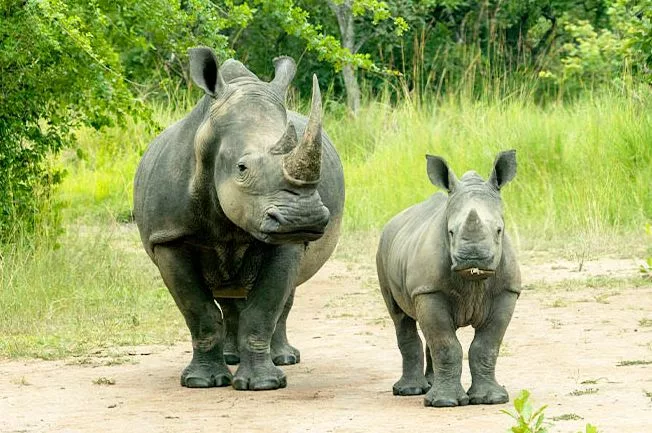
Visit on a Kidepo National Park road trip often make an en route stop at Ziwa Rhino Sanctuary in Nakasongola District. Here, they track the wild white rhinos on foot. This offers them a great opportunity to see all the Big Five animals of Africa.
Unique Animals
Many animals in Kidepo cannot be found anywhere else in Uganda; these Cheetahs, Ostriches, Bat-eared foxes, Black-backed jackals, Serval, Caracal, Mountain reedbuck, Greater Kudu, and Lesser kudu.
Primates
The park also have some species of primates including Patas monkey, Olive Baboon, Vervet monkey, Red-tailed monkey and Black and white colobus.
More Animals
Other animals in Kidepo include Side-striped jackal, Rothschild’s giraffe, Plains zebra, Common warthog, Jackson’s hartebeest, Bohor reedbuck, Oribi, Common eland, Klipspringer, Guenther’s dik-dik, Defassa waterbuck, Bush duiker, Bushbuck and Uganda kob. Kidepo also has unusually small crocodiles with maximum length of 2.5m compared to the Nile crocodiles which regularly exceed 4 metres. The small size is apparently a result of the limited food availability.
3. Birds In Kidepo Valley National Park
Birdlife in Kidepo National Park is remarkable too with 475 species of Uganda birds second to Queen Elizabeth National Park which has over 600 species.
If you planning a birding tour in Uganda Kidepo is the park to go to for arid associated species such as the Common Ostrich (the world’s largest non-flying bird) and Kori Bustard (the world’s largest flying bird) which are unique to this region. Kidepo is also outstanding for its birds of prey with 56 species so far recorded, including Verreaux’s Eagle, White-headed Vulture, Egyptian Vulture, Pygmy Falcon, Dark chanting goshawk, Tawny eagle, and Bateleur eagle.
Other birds that must be regarded as Kidepo specials include White-crested Turaco, Secretary bird, Fox kestrel, Greater kestrel, Abyssinian roller, Abyssinian Scimitarbill, Abyssinian Ground Hornbill, White-billed go-away bird, Northern carmine bee-eater, Red and yellow barbet, Black-breasted barbet, D’Arnaud’s barbet, Karamoja Apalis, Northern red-billed hornbill, Jackson’s hornbill, Rufous chatterer, Purple grenadier, Golden pipit, Chestnut weaver and Purple Heron.
4. People & Culture
The northeastern region of Kidepo Valley National Park is home to two tribes that have maintained their ancient living styles and continue to practice their traditions. It is a great place for cultural tours in Uganda.
The Karamajongo Tribe
The Karamajongo people, who are closely related to the Masai of Kenya and Tanzania, are Uganda’s most distinctive tribe known for their love for cattle.
These nomadic pastoralists take a lot of pride in their culture and customs, harbor foreign interference and with their traditional lifestyle, and view new trends in life, travel, education, technology, dress, fashion, housing, medicines, religion, and several others as unnecessary inconvenience.
The male members of the tribe spend their time looking for greener pastures and fresh water for their cows, while the women stay home in the Manyatta. A manyatta is a village made up of several huts, which in turn are surrounded by a fence made of branches and sharp thorns. These are put up to keep the cattle in and to protect them from thieving rival tribes and wild animals.
The Ik Tribe
Mount Morungole near Kidepo Valley National Park is home to one the smallest ethnic groups in Africa, of about 10,000 people, a tribe called the Ik. According to folklore, the Ik have wandered through much of East Africa, and came from Ethiopia hundreds of years ago.
Today the IK ranks among the most marginal communities on Earth, having been forced to turn to subsistence farming in response to outside factors such as their eviction from Kidepo National Park.
Kidepo Valley National Park Entrance Fee
Foreign non-residents (Adult) – US Dollars 40
Foreign residents (Adult) – US Dollars 30
Children foreign non-residents – US Dollars 20
Children foreign residents – US Dollars 10
East African Citizens (Adults) – Uganda Shillings 20,000
East African Citizens (Child) – Uganda Shillings 5,000
Activities In Kidepo Valley National Park
1. Game Drives – Narus Valley
Kidepo National Park game drives are typically done in Narus Valley since much of the year the park’s wildlife gathers here. Narus is well designed with game viewing tracks c and from a 4×4 safari vehicle; you will have clear views of herbivores grazing in the short savanna grassland.
Lions and other cats are often sighted on top of rocks and kopjes looking out for prey in the vast plains. The best time for the game drive is in the early morning when herbivores are grazing and the cats are on hunt! During the afternoon game drive you will find many animals around the water sources.
2. Game Drives – Kidepo Valley
Game drives can also be done in the Kidepo Valley where one can enjoy the sand bed river especially the dry seasons. The sand bed is like an oasis in a desert. The valley is lined with palms trees and has plenty of birds. It is advisable to visit the northern area in the morning as the afternoon is unbearably hot there.
Crossing the sand bed river another highlight is the Kanangorok Hot Springs where you enjoy the spectacular landscape and can also picnic near the springs which the local people believe have magic powers.
3. Night Game Drives In Kidepo
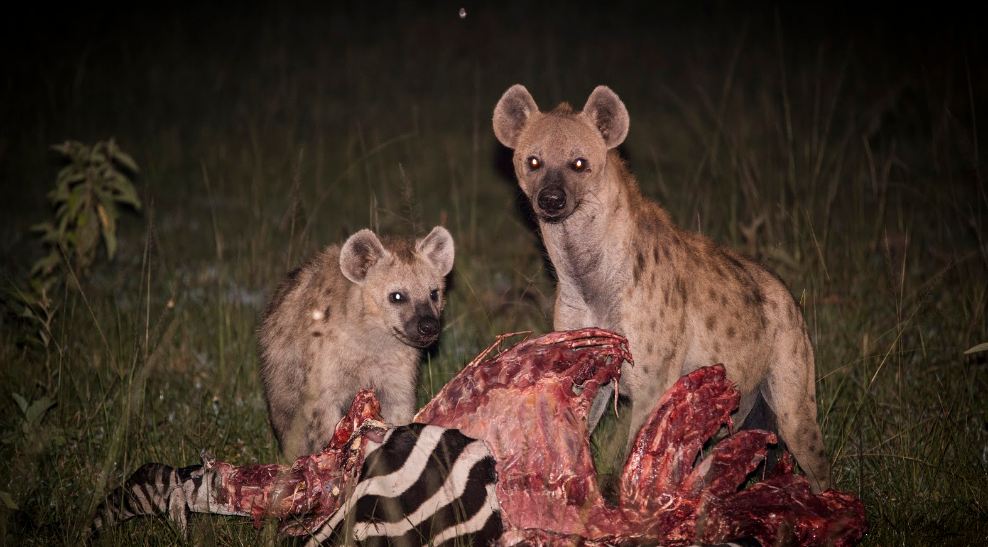
Night is the only game viewing time that clearly exposes you to the nocturnal animals of Kidepo like leopards, lions, jackals, hyenas, and others. You will have a chance to encounter lions or leopards feeding on their hunted prey. Night drives in Kidepo are done in the company of a ranger guide.
4. Bird Watching Tours In Kidepo
An amazing 475 species of birds can be spotted in Kidepo Valley National Park, 60 of which are not found anywhere else in Uganda. Of note are the 56 birds of prey with 14 species endemic to Kidepo including Verreaux’s Eagle, Egyptian Vulture and Pygmy Falcon.
Unique to Kidepo is the world’s largest birds, the Ostriches and from November to April every year, several migratory birds are present. The deserted Namukwweny Valley in the north-west of the park is inhabited by a large number of species like White-crested Turaco, Common Bulbul, Abyssinian Roller and Eastern Paradise Whydah, Green Wood Hoopoe among others.
Along the dry Kidepo riverbed in Apoka, you can see the African Moustached and Broad-tailed Warblers, Clapperton’s Francolin, Black Coucal, Marsh Tchagra and Crimson-rumped Waxbillood. To date, no comprehensive survey of Kidepo’s bird species has been completed so it is possible that you can make new discoveries.
5. Nature Walks In Kidepo National Park
A guided nature walk is one of the best ways you can view wildlife and incredible landscape of Kidepo Valley National Park. Nature walks starts in the morning at around 7.00 am and has a variety of spots to choose from. The Narus River Valley is about five kilometers from the park headquarters and is a popular walk with visitors. Narus means a “soggy place or muddy ground”.
On the nature walk there are various waterholes and grazing areas which give you a great chance to see some of the unique wildlife some of which can only been seen in this Uganda park as well as amazing views of Morungole mountain.
The Namukwweny Valley is also another nature walk spot which is further away that the Narus Valley and is a more immersive walk. Namukwweny means a “place with no birds” but there are plenty of birds in this place.
6. Visiting Karamajongo Village
The best way to get the most out of your Uganda safari tour to Kidepo Valley National Park is to participate and immerse you in the local culture. A visit to a traditional Karamajongo homestead (Manyatta) gives you an unparalleled insight in to what life is like for the Karamojong people.
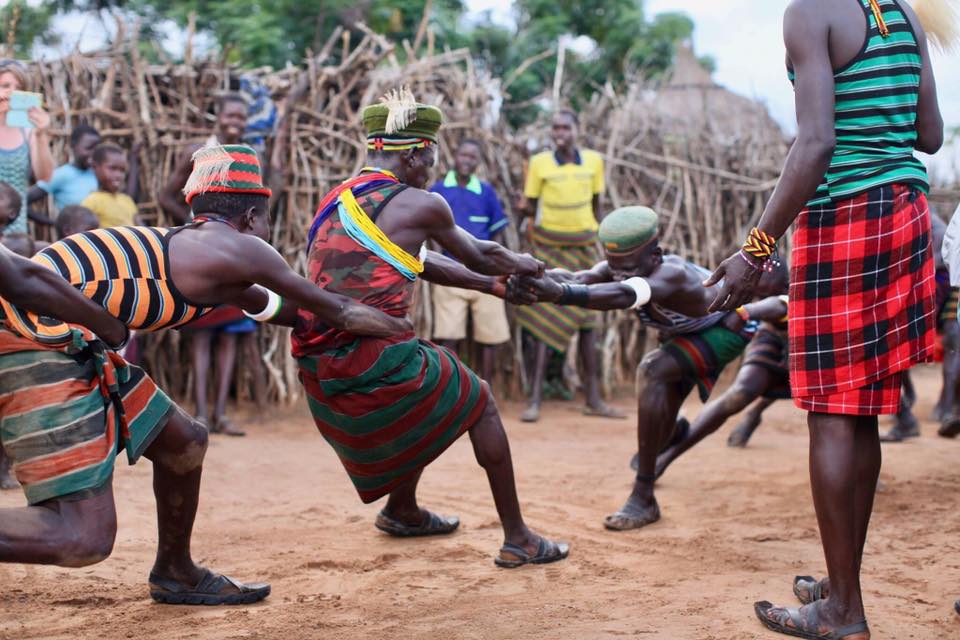
It also gives you a first-hand appreciation of the culture and heritage of the region. You will have a chance to learn about their traditions, see their distinctive housing, ornaments, and handcrafts, and be treated to a traditional dance.
7. Hiking Mt Morungole To Meet Ik People
Hiking Mount Morungole is an attractive adventure which leads to the Ik people. This great expedition involves a whole day hike through changing vegetation and rocky terrain. You’ll have breathtaking views of Kidepo Valley National Park. And you will be exposed to variety of dances from the Ik, their lifestyle, their unique settlements. You’ll also learn about their unique migration history.
Accommodation In Kidepo National Park
Uganda safari accommodation in Kidepo Valley National Park range from luxury, midrange, to budget lodges, camps and hostels. The outstanding lodging and accommodation options of Apoka safari lodge, Kidepo Savannah Lodge, Nga’Moru Wilderness camp coupled with the cool environment and exceptional views of the Savannah grasslands attracts visitors from far and wide.
How To Get To Kidepo National Park?
By Road
Western Route via Ziwa Rhino Sanctuary
This is the most direct route and takes about (571) 10 hours’ drive. From Kampala/Entebbe, you travel through Karuma, Gulu, and Kitgum to Kidepo National Park. The trip can be broken up with an overnight stop at Ziwa Rhino Sanctuary (home to Uganda’s only wild rhinos), Gulu, or Kitgum.
Eastern Route via Jinja & Karamoja Region
This Uganda road trip through the tribal Karamoja region to get here is a whole adventure in itself. From Kampala or Entebbe, you can drive through Jinja, Mbale, Nakapiripirit, Moroto, Kotido, and Kaabong to Kidepo Valley National Park which is about 740km (approximately 12 hour drive).
You can also drive through Jinja, Mbale, Soroti, Moroto, Kotido, and Kaabong to Kidepo which is about 792km (13 hour drive). You’ll have several attractions along this route to break the road travel. You traverse the Mabira rainforest, and cross the mighty River Nile at Jinja.
Here you have an opportunity to tour Lake Victoria and explore the source of the Nile. You can also visit Mount Elgon or hike the Sipi falls in Mbale. You can opt to spend a night in Mbale or Moroto towns.
By Air
The fastest way to get to Kidepo National Park is by a scheduled or chartered flight. A flight to Kidepo National Park takes about 2 hours from either Entebbe international airport or Kajjansi airstrip in Kampala
When Is The Best Time To Visit Kidepo?
Kidepo Valley National Park can be visited at any time of the year. However, the best time to visit Kidepo National Park is in the dry season that lasts from September and all through to March, vegetation is sparser, and sighting animals around watering holes is easier. July and August are the next best months to visit as the rainy period transits to the dry period.
A Little Bit About Murchsion Falls
Murchison Falls National Park is the largest, oldest and most exciting savannah game park in Uganda. Attractions include the explosive waterfall for which the park is named and the wildly tropical stretch of the Nile River that bisects the park as it flows toward Lake Albert.
When it comes to wildlife viewing, a Uganda safari that combines Murchison Falls with the nearby Ziwa Rhino Sanctuary and Budongo Forest Reserve offers you with a decent chance of seeing all the Big 5 animals as well as chimpanzees and shoebills in the course of one short, affordable trip.
Murchison Falls National Park is best know for magnificent Murchison Falls – the world’s strongest waterfalls on River Nile. The falls were named by Sir Samuel Baker during his exploration of Uganda in the 19th Century. Baker named the falls Murchison after the famous British geologist Sir Roderick Murchison, who incidentally believed Africa to be a geologically boring continent.
Notable visitors to Murchison Falls National Park include Ernest Hemingway, President Theodore Roosevelt and several British royals. Sir Winston Churchill also visited Murchison Falls which may have been what led him to declare Uganda the ‘Pearl of Africa’. The 1951 film The African Queen starring Humphrey Bogart was filmed on Lake Albert and the Nile river in Murchison Falls National Park.
Ugandan Pupils and/ or Students (Groups): UGX 3000
Tertiary Institutions/ Universities: UGX 5000
Size And Landscape
Murchison Falls National Park covers about 3,840 km2 of wilderness on both sides of River Nile west of Karuma Falls and east of Lake Albert. It’s part of the greater Murchison Falls Conservation Area. The park’s landscape is dominated by savannah-woodland habitat dotted with beautiful Borassus palm trees. It also encompasses vast tracts of tropical forests, swathes of grassland, and wetland habitats.
To the south, west and east, it adjoins Bugungu Wildlife Reserve (782 km2), Budongo Forest Reserve (825 km2), and Karuma Falls Wildlife Reserve (720 km2). These reserves are diverse ecosystems in their own right, but serve a vital function as buffer zones between the game park and the nearby local communities.
Location Of Murchison Falls National Park
Murchison Falls National Park is located in northwestern Uganda, about 300km by road from Kampala. The park straddles the Ugandan districts of Buliisa, Nwoya, Kiryandongo, and Masindi.
The driving distance from Masindi, the nearest large town, to the national park is about 72 km. Murchison Falls National Park is a great place for a short weekend getaway or short Uganda tours from Kampala or Entebbe. And because of its impressive scenic beauty abundant wildlife, it is a perfect place to celebrate special occasions like honeymoons, engagements, and birthdays
A Brief History Of Recovery
In the first half of the 20th century, Murchison Falls National Park and its surroundings was a hunting playground for the rich. In 1909 – President Theodore Roosevelt of the United States of America visited Murchison Falls as part of the most lavish hunting safari of all time.
By the end of his year-long East African safari, the Smithsonian-Roosevelt Africa Expedition had killed and collected 11,400 animal specimens for the Smithsonian Institution.
In 1952 – hunting activities became regulated in the area. As animal populations recovered, the then Bunyoro-Gulu Game Reserve became Murchison Falls National Park.
In 1960s – Murchison Falls was one of the premier destinations for wildlife safaris in Africa, receiving more than 60,000 visitors every year.
In 1972 – with the rise of Idi Amin’s despotic reign, however, the populations of wild animals in Murchison Falls National Park were greatly reduced by poaching and uncontrolled hunting. Rhinos were killed off entirely and other animal numbers suffered equally at the hands of desperate civilians and soldiers.
In 1979 – although Amin was overthrown, it was to be another 20 years before the Uganda Wildlife Authority was able to restore the core tourism area of the park. Recovering visitor numbers supported the painstaking work of restoring the park to its former glory.
Though poaching, especially snares set for bush-meat, has remained a serious threat on the outer fringes, concerted efforts have been made to make sure there is investment in surrounding communities.
In addition to everything from education initiatives to employment schemes, 20% of the revenue from park fees is fed back to the local community. In short, the restoration of Murchison Falls National Park has built a solid foundation for the park’s long-term future.
Best Time To Visit Murchison Falls National Park
Murchison Falls is a year-round safari destination and there is no truly bad time to visit.
In terms of wildlife viewing, marginally the best time for a Uganda safari is the main Dry season, which runs from December to February. These months are also good for bird watching tours, as Palearctic migrants are present in Uganda from November to April.
However, January and February can be very hot, with midday temperatures routinely soaring over 33°C/91°F. The Wet season, which typically begins in March and runs to November, tends to be more comfortable climatically, and the scenery is lusher/greener from June onwards.
June and July are optimal in terms of relatively low temperatures and rainfall. If you’ll also be trekking gorillas and/or chimps in Uganda, you might want to factor in the best months for these activities. The best time for gorilla trekking is from December to February and June to August. Chimps in Kibale Forestare easiest to track from December to March and June to July.
Your Uganda safari to Murchison Falls can start from Entebbe or Kampala. From there you can get to Murchison Falls by road. Your drive will take around 6 hours.
However, along the way, you’ll enjoy some incredible scenery and you can visit the Ziwa Rhino Sanctuary, a protected area that is home to Uganda’s only wild rhinos.
The fastest way to get to Murchison Falls is by taking a small plane from either Entebbe International Airport or Kajjansi Airstrip in Kampala to a small airstrip located directly inside the park. The flight takes about 1½ hours.
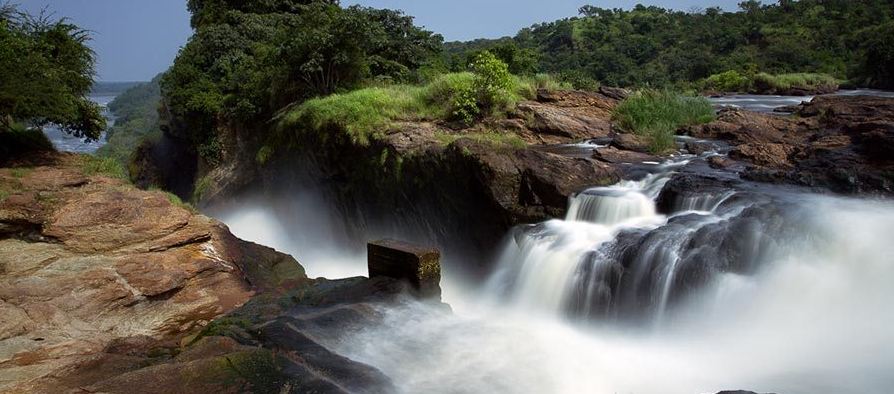
Murchison Falls National Park is divided by the historic Nile River. River Nile which has its source at Lake Victoriain Jinja the longest river on Earth and one of the Natural Wonders of Africa. The Murchison Falls marks Nile’s entry to the Great African Rift Valley. These dramatic falls are a jaw-dropping sight to behold. Here the Nile which is over 50 meters wide is forced through a narrow gorge just about 8 meters wide.
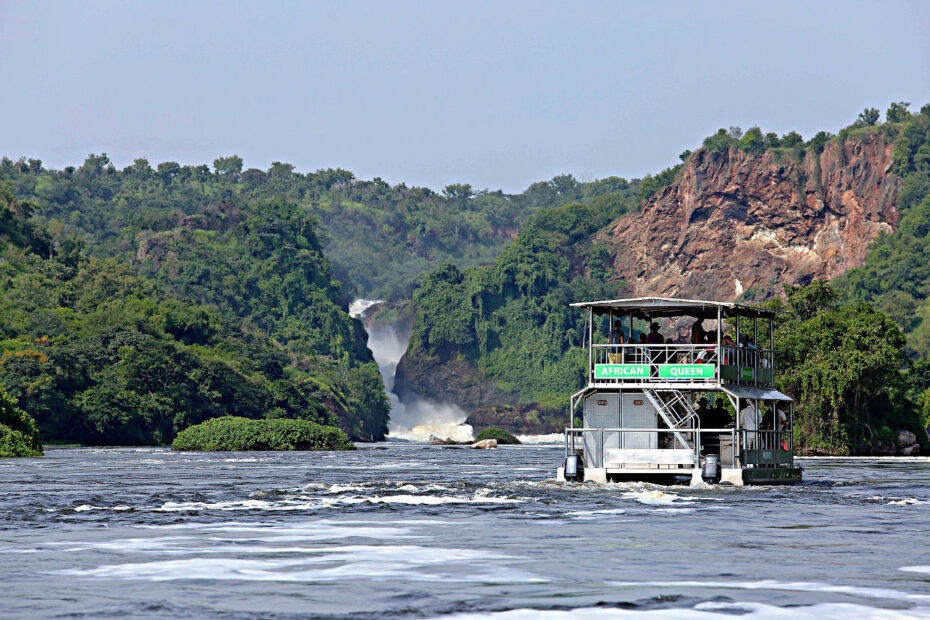
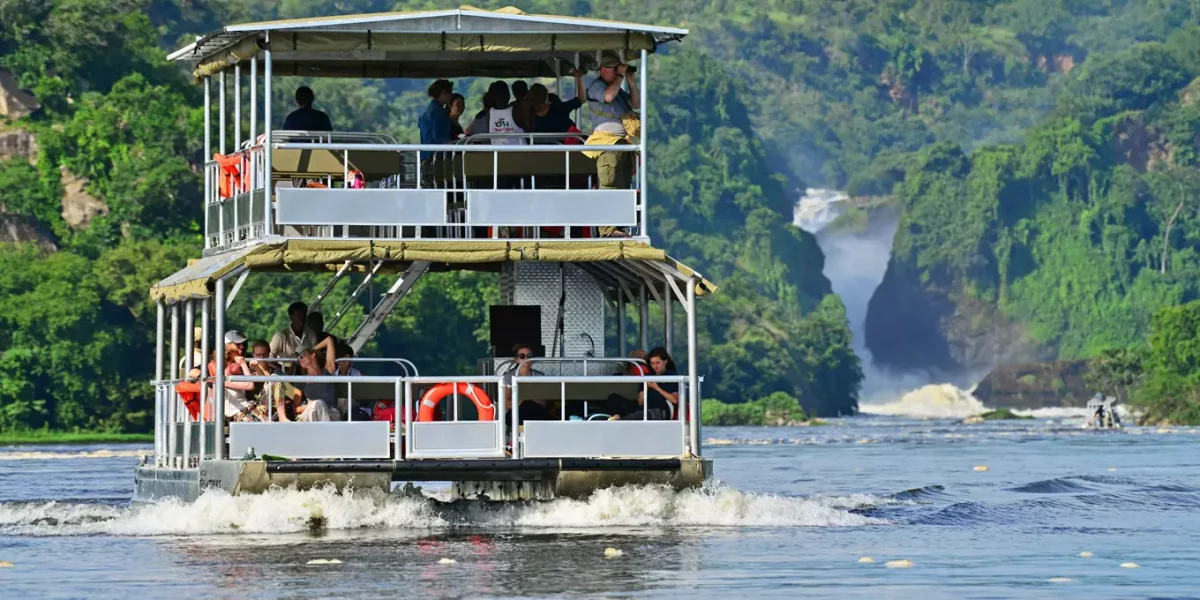
It then plunges 45 meters to what has been termed as the devil’s cauldron below, forming a plume of spray marked by a thunderous roar and a permanent rainbow. The Murchison Fall is the world’s most powerful waterfall! Every second, the equivalent of 200 bathtubs full of water is forced through the tiny gorge. The falls are also lined by verdant plant life, can be viewed on foot from the top or at a more leisurely pace in a boat from below.
A Little History About The Murchison Falls
The Murchison Falls is first mentioned to in the writings of John Speke, who upon visiting Karuma Falls to the east in 1862 was told that a few other waterfalls lay downriver, ‘mostly of minor importance’ but ‘ one within ear sound… Two years later, partly to fulfill the promise they had made to Speke, Samuel Baker and his wife Florence Baker became the first Europeans to explore the stretch of the Nile between Lake Albert and Karuma Falls. As they were paddling about 30 km east of the estuary, Samuel Baker wrote:
“We could distinctly hear the roar of water and upon rounding the corner, a magnificent site burst upon us. On either of the river were beautifully wooded cliffs rising abruptly to a height of about 300 feet. Rocks were jutting out from the intensely green foliage. And rushing through a gap that cleft exactly before us, the river, contracted from a grand stream, was pent up in a passage of scarcely 50 yards in width.
Roaring furiously through the rock-bound pass, it plunged in one leap of about 120 feet (36m) perpendicular into the large abyss below. The fall of water was snow-white, which has a superb effect as it contrasted with the dark cliffs that walled the water, while the graceful palms of the tropics and wild plantation perfected the beauty of the view. This was the greatest waterfall of the Nile, and in honor of the distinguished president of the Royal Geographic Society, I named it the Murchison Falls, the most important object through the entire course of the river”.
2. animals in Murchison Falls National Park
You can expect to see a good variety of African wildlife on a Murchison Falls safari. The national park is home to over 76 mammal species including 4 of the Big Five (lion, leopard, elephant, and buffalo). You are almost certain to see elephant and buffalo – along with plentiful hippos, crocodiles and waterbirds – on the popular boat trip to the base of Murchison Falls. Lions are often seen on game drives north of the Nile River, and leopards are present but more elusive. Other common wildlife includes:
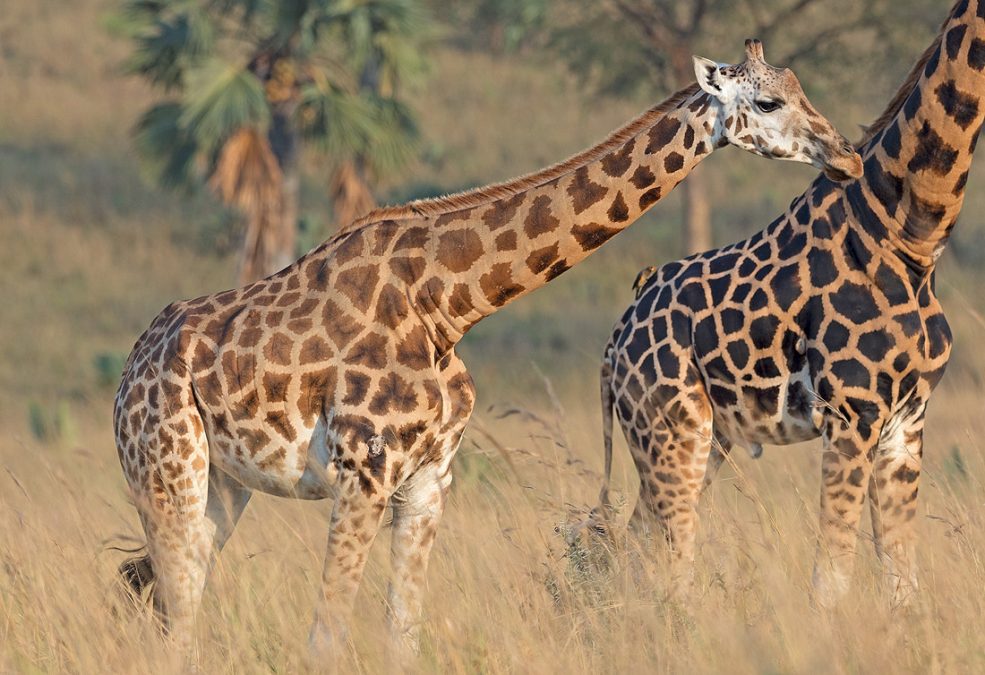
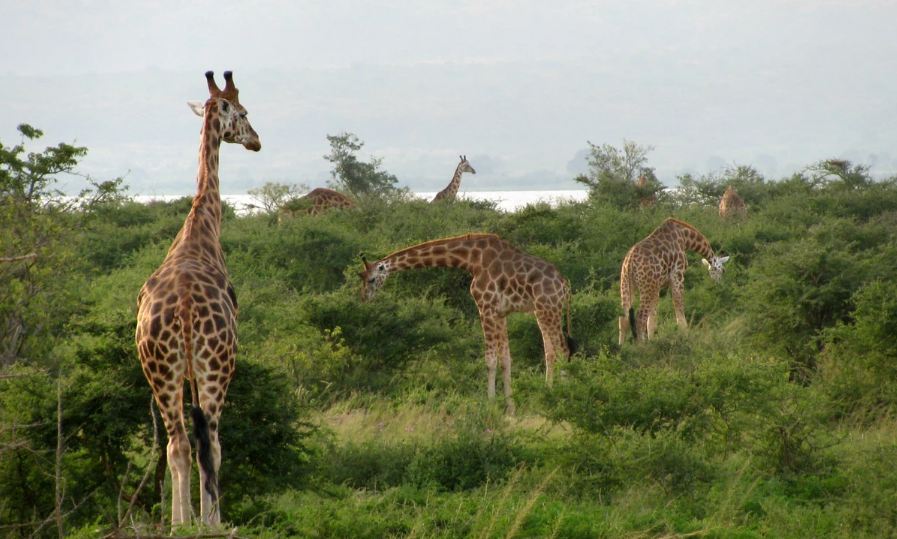
Rothschild’s giraffe
Defassa waterbuck
Uganda kob
Oribi
patas monkey
Olive baboon
Farther afield, the main road to Murchison Falls bisects Budongo Forest, one of the most reliable chimpanzee trekking sites in Uganda. A worthwhile short diversion en route to Murchison Falls is Ziwa Rhino Sanctuary, where rhino (the only member of the Big Five not present in the national park) can be tracked on foot.
3. birds in Murchison Falls National Park
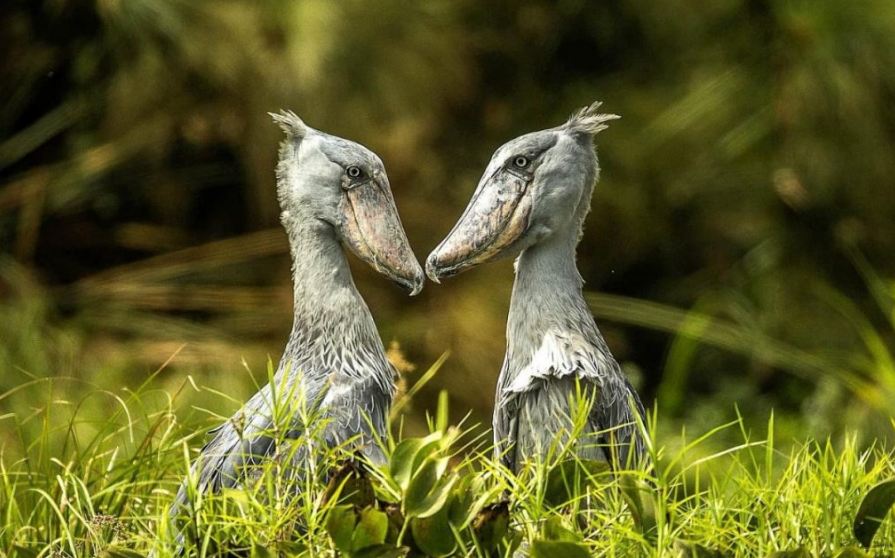
Over 450 bird species can be found in the Murchison Falls National Park! Because of this incredible diversity, the park is one of the best places Uganda birdwatching tours. For birders and non-birders, the prehistoric Shoebill is high on the list of must-sees, and the swampy Nile Lake Albert Delta is one of the best places to spot one. Other fantastic bird species you can see Murchison National Park include;
African skimmer
Abyssinian ground hornbill
Secretary birds
African fish eagle
Blue-throated roller
Beaudouin’s snake-eagle
Blue swallows
Cassin’s spinetail
Chocolate-backed kingfisher
Northern carmine bee-eater
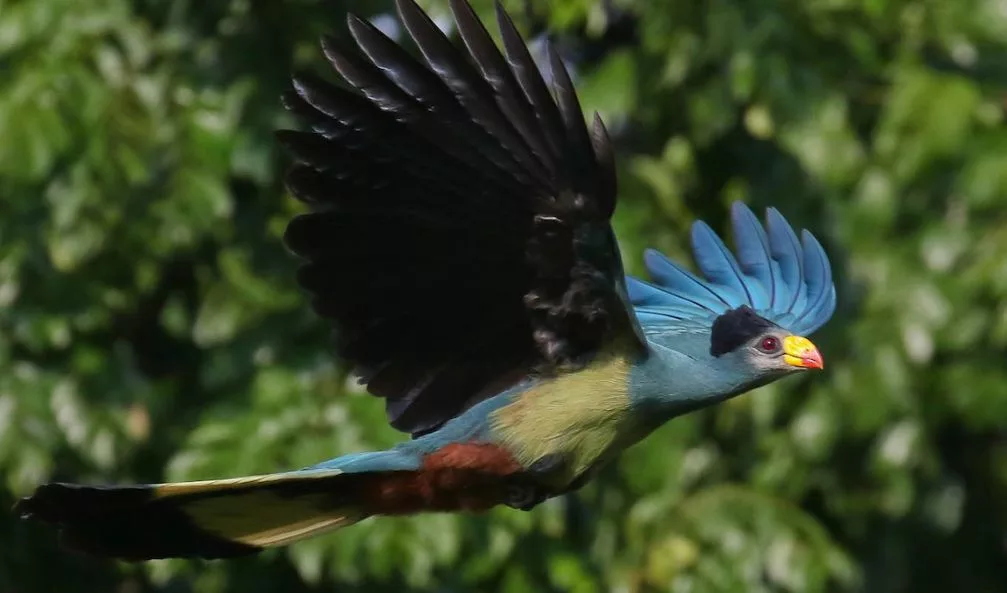
Great blue Turaco
Rock pratincole
Goliath heron
Red-throated Bee-eater
Grey-crowned crane
Saddle-billed stork
Nahan’s francolin
Senegal Coucal
Pel’s Fishing Owl
White-thighed hornbill
Red-winged Grey Warbler
Black-headed lapwing
African Darter
African Dwarf Kingfisher
Brown twinspot
Black-headed Gonolek
activities in Murchison Falls National Park
From game drives, boat safaris, hiking, sport fishing, chimp trekking, bird watching, sightseeing, bush breakfast, camping to sun-downers, Uganda’s Murchison Falls National Park offers unforgettable experiences. Here is a brief description of the best Murchison Falls National Park activities. You can contact us for cost of each activity and more details.
Boat Cruise to the Bottom of the Murchison Falls
Nile Delta Lake Albert Boat Cruise
Day Game Drives
Night Game Drive
Top of Murchison Falls Visit
Bird Watching tours in search of shoebills and other special birds
Murchison Falls National Park offers basic yet pleasant camping sites and lodges for the more budget-restricted traveller. There are also a handful of lodges in Murchison Falls National Park that offer mid-range and luxury accommodation and facilities.
Paraa Safari Lodge – Luxury
Bakers Lodge – Luxury
Nile Safari Lodge – Luxury
Murchison River Lodge – Midrange
Pakuba Safari Lodge – Midrange
Fort Murchison Safari Lodge – Midrange/Budget
Red Chill Rest Camp – Budget
Hornbill Safari Lodge – Budget
Heritage Safari Lodge – Budget
FAQs About Murchison Falls National Park
1. How Many Days Do You Need Murchison Falls Park?
The most usual duration for a stand-alone Murchison Falls National Park safari tours is 3 days, but 2-day and 4-day safari itineraries are also offered by many Uganda tour operators. Given that the drive there and back requires at least 6 hours, a 2-day safari will be very rushed and is not recommended unless you absolutely cannot extend the trip any longer.
A 3-day safari Murchison Falls National Park safari will be more relaxed as it effectively doubles the time you spend in the park. In our view, 4 days is even better, especially if you want to track chimpanzees in Budongo Forest and visit Ziwa Rhino Sanctuary along the way.
2. How Much Does A Murchison Falls Safari Cost?
The typical price of a cheap 2- to 4-day Murchison Falls National Park safari is around US$190 to US$250 per person per day. Midrange safari can cost from US$ 250 to US$ 300 per day and a luxury safari can cost from US$ 350 to US$ 600 per day. This will usually include accommodation, meals, transport, and park entrance and activity fees.
It will exclude drinks, tips and any activities listed as optional. Expect to pay slightly more for a package that includes chimp trekking in Budongo Forest Reserve. Contact us for your dream safari.
The 1978km2 Queen Elizabeth National Park is the most popular destination for Uganda safaris. This is partly because of its proximity to the country’s gorilla trekkinghubs, but also reflects its status as one of the most bio-diverse protected areas in East Africa.
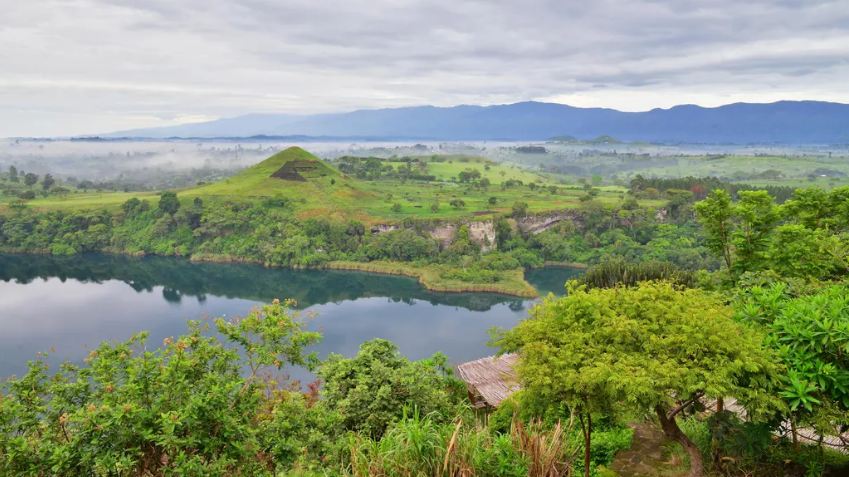
Here you will find extensive freshwater lakes, dense papyrus swamps, swathes of tropical rain-forest, tracts of rolling savannah and brackish crater lakes nestled below the snow-capped Mountains of the Moons.
Queen Elizabeth National Park is home to nearly 100 mammal species, including four of the Big 5 animals, Chimps, and tree-climbing lions.
Bird-wise, it is booming. Though smaller than East Africa’s blockbuster safari destinations — Tanzania’s Serengeti or Kenya’s Masai Mara — Queen contains considerably more avian species: more than 600, in fact, a number that, according to BirdLife International, no protected area in Africa can beat.
A relaxed and accessible wildlife haven, it also has low-cost entry fees, friendly guides and an excellent mix of places to stay, ranging from budget accommodation to eco-luxury lodges. If you are fairly new to safari and have a budding interest in bird-watching and wildlife viewing, it’s the ideal choice.
History of Queen Elizabeth National Park
Queen Elizabeth National Park was founded in 1952 as Kazinga National Park.
It received its name in April 1954, to commemorate the young Queen Elizabeth’s first visit when Uganda was still under colonial rule.
Over the years, the park suffered what seems an unfair share of setbacks, particularly in the period following Idi Amin’s notorious 1971 coup.
During the distress and unrest that followed the installation of the brutal dictator, wildlife poaching was rife. Queen Elizabeth National Park, once magnificent, has been overshadowed by more fortunate East African safari areas ever since.
Gradually, however, under Uganda Wildlife Authority (UWA)’s careful stewardship, the green shoots of recovery have emerged.
An aerial survey completed in 2018 counted several thousand elephants, along with healthy numbers of herbivores; buffalos, hippos and Ugandan kob, handsome antelopes that are a crucial food source for lions.
The rangers in the park have also forged fresh links with the UK, skill-sharing with Queen Elizabeth Country Park in Hampshire and even creating a Ugandan Queens Park Rangers football team.
Queen Elizabeth National Park is a UN Biosphere Reserve
In the many wildlife parks and reserves settlements are banned, but Queen Elizabeth National Park is different.
The park is one of the living examples of man and biosphere reserves or conservation areas in the world where man harmoniously co-exists with wildlife.
When the national park was established in 1952, its dozen or so villages remained, their residents scratching a living by growing bananas, tending smallholdings and fishing for ngege (Nile tilapia, delicious grilled) or emamba, emale and semutundu (lungfish, mudfish and catfish). Overtime, the park’s population has grown.
Location of Queen Elizabeth National Park
Queen Elizabeth National Park is located in southwestern Uganda.
The park is situated right on the equator, on the floor of East Africa’s Rift Valley, a geological wonder that stretches northwards from South Africa to Ethiopia.
The East African Rift Valley was formed approximately 30 million years ago by the pulling apart of two tectonic plates.
As the plates diverged, molten rock welled up from the mantle of the Earth, creating volcanoes and uplifting the landmass.
Over time, erosion carved into the uplifted plateaus, forming the picturesque landscapes we see in Queen Elizabeth National Park today.
Animals in Queen Elizabeth National Park
Queen is home to almost 100 species of mammal, including 4 of the Big 5 (no rhinos).
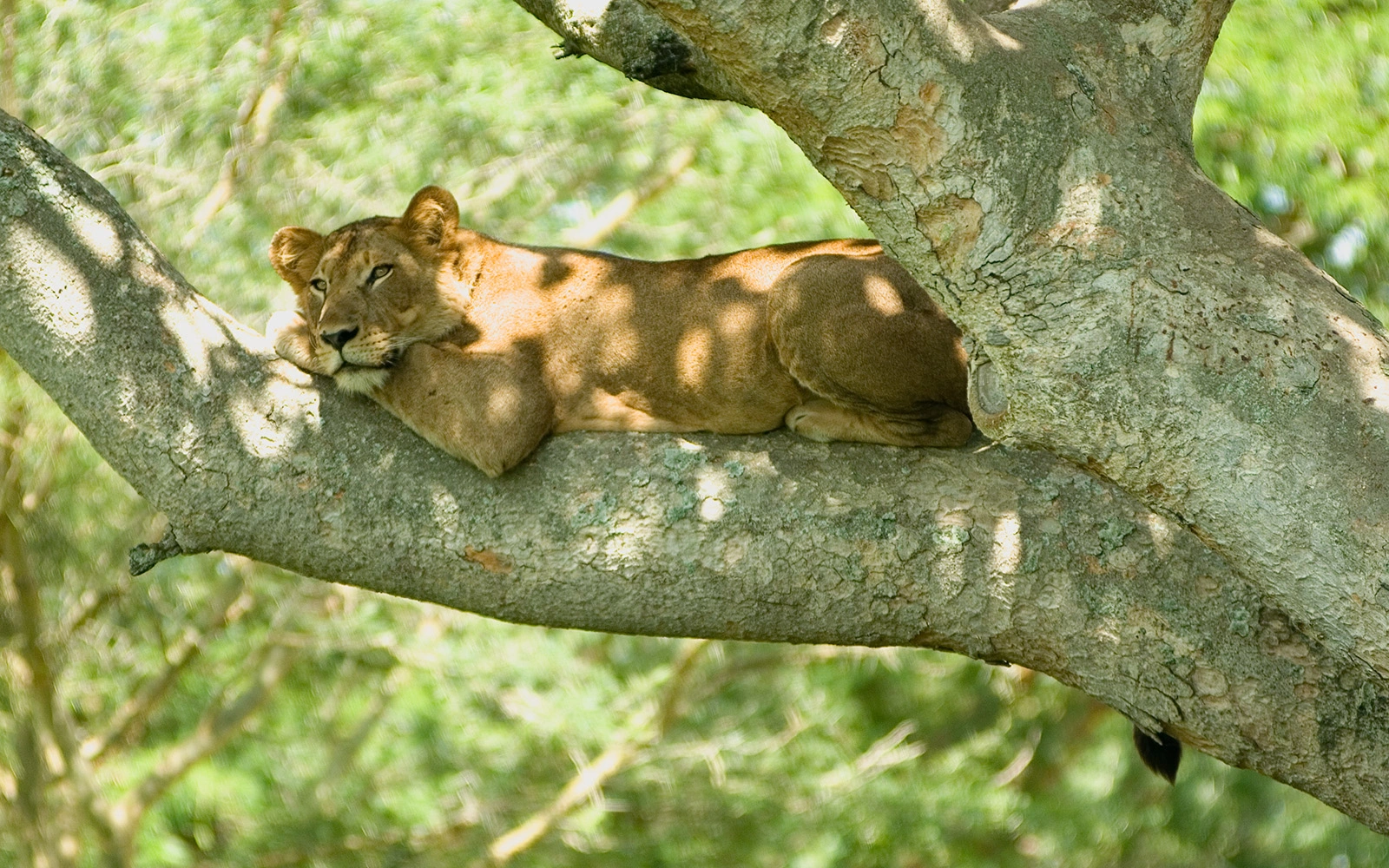
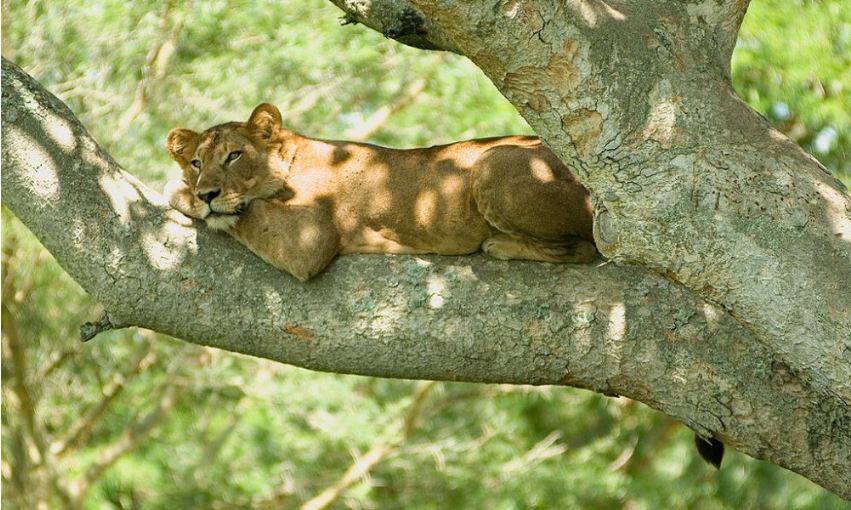
It is the easiest place in Uganda to see lions, which quite often climb trees in the Ishasha sector but are more common on the Kasenyi Plains, where they feed on large herds of Uganda kob.
About 5000 hippos, 300 chimpanzees, 10000 African buffalos, 3900 African bush elephants, 200 African lions, 20000 Uganda kobs and a variety of antelopes also reside in the park.
Elephant, buffalo, hippo, waterbuck and crocodile are generally numerous along the Kazinga Channel, which can be explored on boat trips that also offer great bird watching and occasional sightings of leopard and giant forest hog.
There is also around 10 species of monkeys, including baboons, black and white colobus, red-tailed monkeys, Vervet monkeys, and blue monkeys.
Other Queen Elizabeth National Park animals include spotted hyenas, side striped jackals, mongoose, warthogs, bush pigs, and more.
Giraffe and zebra are absent.
The Famous Tree-Climbing Lions
Queen Elizabeth National Park is known for being home to lions that climb trees.
Now you be thinking that, as lions are cats, and cats like to climb trees, this is not so surprising – especially when you consider that another type of big cat, the African leopard, is a skilled tree climber.
In reality, lions are not usually particularly skilful tree climbers. Their imposing bulk puts them at the top of the predator hierarchy and imparts the power to pull down powerful prey. But they are not well designed for nimble balance or agile leaps.
While all lions can and occasionally do climb trees, it is very seldom that they make a habit of it. Only a very few specific populations, primarily here in Uganda’s Queen Elizabeth NP and in Tanzania’s Lake Manyara, climb trees more often. That is why these lions are called ‘tree-climbing lions’.
Scientists are not sure about the exact reason for this behaviour.
Some believed that it helps the lions escape the annoyance of biting insects while others suggest it offers vantage points for spotting prey, helps them keep an eye out for rival predators, or gives them a cooler resting place away from the sweltering heat on the ground.
In Queen Elizabeth National Park, the tree-climbing lions can be found in the Ishasha Sector in the south of the park.
Lions Vs Villagers – Conflicts in Queen Elizabeth National Park
Queen Elizabeth National Park is home to around 75 Africa lions. For park’s communities, however, these lions are a serious matter.
Despite the ecological benefits that apex predators offer, rural dwellers consider them threatening and object to the cats taking their cattle and respond by persecuting them or setting snares to poach their prey, sometimes catching them, too.
The Uganda Wildlife Authority has tried to stop this by giving 20% of the profits from tourism back to the communities, and by compensating any farmer whose cow is eaten by a lion.
This appeared to be working just fine, until 2018 when a horrifying eleven lions were poisoned by local people in revenge for killing their livestock.
The dead lions, eight of them cubs and the other three adult lionesses, were part of a pride that also included three males.
The carcasses and bones, discovered near a fishing village called Hamkungu, were sent to a regional town for testing. Experts suspect the lions were poisoned with alidcarb, an insecticide.
Hippos of Kazinga Channel
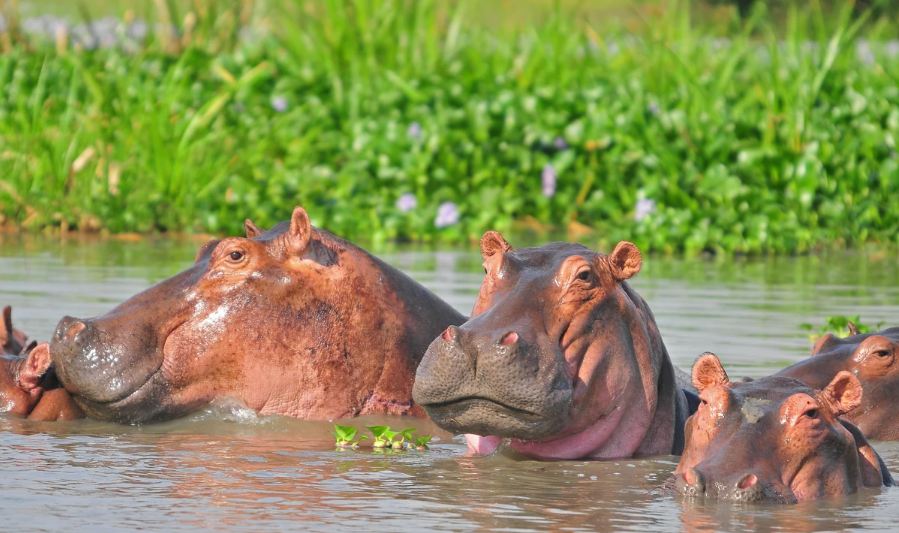
Kazinga Channel is squiggle of fresh water, roughly 22 miles long and 2,500ft wide. Though officially a river, its flow is almost invisible.
The channel connects two natural basins at a near-identical altitude — Lake Rutanzige (also known by its colonial name, Lake Edward) and Lake Katunguru (also called Lake George). It boasts the highest concentration of hippos in Africa.
These semi-aquatic giants, spend their days submerged in the cool water of the channel with only nostrils, eyes, and ears exposed, blinking in the abundant sunshine.
Periodically they duck back under the surface of water and then bobble back up again, blowing excess water from their nostrils and flicking it from their little pink ears.
Sometimes you can witness them squabbling or engaged in rough play with one another, mouths wide open to display their incredibly long canine teeth, and making quite a splash with their huge bodies.
The main reason hippos stay submerged in water during the day is because their vulnerable skin seems unable to stand the effects of the strong equatorial sun.
When night descends, these Uganda animals finally emerge from their water bed and graze by starlight under the cool relief of night. In spite of their bulky appearance; hippos are quite swift on the ground and can run faster than a human.
Hippos have been known to wander several miles from their pool while grazing, but by the time sunrise burns through the morning haze, these portly beasts will have taken refuge once again in their pool retreat.
Chimpanzees of Kyambura Gorge
Kyambura Gorgenear Kazinga Channel is a crack of 11 kilometers long in the Earth’s crust inside Queen Elizabeth National Park.
This scenic gorge was named after Kyambura River which runs through its thick “underground rainforest”, 100 meters underneath the Kichwamba Escarpment.
The name Kyambura locally means as ‘it lost’. It was obtained as a result of the river shifting local members with their belongings and on return; they couldn’t find their colleagues anywhere.
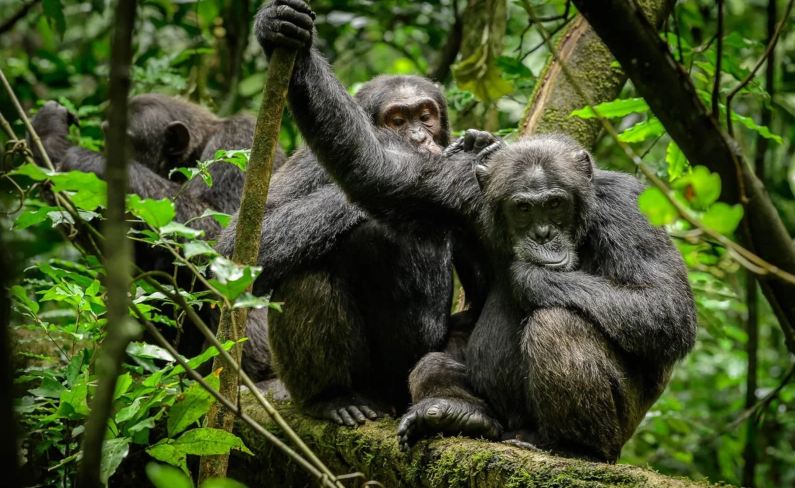
Living within its beautiful underground rain-forest are many monkeys, butterflies, and birds. But, the gorge is best known for a isolated community of 30 wild chimpanzees that have become known as the “Lost Chimpanzees”.
Visit it and you may glimpse chimpanzee’s knuckle prints, or hear their screeches reverberating through the trees.
Birds In Queen Elizabeth National Park
Queen Elizabeth Park’s astonishing variety of habitats harbors more than 600 bird species. This is the second-highest of any park in Africa.
The lakes, rivers, and wetlands are home to a plethora of plovers, herons, storks, pelicans and egrets.
The Volcanic Landscape of Queen Elizabeth National Park
But Queen Elizabeth National Park is not just about the wildlife. One thing you also can’t fail to notice as you drive around the park is the stunning landscapes!
As I mentioned above, Queen Elizabeth National Park is located on the floor of the Africa’s Rift Valley, which was formed millions of years ago by tectonic activity.
This upheaval has now left behind an eye-bending array ancient explosion craters, craggy peaks and rolling lush hills that are a joy to discover.
Crater Lakes in Queen Elizabeth National Park
Scattered across Queen are over 40 volcanic scars, of which 28 hold sparkling crater lakes.
The largest crater area is called the Katwe craters trail, or Katwe-Kikorongo explosion craters. It is a volcanic field of around 209 square kilometres, pocked with ancient craters like the surface of the moon – except greener.
Each crater was formed individually by violent volcanic explosions over the last 1 million years.
There is no ancient lava flow here, which means the explosions were just violent bursts of hot gas and steam that erupted out of the ground like a bomb going off, leaving this ravaged surface.
The size of the individual craters varies, but the largest can be nearly two miles across and up to 100 metres deep.
Many of them have now evolved into saltwater lakes like Lake Nyamunuka but be warned whose water is highly acidic and stinks of sulphur.
Another crater lake to look out for is Katwe Salt Lake, which is so salty that the local community actually mines salt here.
Other craters to look out for in Queen Elizabeth National Park include:
Kashaka Crater: Scenic beauty with diverse vegetation and panoramic vistas.
Lake Kikorongo: Teeming with wildlife like buffalo and elephants, and offering boat tours.
Lake Munyonyo: Home to pink flamingos.
How To Get To Queen Elizabeth National Park?
There are several ways to reach Queen Elizabeth National Park; here are the main options:
By Air
Entebbe International Airport is the main international entry point to Uganda, situated approximately 40 kilometres south of Kampala. From Entebbe, you can take domestic flights to:
Mweya airstrip: Located within Queen Elizabeth National Park itself, offering the most convenient air access (flight time: 1 hour).
Kasese Airport: Situated near the national park’s southern entrance (flight time: 1 hour 15 minutes).
Kihihi Airport: Serves the Ishasha sector in the southern part of the park and as well the nearby Bwindi Impenetrable National Park (flight time: 1 hour).
By Private Car
This is one of the best ways to get to Queen Elizabeth National Park during your safari in Uganda.
From Kampala: The most common route is via Masaka -Mbarara road, covering approximately 420 kilometres (6-7 hours drive). On this route, you can enjoy scenic landscapes and stopovers at interesting spots like the Equator monument and Lake Mburo National Park.
From Fort Portal: This option takes around 260 kilometers (4-5 hours drive) through the breathtaking foothills of the Rwenzori Mountains. Witness stunning views and diverse vegetation en route.
By Bus
Buses: Many companies offer bus services from Kampala to Mbarara or Kasese, with connections to the park entrance gates. While very budget-friendly, expect longer travel times and potential delays.
Shared taxis: These are readily available in Kampala city and major towns, offering a more flexible and potentially faster option, but with less legroom and comfort.
Don’t forget that, the journey to Queen Elizabeth National Park is part of the adventure!
Queen Elizabeth National Park Entry Fees 2024
Adult foreign non-resident: US Dollars 40
Adult foreign resident: US Dollars 30
Children foreign non-resident: US Dollars 20
Children, foreign residents: US Dollars 10
Adult East African Citizen: Uganda Shillings 20,000
Children East African Citizen: Uganda Shillings 5,000
Things To Do In Queen Elizabeth National Park
Day Game Drives: You can enjoy early morning, afternoon and evening game drives. Queen Elizabeth National Park games drives typically lasts 3 to 4 hours.
Night Game Drive: Night game drives around Kazinga Channel offer a chance to see rare nocturne creatures like leopards, civets, jackals, hyenas, as well as lions, hippos, and leopards.
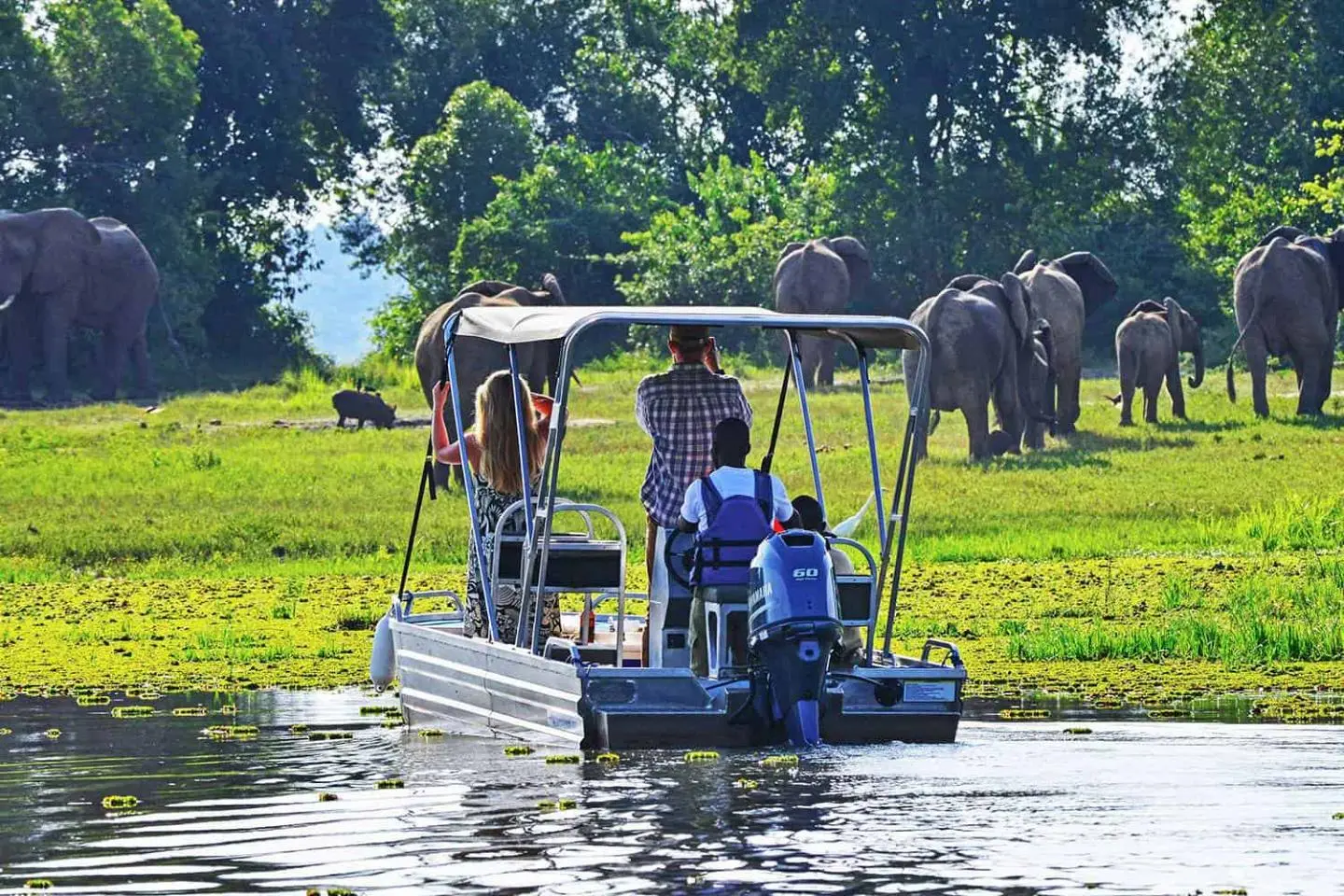
Kazinga Channel Boat Cruise: The relaxing two hour afternoon boat trip takes you on Kazinga Channel which is home to some of the world’s densest concentrations of hippos.
Search Tree Climbing Lions: A large number of visitors visit Queen’s Ishasha sector to track the legendary tree-climbing lions that spend long lazy days dozing in the pretty fig trees
Bird Watching: With over 600 recorded bird species, Queen Elizabeth National Park, offers sensational bird watching on game drives, boat cruises, and nature walks.
Community Visits: You can visit Lake Katwe Salt Mines and witness how locals traditionally harvest salt and interact with the mining community.
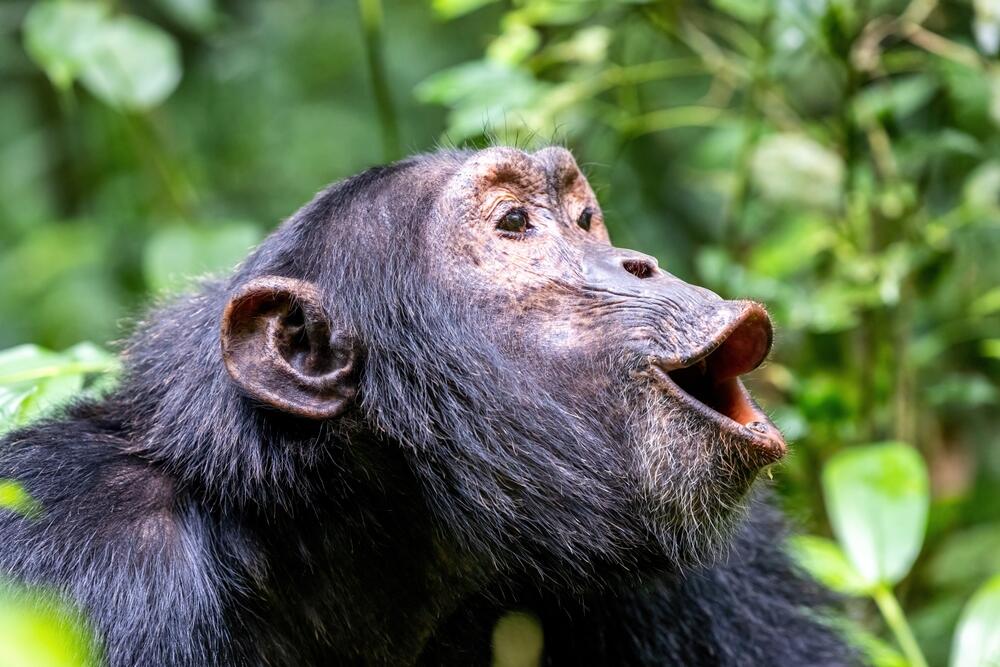
Chimpanzee Tracking: Queen offers Chimpanzee tracking in the mystical Kyambura Gorge. You can also track chimps in the nearby Kalinzu Forest.
Tracking Radio Collared Lions: You join a research team who track and monitor some of lions in Queen Elizabeth National Park though locator devices.
Guided Nature Walks: You can take a guide nature walk verdant Maramagambo Forest and Kyambura Gorge
Lodges In Queen Elizabeth National Park
With a wealth of wildlife acting as a drawcard, there are many Uganda safari lodgesand camps in Queen Elizabeth National Park. They range from luxury, mid-range to budget options. These include;
Mweya safari Lodge
Kyambura Gorge Lodge
Katara Lodge
Parkview Lodge
Elephant Plains Camp
Enganzi Game Lodge
Ishasha Wilderness Camp
Enjojo Lodge
Bush Lodge
Pumba Safari Cottages
When To Visit Queen Elizabeth National Park?
Queen Elizabeth NP is open all year around, but wildlife viewing safaris are best from January to February and June to August (the Dry seasons).
However, this scenic park is at its most beautiful in the Wet season months of March, April, May, September, October and November.
April May, October and November are very wet months and during that time, the rain might interfere with your planned safari activities. Read more about the best time to visit Uganda
How May Days Do You Need In Queen Elizabeth National Park?
Two days is theoretically enough for a stand-alone Queen Elizabeth National Park safari tour, and several Uganda tour operators offer this option.
However, given that the driving time from Entebbe or Kampala is at least 7 hours in either direction, two days makes for a very rushed safari trip and will limit how much you can fit into your tour itinerary.
For this reason, we would recommend a minimum of 3 days, preferably 4, for a stand-alone Queen Elizabeth safari.
If you’re also planning to add a gorilla trekking adventure, we would recommend 4 days as the realistic minimum for your safari, and 5 days or longer as ideal.
Can I Combine A Queen Elizabeth Safari Gorilla Or Chimp Trekking?
A Uganda wildlife safari in Queen Elizabeth National Park is often combined with gorilla and/or chimp trekking.
The most convenient gorilla trekking destination coming from Queen Elizabeth NP is Buhoma sector, on the northern boundary of Bwindi Impenetrable National Park.
Depending on which lodge or camp you stay at in Queen, it is only a 3- to 4-hour drive between there and Buhoma.
It is also possible to drive between Queen and other trekking sites in Bwindi Impenetrable or Mgahinga Gorilla National Park, but you’ll be looking at more like 5 to 7 hours on the road.
Queen Elizabeth NP is even more convenient for seeing chimpanzees, since two popular trekking sites border the park and can be visited as a day trip from any lodge or camp in the vicinity.
Of these, Kalinzu Forest Reserve is recommended to budget-conscious travelers over the forested Kyambura Gorge since it offers an attractive combination of low fees and a high success rate.
It is also straightforward to tag Kibale Forest National Park – which is Uganda’s premier chimpanzee trekking destination, but costlier than Kalinzu – onto a budget Queen Elizabeth NP safari.
How Much Does It Cost To Visit Queen Elizabeth National Park?
More affordable Uganda safari packages that focus solely on Queen Elizabeth NP typically cost around US$200 to US$250 per person per day.
You can expect to pay slightly more for a package that includes chimpanzee trekking, and significantly more for one that incorporates a US$800 gorilla trekking permit.
In all cases, the price should be inclusive of accommodation, meals, transport, park fees and activity costs, but it will exclude tips, unscheduled activities, drinks and other personal purchases.
Explore Kibale Forest National Park in Uganda with unforgettable chimpanzee safari experiences. Discover wildlife, trekking, and top adventures in 2026-2027.
Kibale Forest National Park is a beautiful tropical rainforest in the western region of Uganda.
Established in 1993, this vast forest park of 776km2 is famous for having the greatest variety and concentration of primates in all of Africa. Kibale Forest is home to 13 primate species.
The park is also a top birding destination, with a checklist of over 370 bird species.
But for most visitors on Uganda safaris, the major attraction here is the opportunity to see track wild chimpanzees on foot. Kibale Forest is the best destination for chimpanzee trekking in Africa. More than 1,500 chimpanzees live here in the wild.
Chimps are fascinating creatures. These forest-dwelling apes share nearly 99% of their DNA with humans, and despite their hairier coat and more stooped posture, they are recognizably human-like, both in appearance and behaviorally.
For this reason, chimpanzee trekking in Kibale Forest, though less iconic, perhaps, than gorilla trekking, is one of the most thrilling wildlife experiences Africa has to offer. It is a bucket-list experience, one that should be included on any wildlife safari in Uganda.
Where Is Kibale National Park Found?
Kibale Forest National Park is located in the western Uganda, close to the beautiful town of Fort Portal and Bunyaruguru Crater lakes. The park forms a continuous forest with Queen Elizabeth National Park to the southwest. This adjoining of the parks creates a 180km wildlife corridor, in which African Elephants move freely.
The varied altitude (1,100m to 1,600m) above sea level) of the park results in different varieties of habitat, ranging from moist evergreen forest along the Fort Portal plateau, then through the dry tropical forest and then to the woodland and savanna along the rift valley floor.
Kibale Forest National Park is also situated near Semuliki National Park and Rwenzori Mountains National Park. On the fringes of the park, is the famous community-run Bigodi Wetland Sanctuary, which is also home to a variety of birds and primates.
How to get to Kibale National Park?
By Road
The quickest route to Kibale Forest National Park from Kampala cityis through the Kampala-Fort Portal highway. The park can be reached over a fully-tarmacked road for a distance of about 300km (5 to 6 hours). For tourists overnighting in Fort Portal city, the park is only an hour’s drive away.
Kibale can also be reached from the south via Lyantonde and Ibanda (392km), Mbarara and Ibanda (405km), and Mbarara, Kasese, and Fort Portal (525km), taking around 6-7 hours. All of these routes allow a break in Lake Mburo National Park, while the long Kasese route also encourages a night in Queen Elizabeth National Park.
By Air
You can also access Kibale Forest National Park from the Kasese airstrip, a 68 kilometres (2 hours) drive on surfaced and dirt roads. This airstrip can be reached using chartered aircraft from Entebbe International Airport or Kajjansi airfield near Kampala city.
Activities In Kibale Forest National Park
Kibale Forest National Park offers the ultimate chance to spot chimpanzees in their natural habitat. Nowhere in the world can such large groups of chimpanzees be found in one place. Through chimpanzee tracking adventures you’ll quickly come face-to-face with these intelligent primates.
1. Chimpanzee Tracking in Kibale Forest
Chimpanzees may get less hype in the travel media than majestic gorillas. But these Great Apes have the honour (perhaps a dubious one, depending upon your perspective) of being our closest living relatives and time spent in their company is a unique wildlife experience.
Chimpanzees live in communities of about 20 to 150 individuals. Like humans, they have strong personalities, complex social intelligence, communication skills, and the ability to fashion and use tools. In Kibale Forest National Park, they live in 13 communities, and 4 of them have been successfully habituated for chimpanzee trekking tours.
These chimpanzees of Kibale have been tracked since 1993 and the chances of seeing them are around 95%, far greater than any other location which offers chimpanzee trekking in Rwanda, Uganda, DR Congo or Tanzania.
The Kibale National Park chimp trek can take between 2 to 4 hours, but once the chimps are located, time spent with them is strictly limited to one hour. We recommend that you book the chimpanzee tracking in advance.
There are only a limited number of chimpanzee permits available per day.
Perhaps even more special than the standard chimpanzee tracking adventure is the Chimpanzee habituation Experience (CHEX).
You’ll have an opportunity to visit a community of chimpanzees that are not yet fully habituated and you’ll be with the chimpanzees for a large part of the day (from dawn to dusk). The Habituation Experience is led by the researchers of the Kibale National Park’s habituation team.
The goal is to gradually introduce unhabituated chimpanzees to the presence of humans, a painstaking process that can take 10 years to accomplish.
It is slightly more expensive and needs much more patience than regular chimpanzee trekking. It often involves venturing further into the depths of the rainforest jungle.
But because you spend a long time in the forest, besides observing chimps, there is plenty of time to learn about these special primates, the butterfly species, the ancient rainforest and other animal species that live here. This is a special excursion for travelers who want to experience Kibale to the fullest!
3. Birding in Kibale Forest National Park
Uganda ranks high on the list of best destinations for birding in Africa.
No birding tour in Ugandawould be complete without dedicating some time to scanning the thickets and canopies of Kibale Forest National Park.
With habitats ranging from wet to dry forest, woodland, savanna and swamp, the Kibale has a total of 375 bird species, including 6 species that are endemic to the Albertine Rift. The most sought-after bird species in Kibale is the Green-breasted Pitta.
This enigmatic little bird is only found deep in the tropical forests of Central Africa. And despite their spectacular medley of colours, they are surprisingly elusive. Few birders have had the good chance of seeing the green-breasted pitta.
Other avian species of Kibale Forest National Park include;
African grey parrot, African pitta, Afep pigeon, Abyssinian Ground Thrush, Black-eared ground-thrush, Olive long-tailed cuckoo, Western tinkerbird, Black-bellied seedcracker, Blue-breasted kingfisher, Black bee-eater, Black-capped apalis, Blue-headed sunbird, Brown illadopsis, Brown-chested alethe, Red-chested owlet, Great blue turaco, Cassin’s spinetail, Dusky crimsonwing, Little greenbul, Masked apalis, Nahan’s francolin, Purple-breasted sunbird, Red-faced woodland warbler, Ruwenzori apalis, Scaly-breasted illadopsis, Western nicator, White-naped pigeon, Yellow-rumped tinkerbird
4. Nature Walks In Kibale Forest National Park
Most of the Kibale National Park is covered in evergreen rainforest. Among 300 tree species, rare hardwoods like the brown mahoganies and tiama tower above the forest floor from huge buttress roots.
Interspersed between them, fruit-laden fig trees keep the forest’s impressive primate densities well satisfied. Underneath the thick canopy, the zigzagging forest nature trails are widely recognized as some of the most picturesque in Africa, lined with a thick layer of shrubby undergrowth.
During the forest walk, you can meet several species of primates including the adorable red-tailed monkeys, Pottos, Bushbabies, Mangabeys, Baboons, Colobus, Vervet, Blue, and L’Hoest’s Monkeys. Though chimps, monkeys, and birds are certainly the more conspicuous and noisy inhabitants, the wildlife diversity of Kibale include over 70 mammal species, 250 butterfly species, plus a variety of reptiles, and amphibian families.
On the larger side of the animal spectrum, buffalos and elephants often wander into the forest from nearby Queen Elizabeth NP. These are rarely seen and dutifully avoided by the guides leading walks through the forest. Duikers, forest hogs and Bush pigs also occupy the undergrowth in the company of African golden cats and civets.
Things To Do Near Kibale National Park
1. Nature Walk in Bigodi Wetland
On your Uganda safari tours to Kibale Forest National Park you are encouraged to visit Bigodi Wetland Sanctuary which is located about 6km from the park.
The sanctuary is an award-winning local community based tourism initiative operated by the Kibale Association for Rural and Environmental Development (KAFRED). It is aimed at protecting the local environment while advancing health, education, and economic growth in the wider local community.
Here you can take a 3-hour guided nature walk with a knowledgeable local guide. On your swamp nature walk, you will likely see several kinds of monkeys, including Black and White Colobus, Red Colobus, Red Tailed, Grey Cheeked Mangabey, Olive Baboon, L’Hoest’s, Vervet, and Blue Monkeys. The area also boasts over 200 bird species, including the colorful Great Blue Turacos.
2. Bigodi Village Walk
Beside guided Bigodi swamp walk, KAFRED offers as well excellent cultural tours through a village walks of 3 to 4 hours through Bigodi Village (“home of two tribes”).
During the village tour, you discover the Uganda rural village life accompanied by a professional English-speaking local guide.
You can visit traditional healer who happily shares his knowledge about herbs, plants and local medicines. You can also visit the homes of elderly men and women who tell interesting stories about birth, marriage, ceremonies, clans and traditional rural life.
En route, you are given the chance to experience the Ugandan school system and tour Bigodi’s trading centre. With advance booking, KAFRED walks can be punctuated with a number of add-ons, including:
Traditional meals experience.
Dance and drama.
Handicrafts demonstration.
Homestead Tourism.
3. Crater Lakes and Tea Plantations Tours
The greater Kibale Forest region is not only known for its chimpanzees, monkeys, and birds. Spectacular crater lakes – formed by volcanic activity – and fresh tea plantations on rolling hills offer a perfect backdrop for various walks, hikes, or cycling excursions. Walk through villages to the ‘top of the world’ viewpoint, see tea leaves being picked and discover the origins of the image on the 20,000 Ugandan shilling note.
4. Explore Amabere Ga Nyinamwiru Caves
Amabere Ga Nyinamwiru means “Breasts of Nyinamwiru”. The breast-like features in the cave are in fact live stalactite formations made of calcium carbonate. The white-coloured water that drips off thus called breast milk by local Toro people. These people believe that breasts in the cave belonged to Nyinamwiru, the daughter of Bukuku who was a self-enthroned King of the Bachwezi.
Nyinamwiru’s father cut off her breasts to deny her the opportunity to breast feed her baby Ndahura as the father had been alerted that the child will take over his throne.The cave is a good place to learn about the culture in this region of Uganda. From this site, you can also take a scenic hike to the top of the Nyakasura hill which offers spectacular views of three beautiful crater lakes. You can as well visit the marking of a large foot in the area believed to belong to one of the last Batembuzi dynasty people who were giants.
5. Mountain Biking
Around Kibale Forest National Park, you can cycle through various villages. During the cycling tour, you will experience local life: the people working in the various fields or in their shops, the children at the school, or the local church. Based on what you want, you can do long and shorter trips. We have prepared the mountain bikes with helmets for you.
Naturally, a safari game drive or two in the nearby Queen Elizabeth NP is a must. The park is home to over 600 bird and 95 mammal species, including the famous tree-climbing lions. Here, you can enjoy relaxing boat cruise on Kazinga Channel is home to some of Africa’s densest concentration of hippos and waterbirds. You can also explore the park’s beautiful savannah plains on morning, afternoon, evening and night game drives to see lions, leopards, elephants, buffalos, warthogs, crocodiles, a variety of antelopes, and more.
Accommodation in Kibale National Park
There is only two lodge inside the Kibale Forest National Park itself: Primate Lodge and Kibale Forest Camp. However, there are a variety of lodges, guest houses and tented camps on the periphery. They include budget, mid-range, and luxury Uganda safari lodgesand tented camps. Here are the best places to stay at Kibale:
1. Is Kibale The Best Place in Uganda To Track Chimps?
Yes, Kibale Forest National Park is statistically the best place to track chimpanzees in Uganda. The habituated chimpanzee communities here are very used to people, so your chances of locating them is over 95% and the quality of sightings is usually excellent.
However, Kibale is not the most affordable place to track chimpanzees in Uganda. That distinction belongs to Budongo Forest Reserve near Murchison Falls National Parkand Kalinzu Forest Reserve on the border of Queen Elizabeth National Park, which charges US$50 per person for a permit as compared to US$200 in Kibale. Although Kalinzu Forest is not as reliable for sightings as Kibale, it has a very decent success rate of around 90%. If you are on a really tight budget, it is certainly worth thinking about as a cheaper alternative.
2. How Many Days Are Recommended for Kibale Forest?
It is possible to visit Kibale on a stand-alone 2-day Kibale National Park budget safari out of Kampala or Entebbe. This is quite a rushed option, as the driving time is around 6 hours in either direction.
But it still leaves time to do the Bigodi Swamp Walk on the afternoon you arrive and a chimp trek the next morning. An advantage of a 2-day safari tour is that you only pay for 1 night’s accommodation, which helps keep costs down.
Budget and time permitting, however, we would recommend at least 3 days for a stand-alone visit to Kibale, and 4 days or longer if you also want to visit other nearby national parks like Semuliki, Rwenzori Mountains, Queen Elizabeth and Bwindi Impenetrable National Park.
3. Can I Combine Chimp Trekking in Kibale With Gorilla Trekking?
Yes, plenty Uganda safari trips combine chimpanzee trekking in Kibale National Park with gorilla trekking in Bwindi Impenetrable Forest National Park. The two national parks are about 240 kilometers apart, a distance that can be covered in approximately 6 hours. If you don’t mind things being a little rushed you can squeeze both trekking activities into a 4-day Uganda safari.
However, if possible, we would recommend 5 to 6 days for a combined gorilla and chimpanzee trekking tour. This will make for a far more relaxed safari adventure. And it allows you time along the way to visit Queen and look for lion, elephant, buffalo, hippos, antelopes, and other plains Uganda wildlife.
4. Is Chimpanzee Trekking in Kibale Forest National Park Safe?
Chimpanzee tracking in Kibale Forest National Park is widely regarded to be safe. We have never heard of a visitor being injured by a chimpanzee. Having said that, a large chimp is comparable in size to a human adult, and far stronger, so it is important to follow your guide’s instructions to ensure your safety. Children under the age of 12, being smaller and more vulnerable than adults, are not allowed to go chimp trekking in Kibale.
For reasons of both safety and comfort, it is a good idea to wear good walking or hiking shoes, long-sleeved shirt and long trousers. Tucking your trouser legs into your socks minimizes the risk of being attacked by safari ants (which are harmless but quite common and have a nasty bite) and other creepy-crawlies.
Neutral colors that blend into the bush (khaki, green, gray) are recommended, and a walking stick might be useful for navigating through tricky areas.
6. When to Visit Kibale Forest National Park?
The best time to visit this forest park is during the dry season when the trails are dry and passable. This runs from December to February and then from June to September. Kibale is, however, a tropical rain-forest, so every step should be taken in a comfortable pair of solid boots and long trousers, lest the mud, biting ants or stinging nettles detract from the adventure. All electronics and other precious belongings should also be thoroughly waterproofed.
Rain is possible at any time of year, though April, May and November tend to experience higher rainfall levels. The trails are well-maintained and suitable for most fitness levels, though those trekking chimpanzees should be prepared to walk for several hours if necessary.
Ready To Start Planning Your Trip To Kibale Forest National Park?
We hope you have found all the information needed to decide that the Kibale Forest National Park in Uganda is the perfect place for your next safari adventure. Still have questions? Or maybe you would like some more specific information about the different lodges? Please contact us and we will get back to you soon!
Discover Uganda’s Remarkable Gorilla Haven since 1991
Bwindi Impenetrable National Park is an undisputed highlight of a safari to Uganda. This popular Uganda national park covers an area of about 321km2. It protects a magnificent range of forested hills on the edge of the Albertine Rift Valley in the southwest of Uganda.
It was gazetted a national park in 1991 and declared a Natural World Heritage Site in 1994 on account of its exceptional biodiversity.
Bwindi National Park is home to over 120 mammal and 350 bird species. The main attraction of Bwindi is the opportunity to track the wild gorillas on foot.
Bwindi is home to nearly 50% of the world’s population of mountain gorillas. That equates to around 500 individuals, according to the last official census of 2019, with 24 gorilla families currently habituated for tourism — more than in any other area of Africa.
Even if Bwindi Impenetrable National Park was not home to the Mountain Gorillas, its remoteness and enthralling natural beauty would attract visitors.
But it is those magnificent apes that have made Bwindi Impenetrable National Park Uganda’s most important tourist destination.
No other wildlife encounter can rival sitting with endangered gorillas in their natural habitat and observing the fascinating family dynamics of some of our closest cousins.
If you want to trek gorillas in Bwindi National Park, look no further. Our Bwindi gorilla tours range from short and focused gorilla treks to multi-destination itineraries that include Uganda’s savannah parks as well as classic East African big game destinations like Serengeti and Masai Mara. Many of our suggested itineraries also take in chimpanzee tracking in Kibale Forest for the complete ‘Great Ape’ safari. Click here to see all our pre-packaged Uganda gorilla safari tours to Bwindi Impenetrable National Park or simply contact us for a tailor-made itinerary.
Gorilla Trekking in Bwindi Impenetrable National Park
In Uganda’s Bwindi Impenetrable National Park, gorilla trekking can be organised for a fraction of what it costs in neighbouring Rwanda — making one of Africa’s greatest, and most expensive, wildlife experiences more accessible. A Uganda Gorilla trekking permit costs US$800 and a Rwanda gorilla trekking permit costs US$1,500.
Visits are led by local park ranger guides and groups of 8 visitors are allowed to observe the gorillas for 1 hour, in silence and at a safe distance. It is relatively hard work to reach the gorillas. You should be prepared for round of walk of about 2 to 7 hours through a challenging terrain of steep ridges and valleys.
The appropriately named Bwindi Impenetrable Forest is only accessible by foot. There are no paths, no signs, no directions—and more often than not, no clearings (which is why the guides carry machetes). The good news, however, is that the reward more than outweigh the effort.
Gorillas are not always gentle in the presence of humans. It takes time and effort to achieve this relaxed attitude in a process known as habituation.
Bwindi Impenetrable National Park offers visitors a chance to take part in the gorilla habituation process by tracking a family of semi-habituated gorillas.
This opportunity costs $1,500 per person, but it is an intense and unforgettable experience, perfect for those really love gorillas and also have an interest in the work that goes on behind the scenes.
The gorilla habituation experience in Bwindi is even more limited in number than gorilla treks. It allows just a handful of visitors a day to accompany a team of specialists for 4 hours as they track and engage with gorillas that are not yet fully used to the presence of humans.
Habituated gorilla families in Bwindi Impenetrable National Park can be accessed from four sectors, named after the surrounding villages.
These include Buhoma, Ruhija, Nkuringo and Rushaga. Each of these Bwindi sectors acts as a self-standing gorilla trekking destination, has its own set of accommodation options, gorilla families, level of difficulty,y and it is reached by a different approach from other locations.
1. Buhoma Sector (Northern Bwindi)
Buhoma is the most accessible and visited region of Bwindi Impenetrable National Park.
It is also the largest of the 4 gorilla trekking sectors of the park and has the highest density of luxury Bwindi safari lodges and camps.
As the first area of the park to open to guests, this is where Bwindi gorilla trekking tours first started, when the Mubare gorilla family was habituated to the presence of humans in 1993.
None of the original members of this family is still around — some died in fights or from natural causes, others joined other wild troops and disappeared into the forest — but their 9 descendants are some of the most playful.
In Bthe uhoma Sector of Bwindi National Park, you can also explore the neighbouring communities on cultural tours, bird watch, or take a scenic hike on some of the most spectacular forest trails on the continent. And aside from the Mubare Gorilla Family, there are 5 other habituated gorilla families, including:
Habinyanja Gorilla Family – 12 Members
Rushegura Gorilla Family – 19 Members
Katwe Gorilla Family – 9 Members
Binyiindo Gorilla Family – 7 Members
Muyambi Gorilla Family – 7 Members
2. Ruhija Sector (Eastern Bwindi)
Ruhija is second most visited sector of Bwindi. Ruhija sector is popular with bird watchers and avid hikers who for the summit of Rwamunyonyi Peak (“the hill of many birds”) – the park’s highest point which offers extraordinary views.
In this sector, you can also take a cultural tour to the surrounding areas to meet some Batwa pygmy people – the original inhabitants of Bwindi Impenetrable Forest.
On offer are demonstrations of the use of medicinal plants found in the forest and other ancient survival skills practiced by their people for thousands of years.
Though forest elephant sightings in Bwindi Impenetrable National Park are infrequent, Ruhija provide the best chance of spotting one of these elusive grey ghosts. Ruhija is home to 4 habituated gorilla families, including:
Bitukura Gorilla Family – 13 Members
Oruzogo Gorilla Family – 10 Members
Kyaguliro Gorilla Family – 4 Members
Mukiza Gorilla Family – 15 Members
3. Rushaga Sector (Southern Bwindi)
The Rushaga is famed for its gorilla trekking and the gorilla habituation experience – where tourists spend up to 4 hours with the group rather than the standard 1 hour. The sector also includes Lake Mutanda, so visitors can set out on a boat cruise for an entirely different perspective of the spectacular scenery.
It is home to multiple habituated gorilla families in the region, including:
Shongi Gorilla Family – 11 Members
Kahungye Gorilla Family – 25 Members
Bweza Gorilla Family – 15 Members
Busingye Gorilla Family – 10 Members
Bikingi Gorilla Family – 12 Members
Mishaya Gorilla Family – 9 Members
Mishaya Gorilla Family – 9 Members
Mishaya Gorilla Family – 9 Members
Rwigi Gorilla Family
Tindatine Gorilla Family
4. Nkuringo Sector (Western Bwindi)
The Nkuringo sector is the most scenic area to visit in Bwindi Impenetrable National Park. The dramatic topography and breathtaking views of the volcanic Virunga Mountains do come at a physical cost; this particular region is better suited to more physically active visitors.
Nkuringo is home to four habituated gorilla families, including:
The mountain gorilla symbolises Bwindi Impenetrable National Park, but it is not the whole story. The rich biodiversity, natural beauty and fascinating cultures found in and around Bwindi make it a wonderful place to visit.
While the average stay is only two or three nights and the prime reason to visit is to track the gorillas, there is much more to do, and a longer stay is worthwhile.
1. Bird Watching In Bwindi
Uganda is one of Africa’s most exceptional birding destinations and is home to half of all of Africa’s bird species, with a count of about 1,097 species.
The Bwindi Impenetrable Forest National Park ecosystem alone offers a chance to spot 350 species, including 23 Albertine Rift endemics.
Bwindi is arguably the best forest birding spot in Africa. Short-tailed warblers, Chapin’s Flycatcher, Doherty’s Bushshrike, handsome francolin, Jameson’s antpecker, green tinkerbird and, of course, the spectacular Turacos are all rewards for a day’s birding in Bwindi Impenetrable National Park.
There may even be a chance to become the first person to take a photo of Shelley’s crimsonwing in the wild. As mentioned, Ruhija highlands offer particularly diverse birding, and here keen birders can search the Mubwindi Swamp trail for the mysterious African green broadbill (Grauer’s broadbill).
2. Forest Nature Walks in Bwindi
Bwindi Impenetrable National Park’s four sectors offer fantastic nature walks. Some of the most popular walks are done in the Buhoma sector, which has 6 main hiking trails.
Nature walks in Bwindi offer a rewarding adventure that allows you to explore and discover Bwindi Impenetrable Forest.
You will set off from your lodge with an armed park ranger to protect you and guide you through the wealth of biodiversity that you will find every step of the way.
Expect to get up close and personal with a wealth of birds, primates, colourful orchids, majestic trees, epiphytic plants, shy ungulates, brightly coloured butterflies and enchanting waterfalls.
3. Meeting Bwindi’s Batwa people
During your safari at Bwindi, you can meet and learn about the Batwa people, their lifestyle, history, traditions and ancestral knowledge of Bwindi.
The original dwellers of this ancient jungle, the Batwa, are known as “the Keepers of the Forest.” The Batwa have a long and rich history with the forest.
They previously survived off of the forest, hunting small game using arrows or nets and gathering a wealth of plants, berries and fruit.
The Batwa lived in huts constructed of leaves and branches, moving frequently in search of fresh supplies of food. The Batwa lived in harmony with the forest and its creatures throughout Africa’s equatorial forests for 60,000 years or more.
In 1992, the lives of the Batwa changed forever.
When Bwindi Impenetrable Forest became a national park to protect the 350 endangered mountain gorillas within its boundaries, the Batwa were evicted from the park. They had no title to land, nor compensation.
The Batwa thus became conservation refugees in an unfamiliar, unforested world. Many Batwa died during the early years of exile, and the tribe’s very existence was severely threatened.
After meeting the gorillas in Buhoma, you can stay a few more days to spend time with the community. One of the most inspiring voices belongs to Evelyn Habasa, founder of NGO Ride 4 A Woman, a women’s group supported with the income from gorilla trekking.
The wheels of sewing machines are constantly whirring in her textiles workshop. Guests can learn how to weave a coaster from palm leaf fibres or take part in a cooking class, making local millet bread on a traditional three-stone fire.
Guesthouse rooms are decorated with bright, cheerful African fabrics.
Best Time To Visit Bwindi National Park?
You can visit Bwindi Impenetrable National Park at any time of the year.
People commonly come to Uganda for Bwindi gorilla trekking safaris, and sightings are pretty much guaranteed throughout the year.
However, June to August and December to February which are the dry season months offer the best condition gorilla trekking. In the wet season months, the trails tend to be more slippery and harder to hike.
Getting there
You can get to Bwindi Impenetrable National Park by road or air. If you are planning a road trip to Bwindi, the journey takes approximately 8 to 9 hours from Kampala or Entebbe.
The drive to and from Kampala may be long but very interesting for those who are adventurous and love nature. Travelling by air is the fastest way to reach Bwindi, and there are a number of flights each day.
There are many Uganda safari lodges and camps in or near Bwindi Impenetrable National Park. When you are choosing where to stay in Bwindi, it is important to understand there are four different sectors in the park: Buhoma, Ruhija, Rushaga and Nkuringo as discussed above.
These four sectors act as destinations from which the trekking to different gorilla families commences. When booking a gorilla trekking permit for Bwindi, you book for a specific sector. It makes sense to select accommodation at the sector you will be departing from.
This is because the drive from one sector to another is long and the gorilla trek starts early in the morning. Keeping location in mind, there are many good lodges to choose from, including:
The name “Bwindi Impenetrable National Park” comes from the extensive stands of bamboo interspersed amongst the larger forest hardwoods. The bamboo and thick ground cover of ferns, vines, and other plant growth severely hinder direct access on foot.
2. What Does Bwindi Mean?
Legend has it that the park takes its name, “Bwindi,” from the term used for Mubwindi Swamp, “mubwindi bwa nyinamuraki,” which is found in the southeast sector of the park.
About 100 years ago, so the story goes, a family traveling from the Kisoro area was trying to cross a swamp that seemed impossible to traverse. After praying to the spirits of the swamp for guidance, they were asked to sacrifice their loveliest daughter in exchange for safe passage.
Faced with the prospect of returning to the south, the family opted to drown their beautiful daughter, Nyina Muraki, so that they could cross safely. As people learned about their sacrifice, they began to call it “mubwindi bwa nyinamuraki,” which translates as “dark place of nyina muraki.”
3. How many gorillas are in Bwindi National Park?
Bwindi Impenetrable National Park contains almost half of of the world’s population of endangered mountain gorillas. That equates to around 500 gorilla, according to the last official census of 2019, with 24 gorilla families currently habituated for tourism — more than in any other area that offer gorilla trekking in Africa.
Ready To Start Planning Your Trip To Bwindi?
We hope you have found all the information needed to decide that Bwindi Impenetrable National Park is the perfect place for your next safari adventure. Still have questions? Or maybe you would like some more specific information about the different lodges? Please contact us, and we will get back to you.